Leverage Learnings From India On Crypto Regulations: World Economic Forum Study
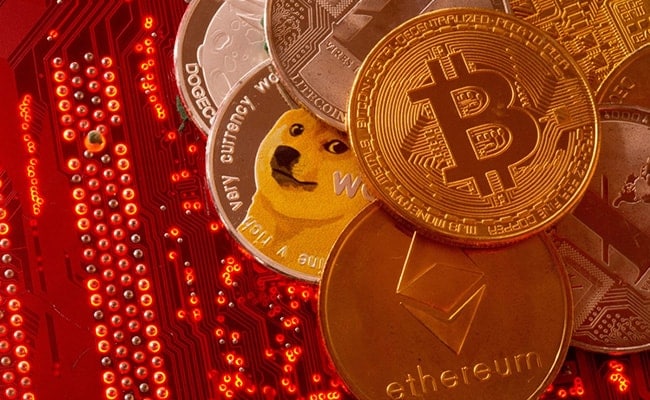
From fragmented monitoring and enforcement to differing classifications of crypto assets, many barriers hinder global coordination on crypto-asset regulation efforts, a global study said on Monday while calling for leveraging learnings from India.
The report published by the World Economic Forum (WEF) emphasised that while full global coordination for crypto regulation would be ideal, varying ecosystem maturity in different jurisdictions, evolving use cases, capacity of regulators and other factors make it difficult to achieve.
As such, regulators and industry players should explore alternative regulatory pathways to collaborate and regulate the crypto-asset ecosystem through a principle-based, agile approach, taking into consideration the local context.
In its section on recommendations, the report argued that the framework for crypto-asset regulations could leverage learnings from existing frameworks in financial services.
In this context, it cited the inter-operable regulatory sandbox of RBI as an example of cross-sector coordination; and data Empowerment and Protection Architecture (DEPA) as an illustration of having systems that are compliant by design.
"In India, the Reserve Bank of India released a Standard Operating Procedure for an Interoperable Regulatory Sandbox (IoRS) in October 2022. IoRS enables the testing of financial products/services that fall within the remit of more than one regulator," it said.
It also noted, "Data protection and empowerment architecture in India provides for consent by design. The decoupling of a consent manager from the data provider/ consumer allows for neutrality and compliance with consent-related obligations." Recently, India also extended its anti-money laundering laws to include 'virtual digital assets', while G20 is deliberating under India's Presidency on creating global rules for regulating crypto-assets.
"The evolving crypto-asset ecosystem and recent market events have underscored the pressing need for collaboration and the building of robust guardrails," said Matthew Blake, Head of WEF's Centre for Financial and Monetary Systems.
Over the past few years, various international standard-setting bodies and organisations have made considerable efforts to produce evidence-based research as well as high-level frameworks.
Geneva-based WEF, which describes itself as an international organisation for public-private cooperation, also called on industry leaders to continue working on interoperable technical standards and focus on establishing and disseminating best practices.
"Crypto industry players have a vital role to ensure that the ecosystem evolves in a responsible manner and can learn from more mature industries to fulfil this role," it said.
Regulating this dynamic sector effectively requires the utilisation of diverse regulatory tools, including legislative frameworks, voluntary codes of conduct and educational initiatives.
Furthermore, given the inherent transparency of these new technologies, it becomes conceivable to envision even more effective regulatory tools to address cross-border concerns, the WEF paper said.
"The coordinated efforts of all jurisdictions to regulate cryptocurrencies are extremely important. Even if you have the best tools and officers to trace cryptocurrency, all your efforts will be in vain once you bump into some non-regulated exchange that simply doesn't provide information to law enforcement," said Oleksiy Feshchenko, Advisor, Global Program against Cybercrime, UN Office on Drugs and Crime (UNODC).

-
Navigating Friction And Energy Realities: An Analysis Of Marco Rubio's October Visit To India

Occurring at a critical juncture marked by stalled trade negotiations and escalating geopolitical pressures over global energy supplies, the visit offers a profound window into modern US-India relations.
-
India Exports Capital. Why Not Export Trusteeship?
The big question, then, is whether India can build an institution that global borrowers, investors, banks, and lawyers can trust, even without an Indian connection.
-
France's Economy & Politics Are In Crisis | The Reason Why
Let's look at how the French economy and politics evolved under Nicolas Sarkozy, Franois Hollande and Emmanuel Macron.
-
You May Inherit The Business. You Must Earn Its Credibility.
Succession tests the founder's ability to share authority as much as it tests the next generation's readiness to assume it.
-
Signing Deals Is One Thing; Making Them Work Is Another | The Week In Whys
Sometimes, things don't turn out as planned. Indian companies have lost some bids to rivals, some projects won't produce until 2030.
-
FOMC Wall, PERM Suspension, Hospital Stocks | Talking Points This Week
A PERM suspension would directly affect green-card sponsorship rather than H-1B visas, so the near-term earnings impact could remain relatively limited. The key question is whether this marks a new phase in US scrutiny of Indian IT.
-
Everything, Everywhere, All At Once: Dalal Street's Week To Forget | Joining The Dots
Visa curbs, a Starlink spat and cancer drug caps: what connects this week's shocks for Indian markets
-
India Is Going Abroad For Critical Minerals. But It May Take Years To Pay Off | The Reason Why
Although India's steps are in the right direction, they remain modest compared with India's growing dependence.
-
When Everyone Has AI, What Gives You An Edge?
India's young workforce is entering an uncertain world of work where powerful AI tools are becoming widely accessible. The advantage will belong to those who combine deep expertise with digital fluency, and the distinctly human capabilities that technology cannot manufacture.
-
Wrong Labels, High Pesticide Residues Holding Back Agri Exports | The Reason Why
India needs stronger domestic food-safety and labelling standards, with best practices becoming part of everyday business for farmers, traders and food companies.










