Land Locked: No Takers For Plots In Mumbai’s Bandra Kurla Complex Since 2008
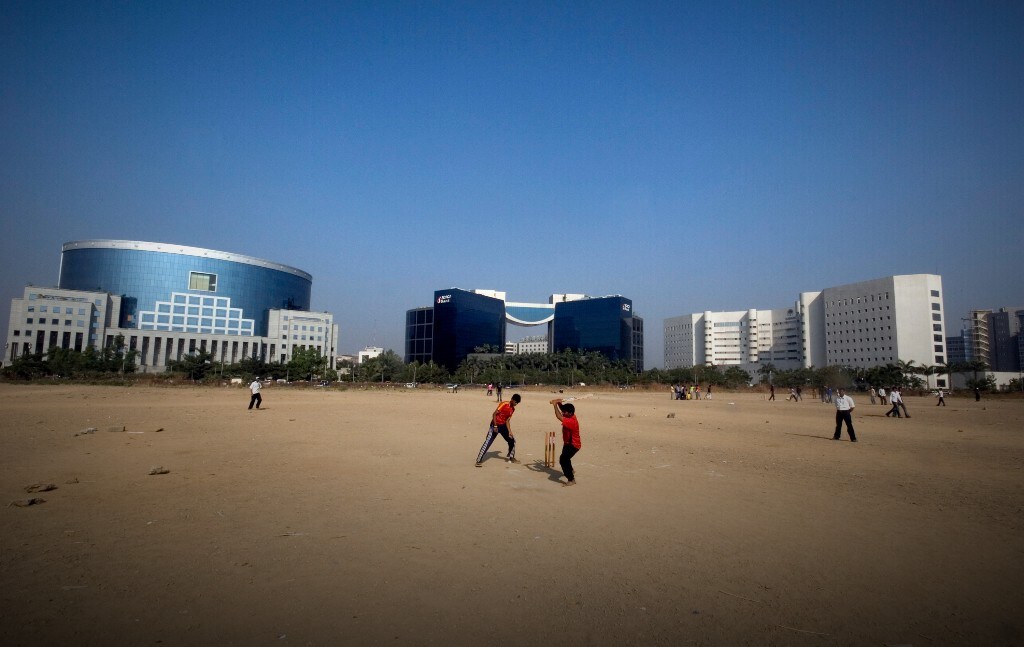
The Bandra Kurla Complex CBD, touted as the new Nariman Point of Mumbai, has not witnessed a single land deal since 2008 even though realty players in the city remain upbeat about the commercial space.
The Mumbai Metropolitan Region Development Authority (MMRDA), the nodal town planning agency, has not tendered a single bid for monetising the land bank of 25-30 hectares it is currently sitting on in the newly developed central business district (CBD).
We have not been able to sell any land parcel since 2008 as we did not get the desired response for the bids. We have decided to put our land monetisation plan on the backburner as we feel it's not the right time and we will not be able get the price we would be quoting.Anil Wankhede, Deputy Metropolitan Commissioner, MMRDA
In 2016, the MMRDA withdrew its bids for selling a 12,500 square metre plot in the BKC with a base price of Rs 1,500 crore. In 2008, it had auctioned three plots for a cumulative Rs 1,322 crore. However, in 2007, three plots had fetched it a much higher price of Rs 2,800 crore. The reserve price during those deals ranged between Rs 3-3.53 lakh per sq metre.
The agency currently has a land bank of 25-30 hectares and considering the floor space index (FSI) of 4 there, it is sitting on over 150 hectares of developable land.
“In any deal, we generally keep a base price of 2-3 lakh per sq metre and if we have to sell around 4,000 sq metre plot, the cost will be in excess of Rs 1,000 crore, which developers are currently not willing to shell out. So, we have decided to hold on for some more time till we feel the market is right for any deal,” he said.
Wankhede said that since many business houses are in consolidation mode and also have other cheaper options, there is not much demand for land in the BKC, the development of which began in the late 1990s on the mostly marshy land between the tony Bandra area on the west and the not-so-posh Kurla on the east. A part of the area was developed by diverting the Mithi, the only river flowing through the megapolis.
Shashank Jain, partner, transaction services at PwC, said the liquidity-starved developers are reluctant to buy land parcels at locations like the BKC, given the high cost.
There is enough appetite for commercial realty from demand-supply and investors' perspective. But the challenge for locations like BKC is the very high cost of rentals, which has a spiralling effect on demand.Shashank Jain, Partner - Transaction Services, PwC
He further said the demand for large office space generally gets generated by the IT sector, which today has become very price-conscious, thus impacting the overall demand.
“Typically, such businesses look at rentals ranging between Rs 35 and Rs 65 per square foot. They prefer to set up offices on the outskirts like Navi Mumbai, Thane or even cities like Gurgaon, Noida, Bengaluru which are much cheaper than Mumbai, where the average rentals are upwards of Rs 250 per sqare foot, ” he explained.
On the developers' side, since the land cost in BKC is high, construction cost shoots up too.
"If a developer has to recover its cost, he/she will have to ensure 100 per cent occupancy and up to Rs 300 per square foot in rentals. Since attracting such high rentals is difficult, even developers are refraining from buying land here," Jain said.
He, however, said BKC may attract niche customers like financial institutions or banks or even large corporate offices.

-
Medicine Pricing: Where Must Profit Stop?

India must confront excessive margins, hidden incentives and regulatory gaps that threaten the integrity of medicine.
-
Why Amazon And Flipkart Are Struggling To Beat Meesho In India's Smaller Cities
With 274 million users and lowest-cost logistics, Meesho is defending its value commerce crown against giants like Amazon and Flipkart.
-
High US Salaries, No Green Card Certainty: The Financial Calculation Facing Indian H-1B Families
The suspension of PERM processing at eight technology employers does not cancel existing H-1B visas. What it does is force a question many Indian families have been avoiding: is the US salary worth tying your career and family plans to one employer?
-
Swiggy vs Eternal: Food Delivery's Two Rivals Are No Longer In The Same Race
Eternal is building a private AI assistant, dark.ai. Swiggy is still working out how to make Instamart pay, with an operating loss of Rs 895 crore in the July-September quarter while Blinkit stayed profitable.
-
Where You Live Shapes How You Get To Work | The Reason Why
Two-wheelers are the most popular way to get to work in India, accounting for nearly 43% of workplace commutes.
-
Unhedged Position: Can India See An Indonesia-Style Time Correction?
The Nifty is trading below levels it first clocked in 2024. Is there, then, as I have suggested in the headline, potential that the current time correction drags on painfully for the next three-five, even ten years?
-
Navigating Friction And Energy Realities: An Analysis Of Marco Rubio's October Visit To India
Occurring at a critical juncture marked by stalled trade negotiations and escalating geopolitical pressures over global energy supplies, the visit offers a profound window into modern US-India relations.
-
India Exports Capital. Why Not Export Trusteeship?
The big question, then, is whether India can build an institution that global borrowers, investors, banks, and lawyers can trust, even without an Indian connection.
-
France's Economy & Politics Are In Crisis | The Reason Why
Let's look at how the French economy and politics evolved under Nicolas Sarkozy, Franois Hollande and Emmanuel Macron.
-
You May Inherit The Business. You Must Earn Its Credibility.
Succession tests the founder's ability to share authority as much as it tests the next generation's readiness to assume it.










