Gucci Just Can’t Keep Up With Brunello Cucinelli And Hermes
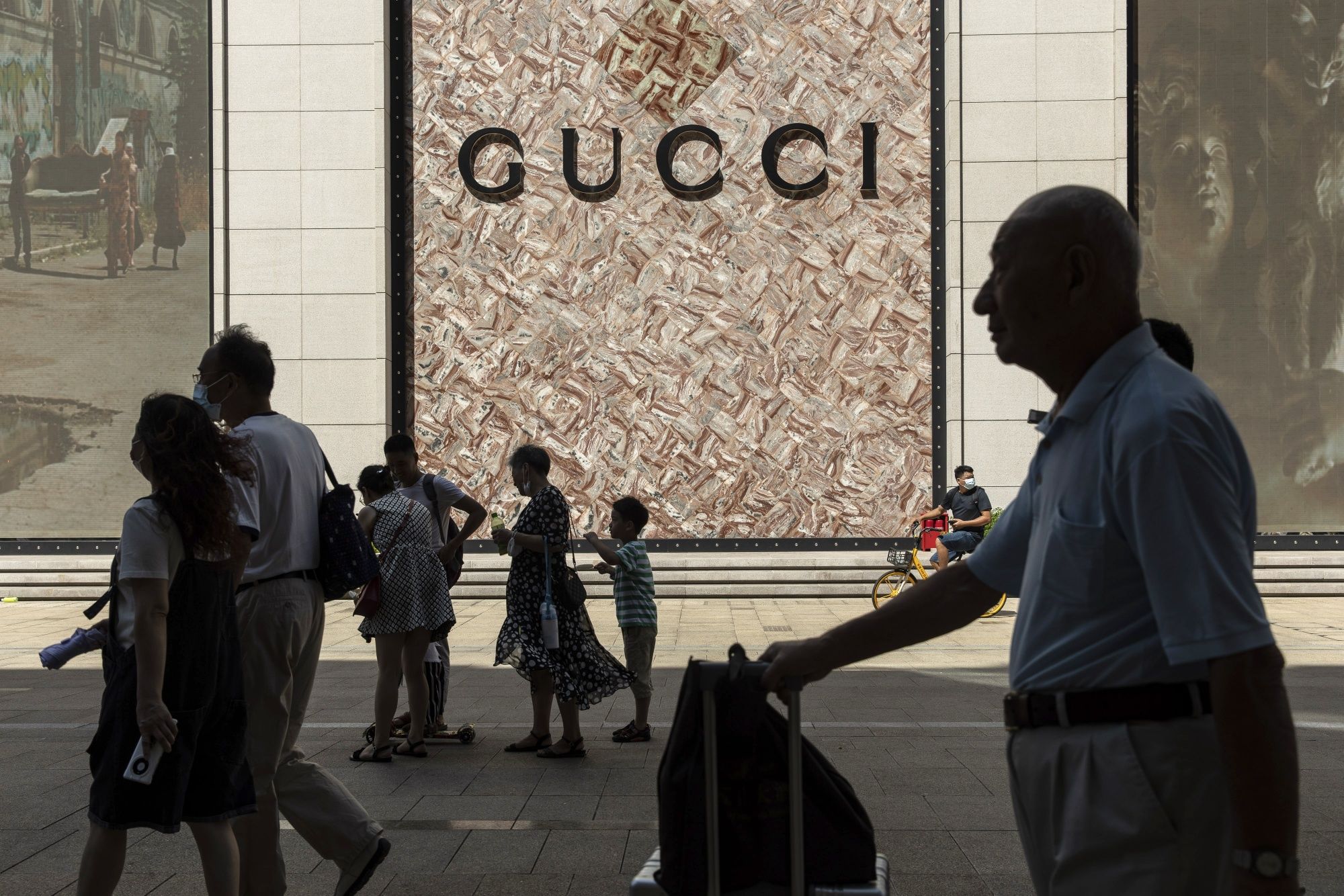
(Bloomberg Opinion) -- Hold onto your Gucci bucket hat. With the middle class cutting back, the luxury industry is realizing that it's all about selling to the 1%.
On Tuesday, Gucci-owner Kering SA said third-quarter sales excluding currency movements and mergers and acquisitions fell 9%, worse than the 6% decline expected by analysts. That's in stark contrast with Hermes International SCA, which beat estimates and said it saw no signs of demand waning among its well-heeled clientele in any of its markets. In the same vein, last week billionaire-favorite Brunello Cucinelli SpA upgraded its revenue forecast for the third time this year.
The dichotomy can be explained by sharply different customer bases.
Confidence has crumbled among the simply affluent in the US and in Europe. Meanwhile, the uber-wealthy have continued to spend. That's corresponded with a shift in fashion trends from ostentation to more refined elegance.
Hermes and cashmere-maker Cucinelli tick this box. Kering does not. In fact, it has appealed to young, fashion-obsessed shoppers in the US and China, who are now either feeling the pinch from inflation and higher borrowing costs or have moved on to other designers. The company must therefore pivot to buyers in the very top echelons as much as it can, even if this brings some short-term pain as it raises prices, reins in its fashion flair and cuts back on selling through some third-party retailers.
All of this won't be easy. Gucci, the group's biggest brand, accounting for about half of sales and about two-thirds of operating profit last year, is already transitioning from the bold maximalism of former creative director Alessandro Michele to a sleeker aesthetic under new top designer Sabato de Sarno.

De Sarno's first collection of pared-back looks, which debuted last month in Milan, should help Gucci become more in tune with the current zeitgeist and appeal to older, upmarket customers.
An injection of enthusiasm is needed. Gucci's organic sales fell 7% in the third quarter, worse than the 6.2% expected by analysts. Kering said the collection had been well received. But the first items won't be in stores until the end of January. Investors will need to be patient to see the full transformation, particularly because Gucci's operating margin will fall by 2 percentage points this year, with little improvement next.
But Gucci isn't the only Kering brand coming apart at the seams. Yves Saint Laurent is facing competition from LVMH's Celine and Loewe, which are firing on all cylinders. That explains some of the 12% decline in organic sales in the third quarter, as local customers in North America and western Europe, which make up 57% of total retail sales, taper their spending. Meanwhile, US department stores are ordering less.
Kering does have some levers it can pull to reorient the business toward the twin drivers of understated luxury and the super-rich's enduring purchasing power.
First of all, it must continue undeterred with Gucci's reinvention, as this will be the most crucial driver of its fortunes over the next few years. But Kering must ensure that its new creative direction has enough freshness to tempt customers to buy, while efforts to elevate clothes and accessories — and charge more — are accompanied by commensurate strides in staying power.
While Saint Laurent faces competition, it does operate in the more subdued luxury space. Kering should continue to develop the brand, even if it means some lost sales, as aspirational shoppers are priced out and it cuts back on where clothes and accessories are sold. Success with high-end womenswear and handbags priced at €3,000 ($3,176) and above show the potential.
Bottega Veneta's performance, too, is being muddied by efforts to make the brand more exclusive, with organic sales falling 7% in the third quarter. Even so, it can push its Intrecciato woven leather bags and curved heel shoes much further. If Kering can get this right — and let's not forget that despite its recent woes, it is a master of turbo-charging brands — the Italian house has a good chance of filling some of the void until Gucci is powering ahead again. It's notable that both Saint Laurent and Bottega Veneta are performing well in China.
Right now though, investors are skeptical. The shares fell as much as 5% in early trading Wednesday and are down about 17% this year, underperforming most rivals. They trade on a forward price-to-earnings ratio of about 13 times, a steep discount to LVMH's about 20 times.
To close the gap, Kering must ensure that its makeover is more old money than nouveau riche.
More From Bloomberg Opinion:
- British Bankers Shouldn't Celebrate the Bonus Cap's Demise: Chris Hughes
- Spies Bring Their China Warnings in From the Cold: Matthew Brooker
- Labour Should Beware the Tyranny of Dodgy UK Data: Marcus Ashworth
This column does not necessarily reflect the opinion of the editorial board or Bloomberg LP and its owners.
Andrea Felsted is a Bloomberg Opinion columnist covering consumer goods and the retail industry. Previously, she was a reporter for the Financial Times.
More stories like this are available on bloomberg.com/opinion
©2023 Bloomberg L.P.

-
Opinion | India at 38: From Innovation Overperformer to Innovation Powerhouse

India now has 453 VC-backed deep science startups, 18 of them late-stage, after 117 percent growth since 2020. Laurus Labs, at USD 9.3 billion, is the most valuable deep science company in any middle-income economy outside China.
-
Navigating Energy Crossroads: S Jaishankar's Call For Diversified Supply Chains At G20 Ministerial Meeting
As geopolitical fault lines continue to test maritime trade routes and commodity flows, Jaishankar's message remains pertinent: true economic resilience requires open markets, protected transit lines, and a genuine commitment to multilateral cooperation rather than coercion.
-
Indians Are Travelling, But Not Every Journey Is A Holiday | The Week In Whys
Pilgrims, patients and working women are the real travellers, and the system hasn't quite caught up with them.
-
Getting To Work Costs Women More | The Reason Why
It is not just about women paying more than men. It is about women paying much more in cities than in villages.
-
AI Bias In Investing Cannot Be Eliminated, But It Can Be Governed
Framing is a particularly important example as identical financial information presented in terms of gains rather than losses can lead an LLM to reach a different assessment.
-
Joining The Dots | Dark Skies, Steady Diya: Why Hope Holds This Diwali
With war, a weak rupee and foreign outflows weighing on sentiment, policymakers at the NDTV World Summit and market veterans at NDTV Profit Ignite: Diwali Edition offered the same advice: stay invested and filter out the noise.
-
The Curious Case of Equitas Small Finance Bank And A CEO Who Quit For Stock
PN Vasudevan believes persistent investor concerns over a perceived conflict of interest had become a governance overhang on Equitas Small Finance Bank's stock, even as the lender improved profitability and asset quality.
-
Talking Points This Week: AI Cash Burn, A Tiger Comeback And An India That Still Finds Its Own Path
India is not immune to higher oil or tighter global liquidity, yet its earnings base is broader, its domestic policy levers are still available.
-
Foreign Investors Own Half Of HDFC Bank and ICICI Bank. An LTCG Cut Could Matter Most Here
Foreign portfolio investors have US$115 billion parked in HDFC Bank, ICICI Bank. If the government cuts long-term capital gains tax, Jefferies says returning foreign money could land here first.










