KCP, Owner Of One Of India's Oldest Cement Units, Plans To Expand Capacity
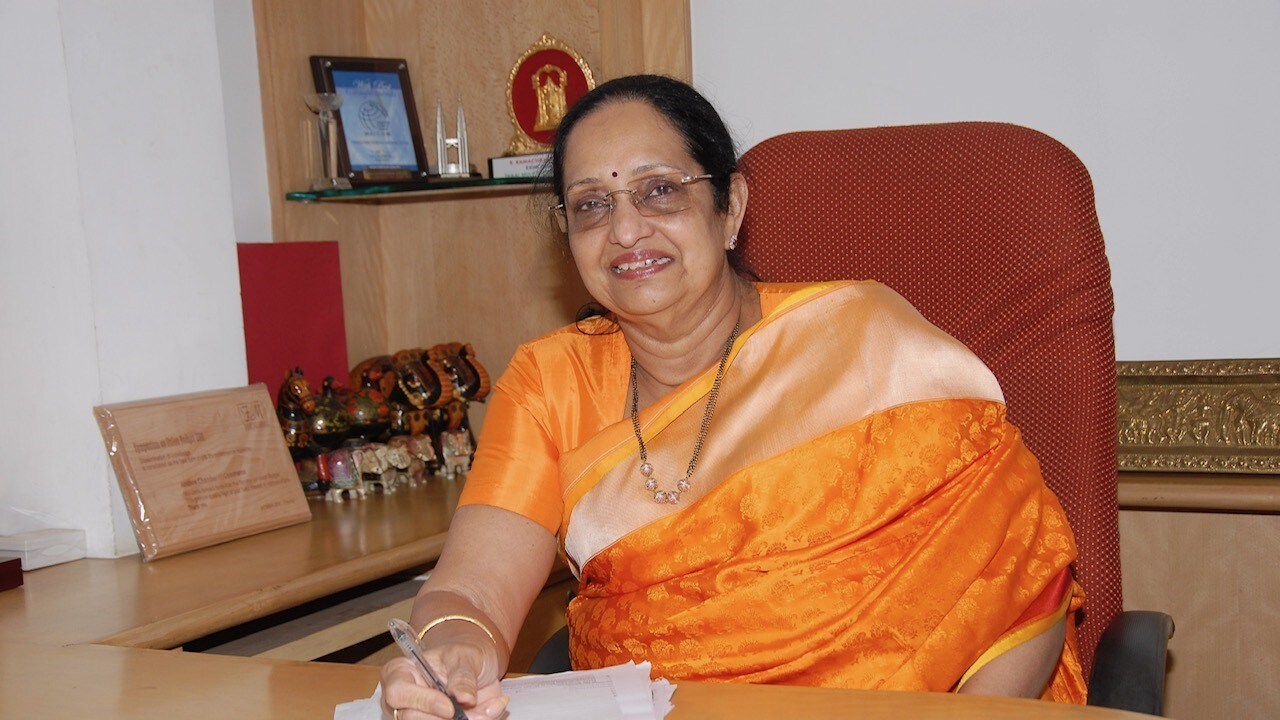
KCP Group, one of the oldest industrial families in Chennai, is planning to expand its cement capacity by setting up a new greenfield project.
The proposed third plant would come up in Andhra Pradesh, VL Indira Dutt, chairperson and managing director of KCP Ltd., and also the president of the Andhra Chamber of Commerce, said in an interview.
The cement business of the group is over 60 years old. It has manufacturing plants in Macherla and Muktyala in Andhra Pradesh with captive supply of high-grade limestone. These two plants have a combined annual capacity of 4.3 million tonnes of premium-grade cement.
Commissioned in 1958, Macherla is one of the country's oldest cement plants and perhaps India's first dry process kiln with technology from KHD Humboldt, Germany. It started with an initial annual capacity of 200 tonnes. Since then, the production capacity has expanded to 0.8 MT with technology from Fives-Lille, France, and later FLSmidth, Denmark (Fuller Inc, US). This plant also incorporates a state-of-art centralised process control system using hardware and software from FLSmidth Automation, Denmark, for optimisation and enhanced production.
The Muktyala facility, commissioned in 2011, is a modern, highly automated, cost-efficient and eco-friendly plant with an annual capacity 1.86 MT, expandable to 3.5 MT. In 2019, the plant capacity was expanded to 3.52 MT per annum by the addition of a second line of operation by replicating the pyroprocessing of the first line and adding grinding technology from Loesche, Germany.
Asserting that KCP had limestone reserves that could last over a hundred years, she said that the new plant — once fully functional — would double the cement capacity of the group. To a query, she said the group had sufficient land to house the new project. She indicated that the proposed plant could fructify within 18–24 months.
India's cement sector is highly competitive with multiple players. KCP Group, she said, is guided by the opportunity. “People come and go. We have been in the business for a long time, and we shouldn't be worried about who comes in or who goes out."
The company, according to Dutt, has confidence in the quality of its product. KCP does not have a brand ambassador. "Our brand speaks for itself."
And she believes in investing in employees and moving forward with them.
The 80-year-old diversified business group with a turnover over $250 million has interests in cement, heavy engineering, sugar, power and hospitality. It has nine manufacturing plants over various geographies in India and Vietnam.
KCP reported revenue of close Rs 425 crore for the quarter ended December and a profit of Rs 18 crore.
KCP started as a small co-operative sugar plant in 1941 by V Ramakrishna. It has since gone into other areas, such as heavy engineering (1955), cement (1958), power (1998) and hospitality (2016).
Known for technology and project management competency, the group has set up over 40 sugar plants and 12 cement factories in India and overseas. Fives-Cail KCP Ltd. is a joint venture with Fives Group of France to execute turnkey sugar plants.
KCP has been a pioneer in developing the sugar industry in Vietnam since the 1990s as a supplier of sugar machinery to plants in Vietnam. On the invitation of the Vietnam government to develop sugar cane in rural areas, a 2,500-tonne-crushing-capacity-a-day sugar plant was commissioned by KCP Vietnam Industries Ltd., a sugar manufacturing subsidiary located in Vietnam in 1999. Since then, it has expanded its capacity to 10,000 TCD.
Dutt, who has been the president of the Andhra Chamber of Commerce for over 10 years now, also spoke of the need to address the challenges coming in the way of ensuring the effectiveness of the Make in India campaign. "How much can you make in India? And at what cost can you do it here?"
Asserting that these had to be properly understood, she said that the government should take a benign view and facilitate the availability of inputs at reasonable prices through assorted initiatives, such as a liberal tax regime. Dutt felt that the micro, small and medium enterprises required handholding by the government and education on the ways to make use of the opportunities arising out of the Make in India campaign.
The chairperson of the Andhra Chambers repeatedly laid emphasis on making critical farm inputs and other items of day-to-day needs available at stable and affordable prices.
KT Jagannathan is a senior financial journalist based in Chennai. He has been in business journalism for over three decades, covering corporate developments and critical industry verticals. He is the co-founder of www.carnaticdarbar.com, a news website for Carnatic music, a niche art form.

-
High US Salaries, No Green Card Certainty: The Financial Calculation Facing Indian H-1B Families

The suspension of PERM processing at eight technology employers does not cancel existing H-1B visas. What it does is force a question many Indian families have been avoiding: is the US salary worth tying your career and family plans to one employer?
-
Swiggy vs Eternal: Food Delivery's Two Rivals Are No Longer In The Same Race
Eternal is building a private AI assistant, dark.ai. Swiggy is still working out how to make Instamart pay, with an operating loss of Rs 895 crore in the July-September quarter while Blinkit stayed profitable.
-
Where You Live Shapes How You Get To Work | The Reason Why
Two-wheelers are the most popular way to get to work in India, accounting for nearly 43% of workplace commutes.
-
Unhedged Position: Can India See An Indonesia-Style Time Correction?
The Nifty is trading below levels it first clocked in 2024. Is there, then, as I have suggested in the headline, potential that the current time correction drags on painfully for the next three-five, even ten years?
-
Navigating Friction And Energy Realities: An Analysis Of Marco Rubio's October Visit To India
Occurring at a critical juncture marked by stalled trade negotiations and escalating geopolitical pressures over global energy supplies, the visit offers a profound window into modern US-India relations.
-
India Exports Capital. Why Not Export Trusteeship?
The big question, then, is whether India can build an institution that global borrowers, investors, banks, and lawyers can trust, even without an Indian connection.
-
France's Economy & Politics Are In Crisis | The Reason Why
Let's look at how the French economy and politics evolved under Nicolas Sarkozy, Franois Hollande and Emmanuel Macron.
-
You May Inherit The Business. You Must Earn Its Credibility.
Succession tests the founder's ability to share authority as much as it tests the next generation's readiness to assume it.
-
Signing Deals Is One Thing; Making Them Work Is Another | The Week In Whys
Sometimes, things don't turn out as planned. Indian companies have lost some bids to rivals, some projects won't produce until 2030.
-
FOMC Wall, PERM Suspension, Hospital Stocks | Talking Points This Week
A PERM suspension would directly affect green-card sponsorship rather than H-1B visas, so the near-term earnings impact could remain relatively limited. The key question is whether this marks a new phase in US scrutiny of Indian IT.









