JPMorgan Stock Traders Notch Record Revenue On Market Chaos
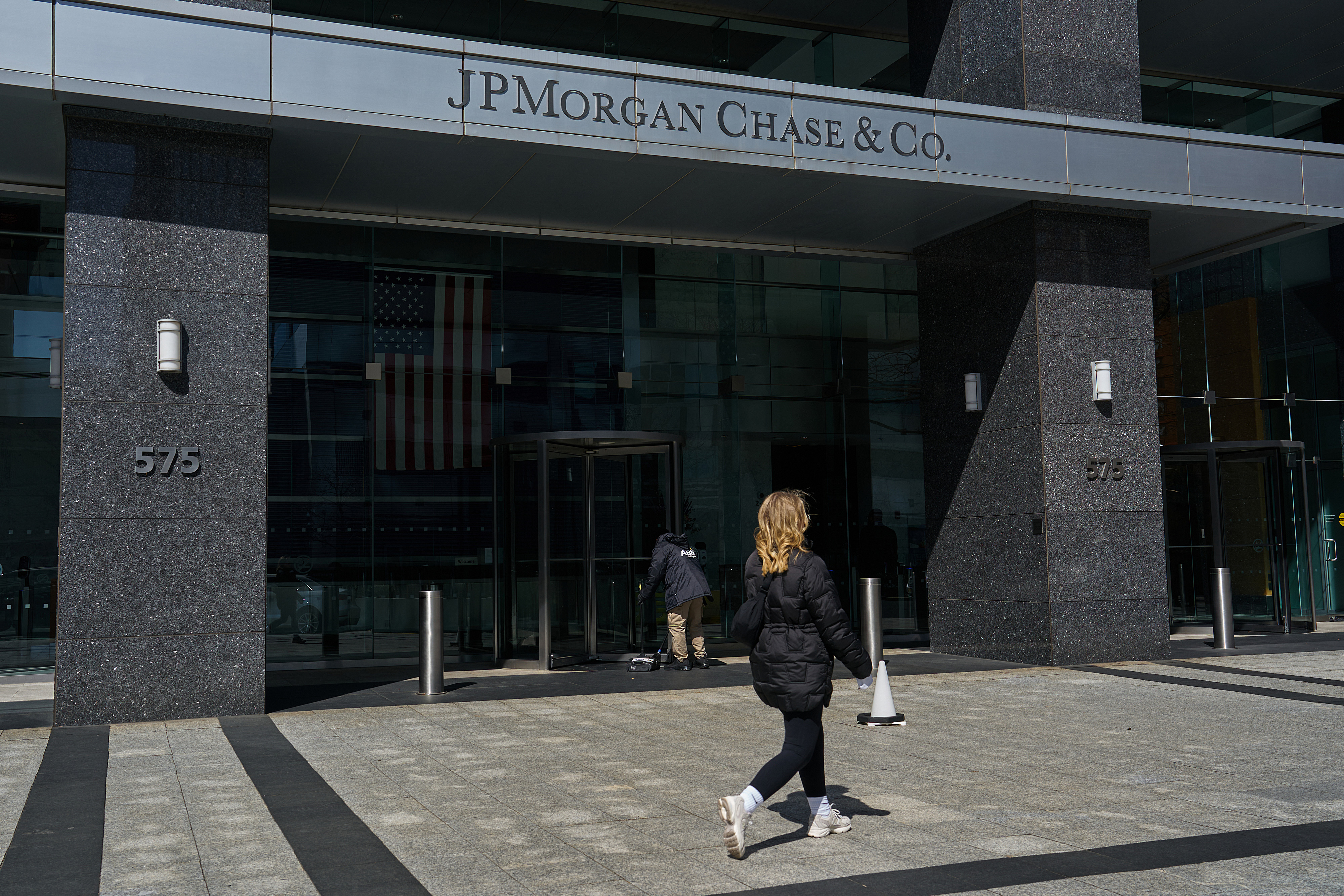
JPMorgan Chase & Co.'s stock traders took in a record haul in the first quarter, boosted by chaotic market moves set off by President Donald Trump's policy announcements after he took office in January.
The biggest US bank boosted equities markets revenue 48% to $3.81 billion, trouncing analysts' expectations as well as the firm's previous stock-trading record set four years ago. Still, Chief Executive Officer Jamie Dimon struck a cautious tone about prospects for the US economy in a statement Friday accompanying the results.
“The economy is facing considerable turbulence (including geopolitics), with the potential positives of tax reform and deregulation and the potential negatives of tariffs and ‘trade wars,' ongoing sticky inflation, high fiscal deficits and still rather high asset prices and volatility,” Dimon said in the statement.

The biggest US bank added $973 million to the pile of money it sets aside for soured loans, more than the $290 million analysts had predicted. The larger-than-expected reserve build is the latest sign that companies across America are gearing up for an economic downturn as executives grapple with President Donald Trump's evolving tariff policy.
Shares of JPMorgan, down 5.3% this year through Thursday, climbed 2.6% in early trading in New York.
JPMorgan's results, along with Morgan Stanley and Wells Fargo & Co., offer a look into how the biggest US banks fared in the early days of Trump's second term. Investors are also eager for details on the US economy from executives whose firms cater to large swaths of American consumers and businesses.
In his annual shareholder letter released Monday, Dimon urged a quick resolution to the uncertainties sparked by the tariffs, warning that some of the negative effects worsen over time and would be hard to undo. Markets swooned following Trump's tariff announcement on April 2, prompting recession warnings from top executives in the finance industry and beyond.
Dimon added his voice to the warnings on Fox Business Wednesday, saying a recession is a “likely outcome.” Trump watched the interview, and later that day announced a 90-day pause on country-specific reciprocal tariffs. The move set off the S&P 500's best day since 2008.
The market tumult has so far thwarted the investment-banking boom that finance executives were predicting on the heels of Trump's election. JPMorgan's investment-banking fees rose 12% in the first quarter, with advisory and debt underwriting both up 16% and equity underwriting down 9%.
Total trading revenue climbed 21%, with the strength in equities driven by “particularly strong performance in derivatives amid elevated levels of volatility,” the firm wrote in the statement. Fixed-income traders took in $5.85 billion, up 8% from a year earlier but less than analysts expected.
Net interest income came in at $23.3 billion for the quarter, up 1% from a year earlier. The firm said it now expects to earn about $94.5 billion in NII this year, more than the roughly $94 billion guidance as of January.
As for costs, JPMorgan reiterated its earlier guidance that it expects adjusted expenses to come in at about $95 billion for the year. In the first quarter, non-interest expenses were $23.6 billion — below analysts' estimates.
The results also included a $588 million gain tied to First Republic, which JPMorgan scooped up nearly two years ago in a government-led auction after the California lender failed. JPMorgan said it reached an agreement with the Federal Deposit Insurance Corp. in January “with respect to certain outstanding items” related to the acquisition.

-
Talking Points This Week: Tech Nerves, FII Buying, And A Faraway Banking Shock

The global markets are not shining this Diwali. The exception in the large markets is, India.
-
Midterm Rally Lasted A Day. The Hard Reality Of A Divided US May Last Two Years | Opinion
Between a contested AI boom, a debt ceiling that arrives in 2027 and a president with every incentive to act alone, the next two years may prove more volatile than the first day's rally suggests.
-
Blue Wave Will Derail the AI Trade but Won't Dismantle the AI Era | Unhedged Position
The Democrats' sweep of the US Congress will see politics collide with economic forces both over the long and short term.
-
It's Time To Take The GST Council's Bet On Trust Global
Payment records can prove India's services exports, and clear, proportionate rules can bring foreign digital sellers into the tax net.
-
Opinion | India at 38: From Innovation Overperformer to Innovation Powerhouse
India now has 453 VC-backed deep science startups, 18 of them late-stage, after 117 percent growth since 2020. Laurus Labs, at USD 9.3 billion, is the most valuable deep science company in any middle-income economy outside China.
-
Navigating Energy Crossroads: S Jaishankar's Call For Diversified Supply Chains At G20 Ministerial Meeting
As geopolitical fault lines continue to test maritime trade routes and commodity flows, Jaishankar's message remains pertinent: true economic resilience requires open markets, protected transit lines, and a genuine commitment to multilateral cooperation rather than coercion.
-
Indians Are Travelling, But Not Every Journey Is A Holiday | The Week In Whys
Pilgrims, patients and working women are the real travellers, and the system hasn't quite caught up with them.
-
Getting To Work Costs Women More | The Reason Why
It is not just about women paying more than men. It is about women paying much more in cities than in villages.
-
AI Bias In Investing Cannot Be Eliminated, But It Can Be Governed
Framing is a particularly important example as identical financial information presented in terms of gains rather than losses can lead an LLM to reach a different assessment.









