JPMorgan Beats Expectations, Helped By Loan Growth, Cost Controls
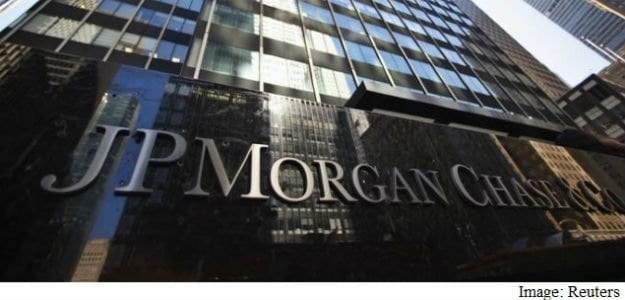
JPMorgan Chase & Co reported a marginally lower second-quarter profit on Thursday but still beat subdued analyst expectations, helped by loan growth and a tight control on operating expenses.
The biggest U.S. bank by assets said its profit slipped 1 percent versus the same period a year earlier, as it set aside more money to meet future loan losses.
However, its earnings per share of $1.55 handsomely beat the average analyst estimate of $1.43 per share, according to Thomson Reuters I/B/E/S. Analysts have reduced their forecasts for big banks in recent weeks.
JPMorgan shares were 2.4 percent higher in premarket trading.
The bank's average book of core loans during the quarter - those related to ongoing businesses it plans to maintain - grew 16 percent, with particular expansion in mortgages and commercial real estate. Even as deposits grew, the portion it lent out also rose to 66 percent, compared with 61 percent a year ago and 64 percent in the prior quarter.
On a conference call with journalists, Chief Financial Officer Marianne Lake said loan growth was "broad-based" and reflected strength in the U.S. economy.
Overall, JPMorgan's second-quarter net income slipped to $6.20 billion in the second quarter ended June 30 from $6.29 billion a year earlier. Net revenue rose 3 percent to $25.21 billion from $24.53 billion.
Even as business grew last quarter, JPMorgan managed to keep down costs apart from technology. Overall operating expenses fell 6 percent compared with the year-earlier period.
"JPMorgan continues to execute really well in a tough environment," said Evercore ISI analyst Glenn Schorr, noting that the bank beat his expectations not only in loan growth, but also in fixed income trading, investment banking and expenses.
JPMorgan is the first U.S. bank to announce results for the quarter, as well as the first to report since Britain voted on June 23 to leave the European Union.
The vote to leave the EU, known as Brexit, helped capital markets revenue at JPMorgan. Trading volumes soared as investors scrambled to react to the vote, helping to boost the bank's fixed-income trading revenue by 35 percent last quarter.
So far in the third quarter, trading volumes have been "fine," but a normal seasonal decline is expected, Lake said.
Perhaps more important than the trading bump, Brexit threw into doubt the likelihood of a U.S. interest rate hike anytime soon. That means lending margins for big banks will remain under pressure.
Although JPMorgan benefited from higher rates in the second quarter compared with the year-ago period, its net interest margin declined from the first quarter.
Another symptom of the bank's struggle with low rates was its return on tangible common equity, a key measure of profitability. The ratio fell to 13 percent from 14 percent a year earlier. Management has said it should be about 15 percent, but to get there, the bank needs higher interest rates.
The Federal Reserve last raised U.S. rates in December, by 0.25 percentage points, after keeping them near zero for almost a decade.
At the start of the year, it was widely expected there would be two U.S. rate hikes this year. Now, Wall Street's top banks are almost evenly split on whether the Fed will raise rates at all this year, according to a Reuters poll.
Brexit also raised questions about whether banks will shift some of their London operations to other cities.
After the vote, JPMorgan said it was considering changes that could result in moving some of its 16,000 UK-based employees. On Thursday, Lake said dialogues about staff moves are "only in their infancy."
Wells Fargo & Co and Citigroup Inc the third- and fourth-biggest U.S. banks, report results on Friday.
(This story has not been edited by NDTV staff and is auto-generated from a syndicated feed.)

-
Love, Sex Aur Dhokha: The Audacious Plot To Spy On Jensen Huang

A Taipei dinner, a Singapore chip buyer and a suspected Chinese asset: inside the alleged spy operation that got close to NVIDIA's Jensen Huang.
-
Ten Things I Learnt This Samvat
Patience can be a trap. Cheap stocks can stay cheap. Leverage can wipe you out. What did Samvat 2082 teach us? Niraj Shah writes on 10 lessons from the year gone by.
-
Talking Points This Week: Tech Nerves, FII Buying, And A Faraway Banking Shock
The global markets are not shining this Diwali. The exception in the large markets is, India.
-
Midterm Rally Lasted A Day. The Hard Reality Of A Divided US May Last Two Years | Opinion
Between a contested AI boom, a debt ceiling that arrives in 2027 and a president with every incentive to act alone, the next two years may prove more volatile than the first day's rally suggests.
-
Blue Wave Will Derail the AI Trade but Won't Dismantle the AI Era | Unhedged Position
The Democrats' sweep of the US Congress will see politics collide with economic forces both over the long and short term.
-
It's Time To Take The GST Council's Bet On Trust Global
Payment records can prove India's services exports, and clear, proportionate rules can bring foreign digital sellers into the tax net.
-
Opinion | India at 38: From Innovation Overperformer to Innovation Powerhouse
India now has 453 VC-backed deep science startups, 18 of them late-stage, after 117 percent growth since 2020. Laurus Labs, at USD 9.3 billion, is the most valuable deep science company in any middle-income economy outside China.
-
Navigating Energy Crossroads: S Jaishankar's Call For Diversified Supply Chains At G20 Ministerial Meeting
As geopolitical fault lines continue to test maritime trade routes and commodity flows, Jaishankar's message remains pertinent: true economic resilience requires open markets, protected transit lines, and a genuine commitment to multilateral cooperation rather than coercion.
-
Indians Are Travelling, But Not Every Journey Is A Holiday | The Week In Whys
Pilgrims, patients and working women are the real travellers, and the system hasn't quite caught up with them.









