Johnson’s Baby Powder Samples Taken By Drug Regulator
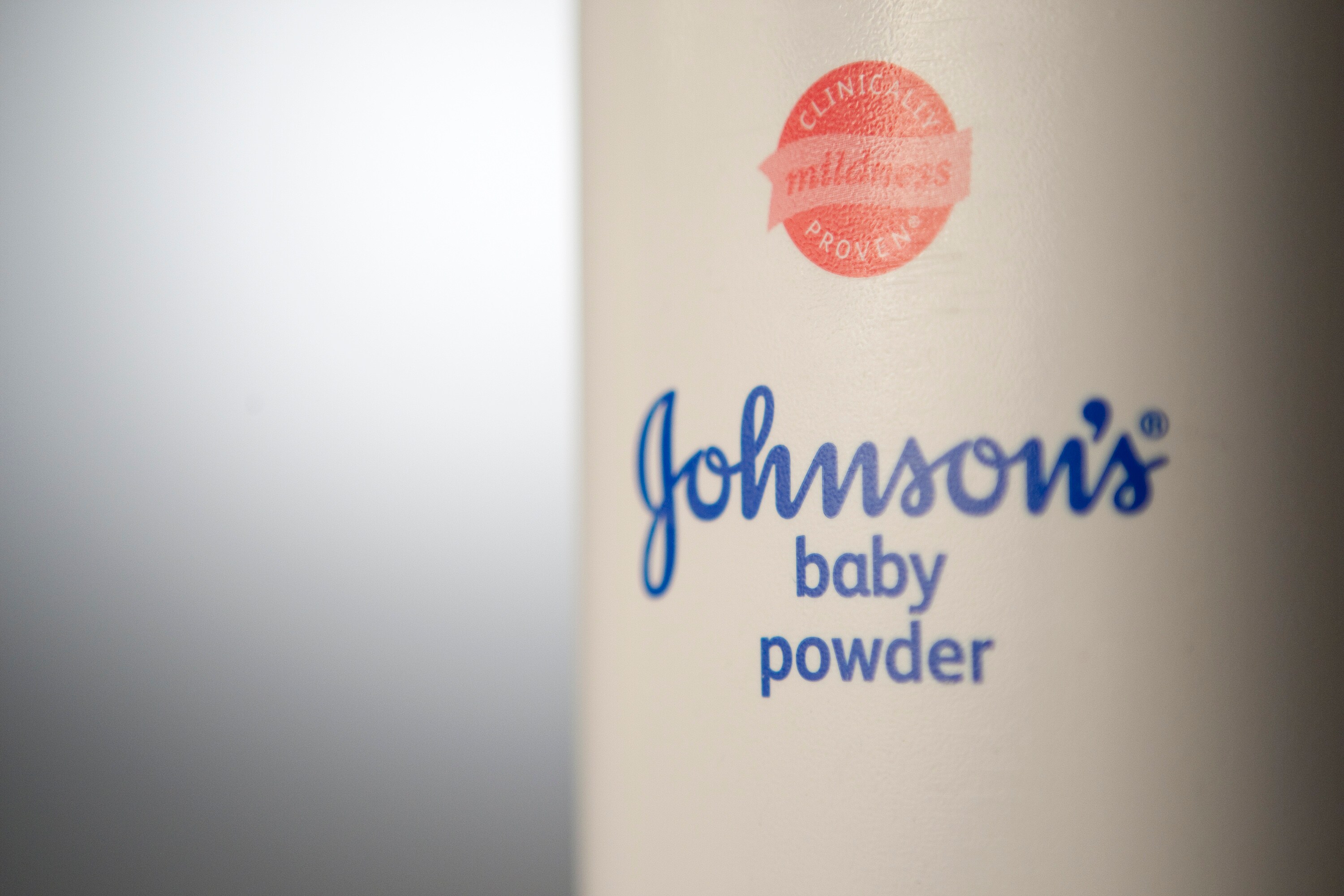
The Central Drugs Standard Control Organization collected samples of Johnson and Johnson's baby powder from the company's Baddi plant in Himachal Pradesh on Wednesday amid reports that the product allegedly contained cancer-causing asbestos.
This was part of a massive nationwide action against the American multinational pharmaceutical major to collect samples of their talcum powder. The company said they were "fully cooperating" with the CDSCO by providing tests and samples, and asserted that the characterisation of these visits as 'raids or seizures is "incorrect".
The CDSCO, under the Union Health Ministry, said over the next four to five days, drug inspectors will search manufacturing plants and wholesalers of J&J's talcum powder and collect samples of the powder for testing.
The inspectors will check if the products complied with the cosmetics standards in India, officials said.
"The action will take place at 12-15 locations across the country and samples of all brands of the Johnson and Johnson talcum powder will be collected for testing to check for the presence of asbestos.
"Samples of raw material as well as the finished product from retail stores are being collected," a government official said.
Sources said the CDSCO has constituted a team of 100 drug inspectors for the purpose. The country's top drug regulator will test the collected samples for presence of asbestos and also check if the brands complied with all regulatory and manufacturing standards, the official said.
The effects of long-term unsafe asbestos exposure on human health are well documented and asbestos fibres are easily inhaled and carried into the lower regions of the lung where those can cause fibrotic lung disease (asbestosis) and changes in the lining of the chest cavity (pleura).
These diseases can lead to reduced respiratory function and death, while long-term inhalation of asbestos fibres also increases the risk of lung cancer and mesothelioma. According to a senior official, powder samples of Johnson and Johnson were tested in 2016 but they were found to be complying with Indian standards.
Some recent reports claimed that the firm allegedly knew for decades about the presence of cancer-causing asbestos in their product. The action by CDSCO came at a time the American pharmaceutical major is already embroiled in a controversy over its faulty hip implants.
The Union Health Ministry recently approved the formula for determination of compensation for patients who prior to August 2010, had received faulty articular surface replacement hip implants manufactured by Johnson and Johnson.
When contacted, the company confirmed that a few of its facilities were visited by the CDSCO and local Food and Drug Administration officials on Wednesday. A company spokesperson said they are "fully cooperating" with the authorities by providing tests and samples.
"The characterization of these visits as 'raids or seizures' is incorrect as has been reported in some instances. The tests have been conducted in the regular way that the FDA collects samples," the spokesperson said. The company said Johnson & Johnson's baby powder is asbestos-free and doesn't cause cancer.
"We have scientific evidence to prove that our talcum powder is safe and beneficial for use," the spokesperson said. The company said the safety of cosmetic talc is based on a long history of safe use and decades of research and clinical evidence by independent researchers and scientific review boards across the world.
It pointed out that in the past, authorities in India like the FDAs and the CDSCO have confirmed that its products comply with Indian standards and are free of asbestos.
"We unequivocally stand by the safety of our products, are fully compliant with regulatory standards and requirements in India and will continue to work with the regulatory authorities," the spokesperson said.
According to reports, earlier this year, a Missouri jury in the U.S. ordered the company to pay a record $4.69 billion to 22 women who alleged that its talc-based products, including its baby powder, contained asbestos and caused them to develop ovarian cancer.

-
High US Salaries, No Green Card Certainty: The Financial Calculation Facing Indian H-1B Families

The suspension of PERM processing at eight technology employers does not cancel existing H-1B visas. What it does is force a question many Indian families have been avoiding: is the US salary worth tying your career and family plans to one employer?
-
Unhedged Position: Can India See An Indonesia-Style Time Correction?
The Nifty is trading below levels it first clocked in 2024. Is there, then, as I have suggested in the headline, potential that the current time correction drags on painfully for the next three-five, even ten years?
-
Navigating Friction And Energy Realities: An Analysis Of Marco Rubio's October Visit To India
Occurring at a critical juncture marked by stalled trade negotiations and escalating geopolitical pressures over global energy supplies, the visit offers a profound window into modern US-India relations.
-
India Exports Capital. Why Not Export Trusteeship?
The big question, then, is whether India can build an institution that global borrowers, investors, banks, and lawyers can trust, even without an Indian connection.
-
France's Economy & Politics Are In Crisis | The Reason Why
Let's look at how the French economy and politics evolved under Nicolas Sarkozy, Franois Hollande and Emmanuel Macron.
-
You May Inherit The Business. You Must Earn Its Credibility.
Succession tests the founder's ability to share authority as much as it tests the next generation's readiness to assume it.
-
Signing Deals Is One Thing; Making Them Work Is Another | The Week In Whys
Sometimes, things don't turn out as planned. Indian companies have lost some bids to rivals, some projects won't produce until 2030.
-
FOMC Wall, PERM Suspension, Hospital Stocks | Talking Points This Week
A PERM suspension would directly affect green-card sponsorship rather than H-1B visas, so the near-term earnings impact could remain relatively limited. The key question is whether this marks a new phase in US scrutiny of Indian IT.
-
Everything, Everywhere, All At Once: Dalal Street's Week To Forget | Joining The Dots
Visa curbs, a Starlink spat and cancer drug caps: what connects this week's shocks for Indian markets
-
India Is Going Abroad For Critical Minerals. But It May Take Years To Pay Off | The Reason Why
Although India's steps are in the right direction, they remain modest compared with India's growing dependence.









