Jet Airways Is Said to Seek Loan Moratorium to Ease Crunch
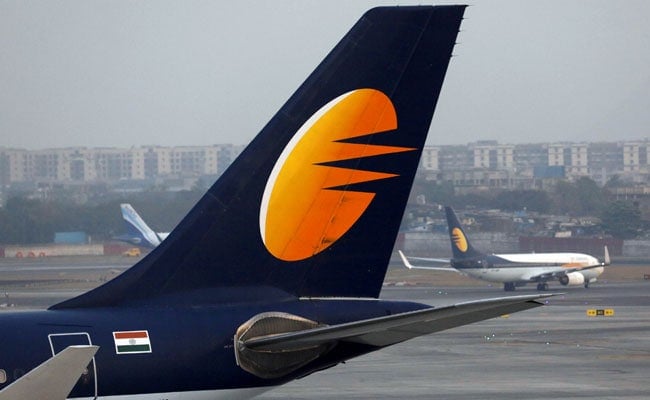
Jet Airways has approached banks for a moratorium on loans and asked for fresh funds to ease a cash crunch, according to people with direct knowledge of the matter, adding to signs the carrier is sliding deeper into trouble.
The airline has already grounded about a dozen planes as part of a review of its network aimed at reducing unprofitable domestic routes, said one of the people, who asked not to be identified because the plans aren't public. The Mumbai-based carrier is also studying laying off more employees in non-core areas, the person said.
The moves show country's biggest full-service carrier -- unprofitable in nine of the past 11 years -- is struggling for survival as two-cent fares in one of the world's most expensive places to buy jet fuel negate the gains from a surge in domestic passenger numbers. Banks, having suffered setbacks from lending previously to failed Kingfisher Airlines, had earlier rebuffed Jet Airways with their reluctance to extend additional loans to the company.
The carrier is continuously evaluating commercial viability of its operations and will make announcements on specific measures, spokesman for the company said in an emailed statement.
"The board approved turnaround strategy is under implementation. The strategy encompasses various cost-reduction and revenue enhancement initiatives including working on restructuring of our balance sheet via debt-reduction, streamlining cash flows, payroll optimization, exploring funding options such as capital infusion, monetization of company's stake in its loyalty program, and several other measures, to realize higher productivity and operational efficiencies," the company said in the statement.
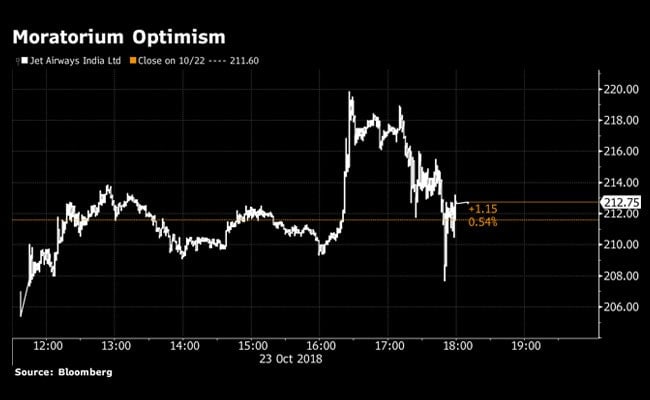
Shares of the company jumped as much as 4 percent on Tuesday in Mumbai, before paring their gains to 1.15 percent, on optimism any successful arrangement with lenders could help the carrier get its finances back in order.
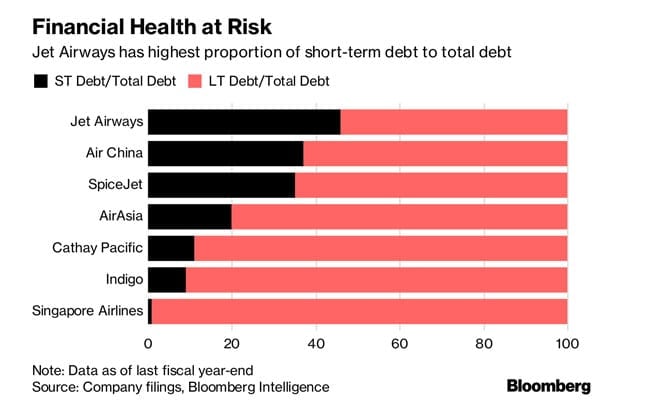
Jet Airways has the highest portion of short-term debt to total debt compared to its Asian peers at 46%.
For Naresh Goyal-led Jet Airways, it's critical to raise funds as the airline is battling a depreciating local currency, intense local competition from budget carriers and surging fuel prices. The banks have asked for a detailed action plan from Jet Airways on proposals to sell shares, the people said.
Two-Cent Fares Are Killing Airlines in Cutthroat Market
The carrier was one of the first to take off in the early 1990s after the country opened up aviation to non-state carriers. Jet Airways has shared little details of a turnaround plan it announced in August, while the stock has plunged 75 percent this year, shrinking the market value of the company to about $325 million.
Among the proposed steps it announced were the sale of the carrier's stake in its frequent-flier program, capital infusion, paring of debt and cutting costs by as much as 20 billion rupees ($271 million) over the next two years. While Blackstone Group LP and TPG Capital were reportedly in talks for the stake in the loyalty program, JetPrivilege, the carrier hasn't given any indication it is anywhere close to a deal.
Jet Airways owns 49.9 percent of JetPrivilege, with the rest held by Etihad Airways PJSC, which separately owns 24 percent of the domestic carrier.
Cash and equivalents at Jet Airways dwindled to 3.2 billion rupees as of March, from as high as 20.8 billion rupees three years earlier, signaling the urgency to raise capital and tide over any squeeze.
Net debt was at 73.6 billion rupees as of June 30, 65 percent of that denominated in dollars, Chief Financial Officer Amit Agarwal said in August. The local currency's 13 percent slide against the greenback is making matters worse by threatening to drive up plane financing costs.
Jet Airways has 124 aircraft in its fleet, according to its website, compared with IndiGo's 159 as of end-March.
(Except for the headline, this story has not been edited by NDTV staff and is published from a syndicated feed.)

-
Where You Live Shapes How You Get To Work | The Reason Why

Two-wheelers are the most popular way to get to work in India, accounting for nearly 43% of workplace commutes.
-
High US Salaries, No Green Card Certainty: The Financial Calculation Facing Indian H-1B Families
The suspension of PERM processing at eight technology employers does not cancel existing H-1B visas. What it does is force a question many Indian families have been avoiding: is the US salary worth tying your career and family plans to one employer?
-
Unhedged Position: Can India See An Indonesia-Style Time Correction?
The Nifty is trading below levels it first clocked in 2024. Is there, then, as I have suggested in the headline, potential that the current time correction drags on painfully for the next three-five, even ten years?
-
Navigating Friction And Energy Realities: An Analysis Of Marco Rubio's October Visit To India
Occurring at a critical juncture marked by stalled trade negotiations and escalating geopolitical pressures over global energy supplies, the visit offers a profound window into modern US-India relations.
-
India Exports Capital. Why Not Export Trusteeship?
The big question, then, is whether India can build an institution that global borrowers, investors, banks, and lawyers can trust, even without an Indian connection.
-
France's Economy & Politics Are In Crisis | The Reason Why
Let's look at how the French economy and politics evolved under Nicolas Sarkozy, Franois Hollande and Emmanuel Macron.
-
You May Inherit The Business. You Must Earn Its Credibility.
Succession tests the founder's ability to share authority as much as it tests the next generation's readiness to assume it.
-
Signing Deals Is One Thing; Making Them Work Is Another | The Week In Whys
Sometimes, things don't turn out as planned. Indian companies have lost some bids to rivals, some projects won't produce until 2030.
-
FOMC Wall, PERM Suspension, Hospital Stocks | Talking Points This Week
A PERM suspension would directly affect green-card sponsorship rather than H-1B visas, so the near-term earnings impact could remain relatively limited. The key question is whether this marks a new phase in US scrutiny of Indian IT.
-
Everything, Everywhere, All At Once: Dalal Street's Week To Forget | Joining The Dots
Visa curbs, a Starlink spat and cancer drug caps: what connects this week's shocks for Indian markets









