Japanese Funding Body Wants Same Exemptions As World Bank
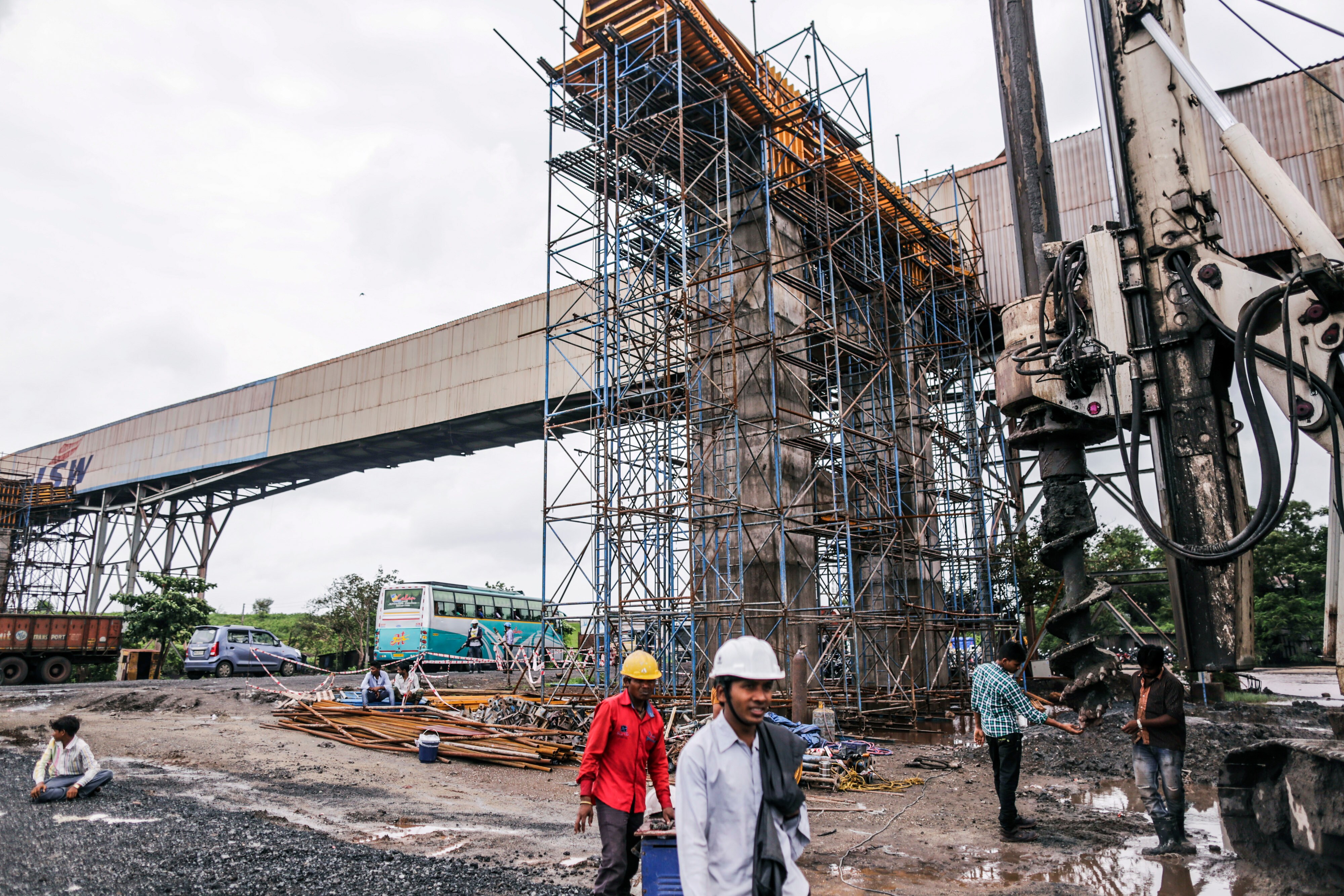
Japan International Cooperation Agency (JICA) wants the Indian finance ministry to scrap the countervailing duty on imports for projects implemented by it, a senior finance ministry official told BloombergQuint.
This, the agency hopes, will keep the cost of projects it is funding at par with those undertaken by multilateral institutions like World Bank and Asian Development Bank.
Currently, there is a provision that exempts imports for World Bank or Asian Development Bank-funded projects from an additional customs duty (that is, the countervailing duty), the official explained. Projects funded by JICA don't get this exemption thereby increasing project cost and the cost of borrowing.
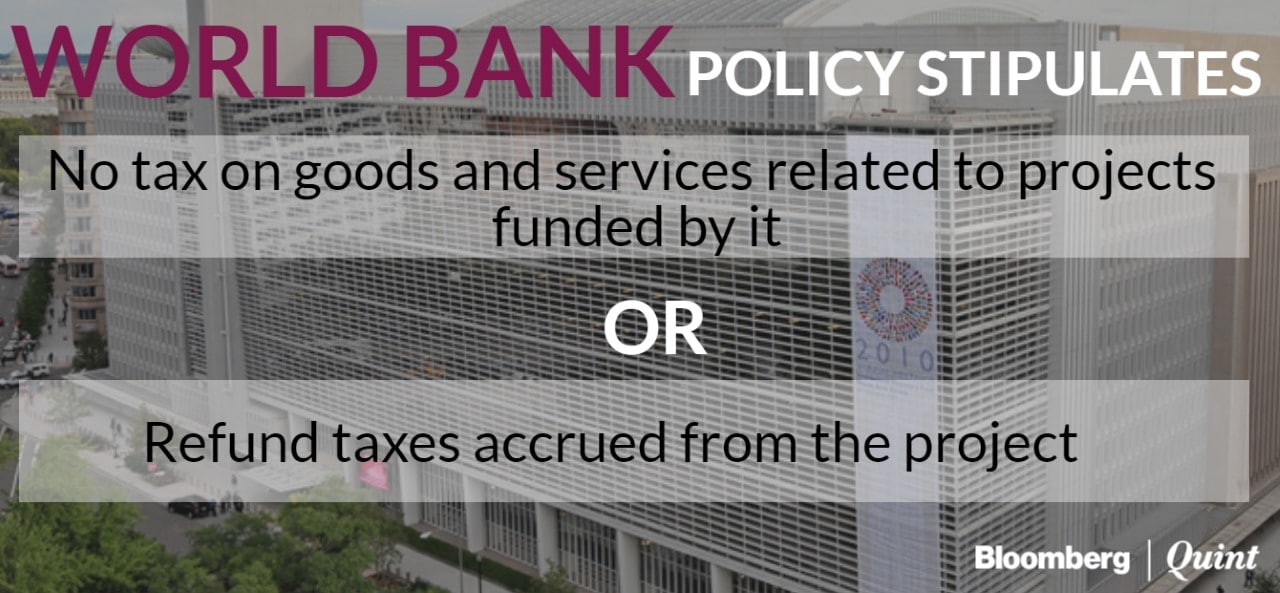
According to the World Bank's policy, loans provided by the bank cannot be used to finance taxes. Countries which are recipients of these loans therefore have a choice either to provide exemptions for goods and services procured under projects financed by the bank, or provide budgetary funds to pay for the tax portion of the project cost.
The Japanese agency is of the view that additional cost incurred by it on countervailing duty can be used for other investments, the official quoted above said.
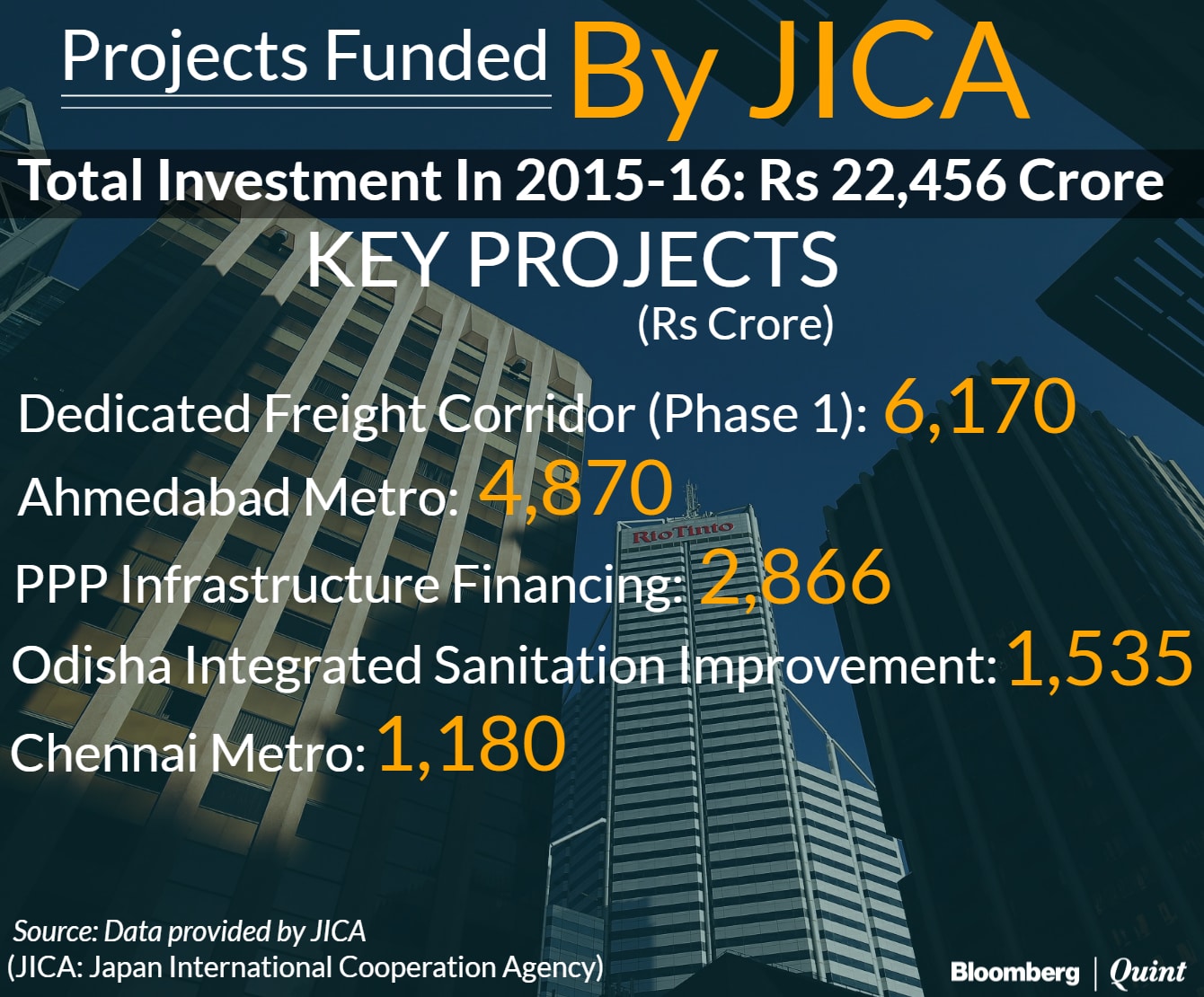
In 2015-16, JICA had signed official development assistance loans worth Rs 22,456 crore (1 yen = Rs 1.68) in India which includes metro projects in Chennai and Ahmedabad, among others.
The revenue department of the finance ministry has proposed a GST-like arrangement to provide exemptions. Under the GST regime, exemptions will be scrapped and those companies or industries that were given sops will have to first pay taxes which will later be reimbursed or compensated by states, which will have to make provisions for the same in their budgets.
In case the finance ministry decides to exempt JICA from the countervailing duty, the import duty will have to be collected first which will then be refunded by the Indian government.
If the Department of Economic Affairs decides to bring projects funded by JICA at par with those funded by the World Bank or ADB, it will have to make budgetary provisions to reimburse that amount. Discussions to that effect are currently on, the finance ministry official said.
Countervailing duty is imposed to create a level-playing field between domestic and foreign producers of a commodity. Foreign producers can generally sell the same product at a lower price because of the sops they receive from their government, which has a negative impact on domestic Indian companies.
Finance Minister Arun Jaitley withdrew an exemption on countervailing duty on specified machinery required for construction of roads and proposed a duty of 12.5 percent in last year's budget.
“Supply of goods to projects financed by multilateral or bilateral agencies/funds as notified by the department of economic affairs, ministry of finance, where legal agreements provide for tender evaluation without including customs duty,” the foreign trade policy says.
Large infrastructure projects are provided import duty benefits either under multilateral or bilateral agreements, said Himanshu Tewari, partner at BMR Advisors.
According to the Japan India Comprehensive Economic Partnership Agreement, "each Party shall not introduce or maintain any prohibition or restriction other than customs duties on the importation of any good of the other Party or on the exportation or sale for export of any good destined to the other Party, which is inconsistent with its obligations under the relevant provisions of the WTO Agreement."
The finance ministry is trying to align all countervailing duty exemptions before the rollout of GST where exemptions are going to be exceptional, and not a norm, Tewari said.
JICA did not respond to BloombergQuint's request for a comment at the time of filing this report.

-
Talking Points This Week: Tech Nerves, FII Buying, And A Faraway Banking Shock

The global markets are not shining this Diwali. The exception in the large markets is, India.
-
Midterm Rally Lasted A Day. The Hard Reality Of A Divided US May Last Two Years | Opinion
Between a contested AI boom, a debt ceiling that arrives in 2027 and a president with every incentive to act alone, the next two years may prove more volatile than the first day's rally suggests.
-
Blue Wave Will Derail the AI Trade but Won't Dismantle the AI Era | Unhedged Position
The Democrats' sweep of the US Congress will see politics collide with economic forces both over the long and short term.
-
It's Time To Take The GST Council's Bet On Trust Global
Payment records can prove India's services exports, and clear, proportionate rules can bring foreign digital sellers into the tax net.
-
Opinion | India at 38: From Innovation Overperformer to Innovation Powerhouse
India now has 453 VC-backed deep science startups, 18 of them late-stage, after 117 percent growth since 2020. Laurus Labs, at USD 9.3 billion, is the most valuable deep science company in any middle-income economy outside China.
-
Navigating Energy Crossroads: S Jaishankar's Call For Diversified Supply Chains At G20 Ministerial Meeting
As geopolitical fault lines continue to test maritime trade routes and commodity flows, Jaishankar's message remains pertinent: true economic resilience requires open markets, protected transit lines, and a genuine commitment to multilateral cooperation rather than coercion.
-
Indians Are Travelling, But Not Every Journey Is A Holiday | The Week In Whys
Pilgrims, patients and working women are the real travellers, and the system hasn't quite caught up with them.
-
Getting To Work Costs Women More | The Reason Why
It is not just about women paying more than men. It is about women paying much more in cities than in villages.
-
AI Bias In Investing Cannot Be Eliminated, But It Can Be Governed
Framing is a particularly important example as identical financial information presented in terms of gains rather than losses can lead an LLM to reach a different assessment.









