Japan, India, And France Announce Launch Of Common Platform For Talks Among Sri Lanka Creditors
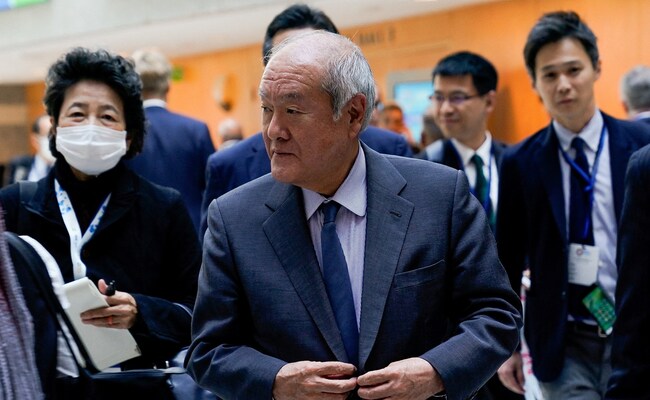
Japan, India and France today announced a common platform for talks among bilateral creditors to coordinate restructuring of Sri Lanka's debt, a move they hope would serve as a model for solving the debt problems of middle-income economies.
It remains uncertain, however, whether Sri Lanka's biggest bilateral creditor - China - will join the initiative launched by Japan, this year's G7 chair, with the aim of kicking off a series of meetings among Sri Lanka's creditors.
"To be able to launch this negotiation process gathering such a broad-based group of creditors is a historical outcome," Japanese Finance Minister Shunichi Suzuki told a briefing.
"This committee is open to all creditors," he said.
French Director General of the Treasury Emmanuel Moulin told the briefing that the group was ready to hold the first round of talks "as soon as possible."
Sri Lanka's central bank governor had told Reuters earlier this week that having a single platform for talks would be a welcome move that would make it easier to discuss and share information.
The island nation of 22 million people last month secured a $2.9 billion programme from the International Monetary Fund to tackle its huge debt burden. But the middle-income economy could not apply for relief under the G20's common framework for debt treatments, which targets only low-income countries.
That has put the onus on major economies to come up with an alternative scheme, leading to the creation of the new platform.
Sri Lanka owes $7.1 billion to bilateral creditors, according to official data from its government, with $3 billion owed to China, followed by $2.4 billion to the Paris Club and $1.6 billion to India.
The government also needs to renegotiate more than $12 billion of debt in eurobonds with overseas private creditors, and $2.7 billion on other commercial loans.
Sri Lanka kicked off talks to rework part of its domestic debt this month and aims to finalize the deal by May.
(Except for the headline, this story has not been edited by NDTV staff and is published from a syndicated feed.)

-
Ten Things I Learnt This Samvat

Patience can be a trap. Cheap stocks can stay cheap. Leverage can wipe you out. What did Samvat 2082 teach us? Niraj Shah writes on 10 lessons from the year gone by.
-
Talking Points This Week: Tech Nerves, FII Buying, And A Faraway Banking Shock
The global markets are not shining this Diwali. The exception in the large markets is, India.
-
Midterm Rally Lasted A Day. The Hard Reality Of A Divided US May Last Two Years | Opinion
Between a contested AI boom, a debt ceiling that arrives in 2027 and a president with every incentive to act alone, the next two years may prove more volatile than the first day's rally suggests.
-
Blue Wave Will Derail the AI Trade but Won't Dismantle the AI Era | Unhedged Position
The Democrats' sweep of the US Congress will see politics collide with economic forces both over the long and short term.
-
It's Time To Take The GST Council's Bet On Trust Global
Payment records can prove India's services exports, and clear, proportionate rules can bring foreign digital sellers into the tax net.
-
Opinion | India at 38: From Innovation Overperformer to Innovation Powerhouse
India now has 453 VC-backed deep science startups, 18 of them late-stage, after 117 percent growth since 2020. Laurus Labs, at USD 9.3 billion, is the most valuable deep science company in any middle-income economy outside China.
-
Navigating Energy Crossroads: S Jaishankar's Call For Diversified Supply Chains At G20 Ministerial Meeting
As geopolitical fault lines continue to test maritime trade routes and commodity flows, Jaishankar's message remains pertinent: true economic resilience requires open markets, protected transit lines, and a genuine commitment to multilateral cooperation rather than coercion.
-
Indians Are Travelling, But Not Every Journey Is A Holiday | The Week In Whys
Pilgrims, patients and working women are the real travellers, and the system hasn't quite caught up with them.
-
Getting To Work Costs Women More | The Reason Why
It is not just about women paying more than men. It is about women paying much more in cities than in villages.









