Japan Back in Recession: What Experts Say
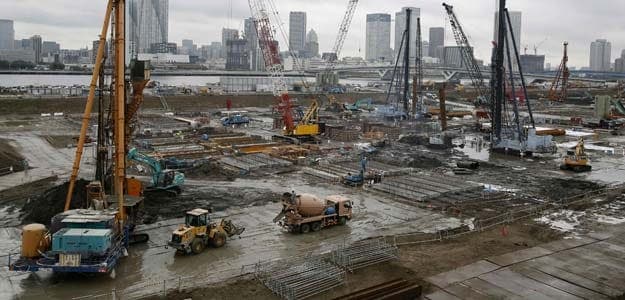
Tokyo: Japan's economy slid back into recession in July-September as uncertainty over the overseas outlook hurt business investment, putting policymakers under growing pressure to deploy new stimulus measures to support a fragile recovery.
COMMENTARY
Junichi Makino, chief economist, SMBC Nikko Securities:
"Private consumption and exports rebounded, while housing investment marked the third straight quarter of increase ... While GDP marked the second straight quarter of contraction, it was mainly due to declines in inventory and increases in imports driven by growing final demand. As such, we don't need to be too pessimistic."
"Japan's economy will gradually pick up as private consumption and exports continue to improve moderately. Capital expenditure will also turn up."
Akira Amari, Japan Economics Minister (statement after GDP):
"While there are some weaknesses, Japan's economy continues to recover moderately as a trend with corporate revenues at record high levels, and job and income conditions improving."
"While there are risks such as overseas developments, we expect the economy to head toward a moderate recovery thanks to the effect of various (stimulus) steps taken so far ..."
"The government will continue to watch economic developments carefully and guide economic and fiscal policy flexibly."
Marcel Thieliant, Japan economist, Capital Economics:
"The second straight fall in GDP underlines the downside risks to the Bank of Japan's growth forecasts. With rising slack dampening price pressures, we remain convinced that more monetary stimulus will eventually be needed."
"Admittedly, policymakers have shown considerable reluctance to respond to weaker growth with additional stimulus as underlying inflation has accelerated. Indeed, we see little chances that the Bank will respond to today's data by stepping up the pace of easing at its meeting later this week."
"But the key point is that the output gap widened again last quarter. The upshot is that the (BoJ's) preferred inflation measure, which excludes prices of fresh food and energy, should start to moderate soon."
"We therefore remain convinced that more stimulus will eventually be needed, and now believe that the January meeting is the most likely venue for its announcement."
Shuji Tonouchi, senior fixed income strategist, Mitsubishi UFJ Morgan Stanley Securities:
"The biggest drag on the economy was the decline in inventories, which implies that industrial output could pick up in the second half of the fiscal year. However, I am not optimistic because domestic demand is not that strong."
"China's economic slowdown did not have a big impact on Japan's Q3 GDP, but we could see a negative impact in the following quarters. The government does not have to respond right away, but economic stimulus could become more likely if things do not get better."
Takeshi Minami, chief economist, Norinchukin Research Institute:
"A big drop in inventories was the biggest factor behind the third-quarter contraction. Weak capital spending was a concern, but excluding these factors, the GDP figures were not so bad."
"Private demand is firm on the whole, therefore it may be misleading to describe the economy being in a recession. While inventory adjustment is making progress, final demand is picking up so the economy is looking up, albeit slowly."
"Given the economy is not in such bad shape as the headline GDP number showed, authorities may not consider large-scale stimulus for now. The BOJ is likely to stand pat for the time being, and the government will likely limit fiscal spending to the minimum necessary to respond to supply-side reform in the long run rather than near-term steps to stimulate demand."

-
High US Salaries, No Green Card Certainty: The Financial Calculation Facing Indian H-1B Families

The suspension of PERM processing at eight technology employers does not cancel existing H-1B visas. What it does is force a question many Indian families have been avoiding: is the US salary worth tying your career and family plans to one employer?
-
Unhedged Position: Can India See An Indonesia-Style Time Correction?
The Nifty is trading below levels it first clocked in 2024. Is there, then, as I have suggested in the headline, potential that the current time correction drags on painfully for the next three-five, even ten years?
-
Navigating Friction And Energy Realities: An Analysis Of Marco Rubio's October Visit To India
Occurring at a critical juncture marked by stalled trade negotiations and escalating geopolitical pressures over global energy supplies, the visit offers a profound window into modern US-India relations.
-
India Exports Capital. Why Not Export Trusteeship?
The big question, then, is whether India can build an institution that global borrowers, investors, banks, and lawyers can trust, even without an Indian connection.
-
France's Economy & Politics Are In Crisis | The Reason Why
Let's look at how the French economy and politics evolved under Nicolas Sarkozy, Franois Hollande and Emmanuel Macron.
-
You May Inherit The Business. You Must Earn Its Credibility.
Succession tests the founder's ability to share authority as much as it tests the next generation's readiness to assume it.
-
Signing Deals Is One Thing; Making Them Work Is Another | The Week In Whys
Sometimes, things don't turn out as planned. Indian companies have lost some bids to rivals, some projects won't produce until 2030.
-
FOMC Wall, PERM Suspension, Hospital Stocks | Talking Points This Week
A PERM suspension would directly affect green-card sponsorship rather than H-1B visas, so the near-term earnings impact could remain relatively limited. The key question is whether this marks a new phase in US scrutiny of Indian IT.
-
Everything, Everywhere, All At Once: Dalal Street's Week To Forget | Joining The Dots
Visa curbs, a Starlink spat and cancer drug caps: what connects this week's shocks for Indian markets
-
India Is Going Abroad For Critical Minerals. But It May Take Years To Pay Off | The Reason Why
Although India's steps are in the right direction, they remain modest compared with India's growing dependence.









