Jaguar Has A $152,000 Defender Against ‘Wokeness’
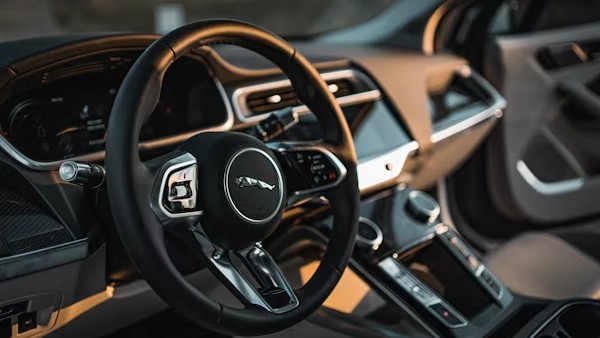
As part of its preparations to become an all-electric car brand in 2026, Jaguar recorded the sound of one of its V8 combustion engines last year so it could be archived at the British Library along with other “culturally significant” items. Perhaps it should have waited to record the gasps of people reacting to its rebranding exercise: a garish teaser video hinting at its edgy new direction triggered a social media pile-on last week, with everyone from Elon Musk to Nigel Farage weighing in on the new “woke” Jaguar.
Here are my two cents: Not only has Jaguar Land Rover Automotive Plc earned the right to take a few risks, it won't matter much if the relaunch flops.
Comprising around 15% of total sales, Jaguar is a sideshow compared to core products like the Range Rover and Defender, which are making heaps of money for Tata Motors Ltd.'s British unit, which the Indian group acquired from Ford Motor Co. in 2008. But if Jaguar keeps grabbing this much attention, perhaps it won't be in the wilderness much longer.

There's no question Jaguar has a rich heritage — the E-type (known as the XK-E in North America) ranks as one of the most beautiful cars ever made, while as a teenager this columnist lusted after the XJ220 sportscar — but those glory days are long gone. Notwithstanding a few modern hits like the F-Pace SUV and electric I-Pace, a lineup of mostly uninspiring and unreliable sedans contributed to a steep decline in demand. Jaguar sold 67,000 vehicles last year, and the brand makes hardly any money.
Still, its owner has taken a big gamble: Demand for battery powered vehicles has begun to falter and yet Jaguar will only offer vehicles with a plug from 2026.
The brand also aims to move up-market by charging close to £100,000 ($126,000) for its first model; that's very ambitious considering luxury EVs remain a small and highly competitive niche. Lucid Group Inc. is burning through billions, while sales of Porsche AG's once-popular Taycan have hit the skids; meanwhile, radical designs such as Mercedes-Benz Group AG's EQS have flopped.
JLR chief creative officer Gerry McGovern insisted last week his team had “not been sniffing the white stuff.” While I've not yet seen the new Jaguar's first model, a four-door GT which will be unveiled in Miami next week, he doesn't owe anyone an apology.
A two-decade JLR veteran, McGovern's clean, modernist designs have been central to the group's financial turnaround: Stately Range Rovers have become de rigueur for royals and Wall Street types — they were also highly prized by thieves until the manufacturer bolstered vehicle security — but the reinvention of the Defender is his standout achievement.

Launched in 2019 and targeted at wealthy urban types, the new Defender marked a radical break with the iconic 4x4's countryside roots. While it pains this perennial SUV critic to admit it, the vehicle looks fantastic and has quickly become JLR's top-selling model. This year JLR unveiled a high performance version called the Octa, which costs £145,000 (prices start at $152,000 in the US) and has already racked up almost 3,000 orders.
The Defender has played a big part in helping JLR increase average selling prices – essential for a group that has barely 400,000 in annual sales and thus lacks the economies of scale enjoyed by premium rivals like BMW AG and Mercedes selling around five times as many vehicles.

Having invested a couple of billion pounds in Jaguar's relaunch, Tata will be hoping that capital wasn't wasted. But it isn't betting the farm; Jaguar is reportedly targeting annual sales of around 50,000 with its first three electric models, or barely a quarter of the total achieved in 2019. JLR will be fine even if it fails to reach that low bar. Having been burdened by debt in recent years, the group was recently upgraded to investment grade by S&P Global Ratings and it expects to end this financial year with net cash.
Mock Jaguar all you want, but at last count its viral ad had 163 million views on X. To me, that's the sound of a winning strategy.

-
Navigating Energy Crossroads: S Jaishankar's Call For Diversified Supply Chains At G20 Ministerial Meeting

As geopolitical fault lines continue to test maritime trade routes and commodity flows, Jaishankar's message remains pertinent: true economic resilience requires open markets, protected transit lines, and a genuine commitment to multilateral cooperation rather than coercion.
-
Indians Are Travelling, But Not Every Journey Is A Holiday | The Week In Whys
Pilgrims, patients and working women are the real travellers, and the system hasn't quite caught up with them.
-
Getting To Work Costs Women More | The Reason Why
It is not just about women paying more than men. It is about women paying much more in cities than in villages.
-
AI Bias In Investing Cannot Be Eliminated, But It Can Be Governed
Framing is a particularly important example as identical financial information presented in terms of gains rather than losses can lead an LLM to reach a different assessment.
-
Joining The Dots | Dark Skies, Steady Diya: Why Hope Holds This Diwali
With war, a weak rupee and foreign outflows weighing on sentiment, policymakers at the NDTV World Summit and market veterans at NDTV Profit Ignite: Diwali Edition offered the same advice: stay invested and filter out the noise.
-
The Curious Case of Equitas Small Finance Bank And A CEO Who Quit For Stock
PN Vasudevan believes persistent investor concerns over a perceived conflict of interest had become a governance overhang on Equitas Small Finance Bank's stock, even as the lender improved profitability and asset quality.
-
Talking Points This Week: AI Cash Burn, A Tiger Comeback And An India That Still Finds Its Own Path
India is not immune to higher oil or tighter global liquidity, yet its earnings base is broader, its domestic policy levers are still available.
-
Foreign Investors Own Half Of HDFC Bank and ICICI Bank. An LTCG Cut Could Matter Most Here
Foreign portfolio investors have US$115 billion parked in HDFC Bank, ICICI Bank. If the government cuts long-term capital gains tax, Jefferies says returning foreign money could land here first.
-
'Never Seen This Level Of Negativity': Sandeep Tandon Says The Next Rally May Be Closer Than You Think
Veteran investor Sandeep Tandon says foreign selling is easing, large-caps are due a comeback and mid-caps are crowded, while he turns positive on gold, power and pharma this Diwali.
-
Indians Stay With Family, Not In Hotels | The Reason Why
India still lacks enough clean, reliable and affordable hotels for budget-conscious travellers.










