Jack Ma Steps Down As Alibaba's Chairman
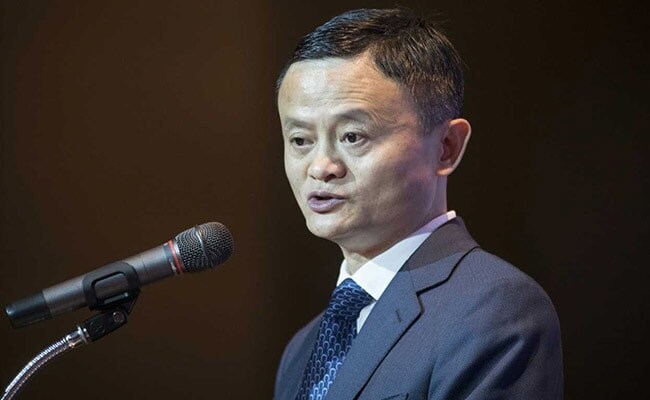
Alibaba co-founder Jack Ma is stepping down as Chairman of the multi-billion dollar e-commerce behemoth on Tuesday as the company celebrates its 20th anniversary.
Jack Ma, who turned 55 on Tuesday, announced last year that he would retire within a year, with the company CEO Daniel Zhang taking over as the Chairman of the board. Jack Ma resigned as Alibaba's CEO on May 10, 2013.
His resignation comes amid uncertainty over the intensifying US-China trade war.
As co-founder of the Internet giant, the former English teacher likes to describe his relationship with Alibaba as that of a parent to a child, according to a report in Xinhua.
"It's like weaning a child. It's good for both the mother and the child. Even if her kid cried, she would not budge, as she knew it was a wise decision and a process of growing up," he was quoted as saying.
Founded in 1999 in an underground garage, Alibaba has grown into one of the world's most profitable companies.
Jack Ma returned to Hupan Garden, the birthplace of Alibaba, on the eve of the company's 20th anniversary.
"Ma's Hangzhou apartment in 1999 is where it all began for Alibaba. On the eve of the company's 20th birthday, we took him back to reflect on those early days and what it took to build Alibaba into what it is today," the Alibaba Group tweeted while sharing a video in which Jack Ma is shown describing his journey spanning two decades.
"When I come back here, it's like a movie in my mind. This is the place we start. I'm the person always looking forward. I don't want to look at the things back. It was not easy... but we know, without these tough days, we can never be today," Jack Ma said.
"It's the dreams that keep us working hard. It's the dreams that keep us never afraid of the mistakes," he said.
Alibaba's success did not come without doubts and setbacks. In 2000, Alibaba started to recruit workers.
"We couldn't get staff as the name of the company sounded strange, and many people thought e-commerce had no future in China," Jack Ma was quoted as saying by Xinhua. Attributing the company's success to the good fortune which came from its desire to promote the progress of society and help small enterprises and employees grow, Jack Ma said he was lucky to find a competent team.
Depicting himself as a man without a professional business and technology education, Jack Ma said his experience of being a teacher played an important role in turning him into an entrepreneur.
Before starting Alibaba, Jack Ma studied at Hangzhou Normal University after twice failing the national college entrance exams and became an English teacher after graduation.
In an open letter last year where he announced his retirement plans, Jack Ma said he wants to return to education, which gives him excitement and blessings.

-
Unhedged Position: Can India See An Indonesia-Style Time Correction?

The Nifty is trading below levels it first clocked in 2024. Is there, then, as I have suggested in the headline, potential that the current time correction drags on painfully for the next three-five, even ten years?
-
Navigating Friction And Energy Realities: An Analysis Of Marco Rubio's October Visit To India
Occurring at a critical juncture marked by stalled trade negotiations and escalating geopolitical pressures over global energy supplies, the visit offers a profound window into modern US-India relations.
-
India Exports Capital. Why Not Export Trusteeship?
The big question, then, is whether India can build an institution that global borrowers, investors, banks, and lawyers can trust, even without an Indian connection.
-
France's Economy & Politics Are In Crisis | The Reason Why
Let's look at how the French economy and politics evolved under Nicolas Sarkozy, Franois Hollande and Emmanuel Macron.
-
You May Inherit The Business. You Must Earn Its Credibility.
Succession tests the founder's ability to share authority as much as it tests the next generation's readiness to assume it.
-
Signing Deals Is One Thing; Making Them Work Is Another | The Week In Whys
Sometimes, things don't turn out as planned. Indian companies have lost some bids to rivals, some projects won't produce until 2030.
-
FOMC Wall, PERM Suspension, Hospital Stocks | Talking Points This Week
A PERM suspension would directly affect green-card sponsorship rather than H-1B visas, so the near-term earnings impact could remain relatively limited. The key question is whether this marks a new phase in US scrutiny of Indian IT.
-
Everything, Everywhere, All At Once: Dalal Street's Week To Forget | Joining The Dots
Visa curbs, a Starlink spat and cancer drug caps: what connects this week's shocks for Indian markets
-
India Is Going Abroad For Critical Minerals. But It May Take Years To Pay Off | The Reason Why
Although India's steps are in the right direction, they remain modest compared with India's growing dependence.
-
When Everyone Has AI, What Gives You An Edge?
India's young workforce is entering an uncertain world of work where powerful AI tools are becoming widely accessible. The advantage will belong to those who combine deep expertise with digital fluency, and the distinctly human capabilities that technology cannot manufacture.









