Jack Ma's Alibaba Group Under Probe By China For Monopolistic Practices
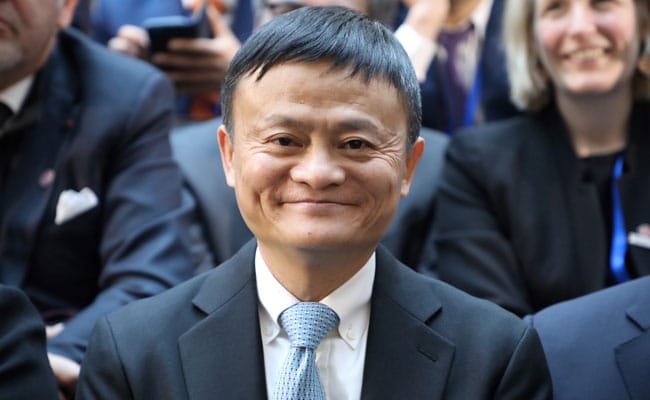
Jack Ma-led Alibaba Group is being investigated under the anti-monopoly law, a measure seen as an effort by ruling Communist Party to control fast-growing tech industries.
“China's State Administration for Market Regulation (SAMR) has started investigation on Alibaba Group for alleged monopoly conduct including implementing an ‘exclusive dealing agreement',” according to Xinhua.
The announcement shook several investors who dumped shares of Alibaba's subsidiaries and affiliates, as well as other Internet firms that are at risk of being targeted by Chinese antitrust regulators. Alibaba shares fell nearly 9 per cent in Hong Kong.
Owned by China's charismatic entrepreneur Jack Ma, a schoolteacher who became a multi-billionaire, Alibaba is arguably the world's biggest e-commerce company with hundreds of millions of users and billions of dollars in turnover. According to Bloomberg, it is Asia's “most valuable corporation”.
Its three main sites Taobao, Tmall and Alibaba.com host millions of merchants and businesses.
The SAMR probe will zero in on the monopolistic behaviour, the so-called “choosing one from two” practice and coaxing merchants to sign exclusive cooperation pacts, which then prevents them from offering products on rival platforms.
Separately, the People's Bank of China, China Securities Regulatory Commission and the China Banking Regulatory Commission will also meet affiliate Ant Group for “supervisory and guidance” talks.
Ant Group is the developer of AliPay, a popular mobile payment system in China, which has also invested in India's Paytm.
Ant Group said it would “diligently study and strictly comply with regulatory departments' requests”.
In a statement through its official Sina Weibo account, Alibaba stated it had received notification from SAMR that an investigation has been started into the company under the anti-monopoly law.
“Alibaba will actively cooperate with regulators to complete the investigation,” according to the statement, adding that the company's business operations remain unaffected.
The move is being seen as the ruling Communist Party of China's (CPC) pushback against internet giants Alibaba and Tencent, companies which are part of the daily lives of hundreds of millions of Chinese and have rapidly expanded its size and power.
The investigations were “…requirements for improving the socialist market economy system and promoting high-quality development,” the People's Daily, the communist party's mouthpiece said in an editorial.
If “monopoly is tolerated, and companies are allowed to expand in a disorderly and barbarian manner, the industry won't develop in a healthy, and sustainable way,” it said.
“This investigation does not mean that the country's attitude towards the encouragement and support of the platform economy has changed,” the editorial added.

-
Unhedged Position: Can India See An Indonesia-Style Time Correction?

The Nifty is trading below levels it first clocked in 2024. Is there, then, as I have suggested in the headline, potential that the current time correction drags on painfully for the next three-five, even ten years?
-
Navigating Friction And Energy Realities: An Analysis Of Marco Rubio's October Visit To India
Occurring at a critical juncture marked by stalled trade negotiations and escalating geopolitical pressures over global energy supplies, the visit offers a profound window into modern US-India relations.
-
India Exports Capital. Why Not Export Trusteeship?
The big question, then, is whether India can build an institution that global borrowers, investors, banks, and lawyers can trust, even without an Indian connection.
-
France's Economy & Politics Are In Crisis | The Reason Why
Let's look at how the French economy and politics evolved under Nicolas Sarkozy, Franois Hollande and Emmanuel Macron.
-
You May Inherit The Business. You Must Earn Its Credibility.
Succession tests the founder's ability to share authority as much as it tests the next generation's readiness to assume it.
-
Signing Deals Is One Thing; Making Them Work Is Another | The Week In Whys
Sometimes, things don't turn out as planned. Indian companies have lost some bids to rivals, some projects won't produce until 2030.
-
FOMC Wall, PERM Suspension, Hospital Stocks | Talking Points This Week
A PERM suspension would directly affect green-card sponsorship rather than H-1B visas, so the near-term earnings impact could remain relatively limited. The key question is whether this marks a new phase in US scrutiny of Indian IT.
-
Everything, Everywhere, All At Once: Dalal Street's Week To Forget | Joining The Dots
Visa curbs, a Starlink spat and cancer drug caps: what connects this week's shocks for Indian markets
-
India Is Going Abroad For Critical Minerals. But It May Take Years To Pay Off | The Reason Why
Although India's steps are in the right direction, they remain modest compared with India's growing dependence.
-
When Everyone Has AI, What Gives You An Edge?
India's young workforce is entering an uncertain world of work where powerful AI tools are becoming widely accessible. The advantage will belong to those who combine deep expertise with digital fluency, and the distinctly human capabilities that technology cannot manufacture.









