ITC's Hotel Business Demerger Plan Failed To Cheer Investors. Here's Why
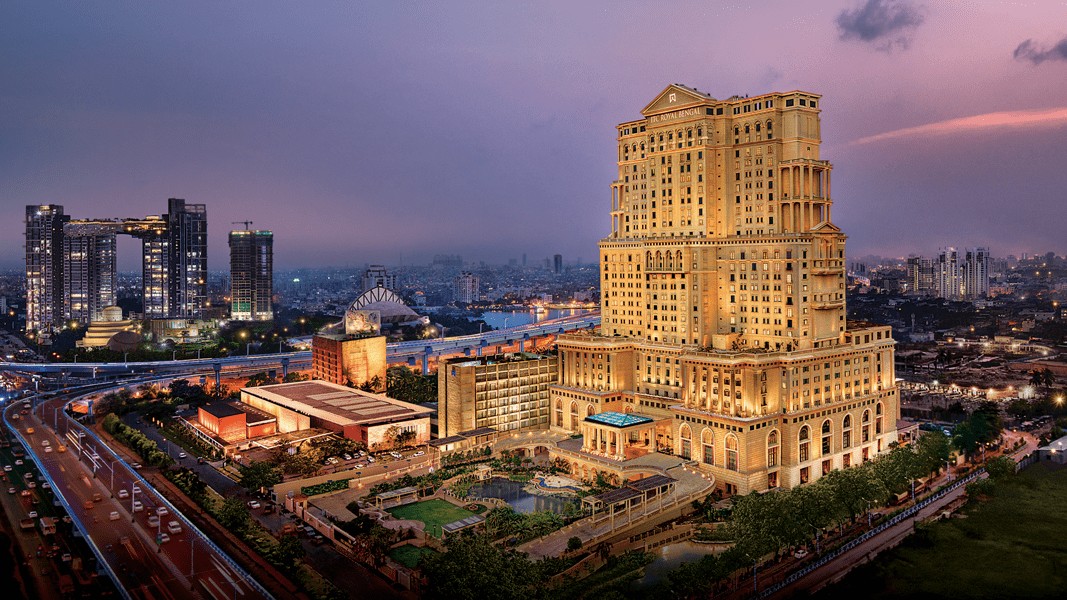
Ending months of speculation, ITC Ltd. has officially announced a demerger of its hotel business. But shares of the cigarette-to-hotel major fell sharply on Monday after hitting a 52-week high during the day following the board's in-principle approval of the demerger.
The move to carve out the hotel business into a separate unit is expected to unlock shareholder value with a direct stake in the new entity, but the move has disappointed ITC investors, with the stock crashing as much as 4%. The slide continued on Tuesday with the stock trading 3% lower at 10:40 a.m. versus an almost changed Nifty 50.
ITC has decided to retain 40% of the demerged entity, while the remaining 60% will be owned by the shareholders proportionate to their holding in the company, according to the proposed plan. The company's decision not to do a full split of the hotel business has dampened investor sentiments.
"The demerger ratio announced is not quite favourable to existing shareholders," said Apurva Sheth, head of market perspectives and research at SAMCO Securities. "Since shareholders are not getting one share for each share they are holding, they are disappointed."
Markets have been gung-ho about the demerger because the hotel business has been a drag on ITC's books. The hotel division had been a capital guzzler, accounting for over 20% of ITC's capex. However, it contributed less than 5% to ITC's revenue and EBIT over the last decade.
The demerger will remove the overhang from investor concerns about hotels being a low return-on-equity business, allowing them the option to stay only with ITC's high-return businesses.
ITC has made efforts to move towards an asset-light approach in line with the industry trend of large players moving towards management contracts. Though over half of the current room inventory is through management contracts, the company's revenue remains skewed towards its own hotels.
The country's second-largest hotel chain has an inventory of more than 11,500 rooms across over 120 hotels in more than 70 locations.
Another possible reason for the sell-off could be profit-booking.
"The market was anticipating developments on the demerger. Hence, once the cat was out of the bag, the only logical reaction was to book profits and move on to the next stock," said Sheth.
According to analysts, this is the right time for a demerger as the hospitality sector is poised to exhibit robust profitability as compared with the pre-Covid era.
On the back of key metrics such as occupancy rate, average rental revenue per occupied room, and revenue per available room, ITC's hotel segment Ebitda margin expanded to an all-time high of 32.2% in FY23.
"Given the market opening up after the Covid debacle, we factor in margin expansion of 33.5% by FY26E," said Emkay. The brokerage also factored in a 13% top-line CAGR over FY23–26E, with EBIT growth of 21%. As of FY23, ITC's hotel business contributed Rs 2,585 crore to the top line and Rs 541.9 crore to EBIT.
"The stock faces technical pressure, with a close below Rs 468 potentially bringing more challenges, while long-term support near Rs 450 levels warrants caution and observation for potential volatility," said Prashanth Tapse, senior vice president and research analyst at Mehta Equities Ltd.
The proposed hospitality-focused entity aims for growth and value creation in the Indian hospitality industry, benefiting both ITC and the new entity through institutional synergies. More clarity on the scheme of arrangement is awaited, with a board meeting slated for Aug. 14.

-
High US Salaries, No Green Card Certainty: The Financial Calculation Facing Indian H-1B Families

The suspension of PERM processing at eight technology employers does not cancel existing H-1B visas. What it does is force a question many Indian families have been avoiding: is the US salary worth tying your career and family plans to one employer?
-
Swiggy vs Eternal: Food Delivery's Two Rivals Are No Longer In The Same Race
Eternal is building a private AI assistant, dark.ai. Swiggy is still working out how to make Instamart pay, with an operating loss of Rs 895 crore in the July-September quarter while Blinkit stayed profitable.
-
Where You Live Shapes How You Get To Work | The Reason Why
Two-wheelers are the most popular way to get to work in India, accounting for nearly 43% of workplace commutes.
-
Unhedged Position: Can India See An Indonesia-Style Time Correction?
The Nifty is trading below levels it first clocked in 2024. Is there, then, as I have suggested in the headline, potential that the current time correction drags on painfully for the next three-five, even ten years?
-
Navigating Friction And Energy Realities: An Analysis Of Marco Rubio's October Visit To India
Occurring at a critical juncture marked by stalled trade negotiations and escalating geopolitical pressures over global energy supplies, the visit offers a profound window into modern US-India relations.
-
India Exports Capital. Why Not Export Trusteeship?
The big question, then, is whether India can build an institution that global borrowers, investors, banks, and lawyers can trust, even without an Indian connection.
-
France's Economy & Politics Are In Crisis | The Reason Why
Let's look at how the French economy and politics evolved under Nicolas Sarkozy, Franois Hollande and Emmanuel Macron.
-
You May Inherit The Business. You Must Earn Its Credibility.
Succession tests the founder's ability to share authority as much as it tests the next generation's readiness to assume it.
-
Signing Deals Is One Thing; Making Them Work Is Another | The Week In Whys
Sometimes, things don't turn out as planned. Indian companies have lost some bids to rivals, some projects won't produce until 2030.
-
FOMC Wall, PERM Suspension, Hospital Stocks | Talking Points This Week
A PERM suspension would directly affect green-card sponsorship rather than H-1B visas, so the near-term earnings impact could remain relatively limited. The key question is whether this marks a new phase in US scrutiny of Indian IT.









