It's Time SEBI Brought These Five PSU Banks Under Additional Surveillance
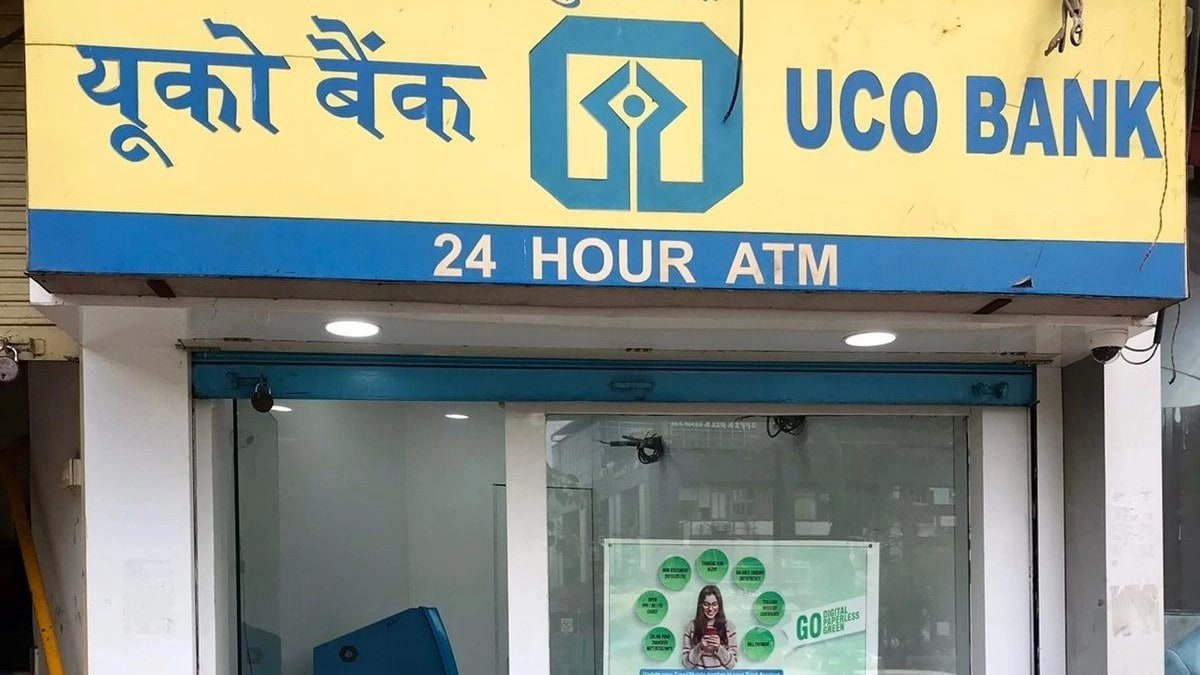
Shares of public sector banks have rallied and many have doubled in the last 12 months. But will a private sector publicly listed company enjoy the same leeway as the PSU banks while flouting minimum public shareholding norms?
It is true the regulator cannot do much about the minimum public float regulations, which are meant for all companies except public sector units. But what the regulator can do is curb volatility and stock price spikes driven by small trading volumes or block trades in at least five PSU stocks that are violating the minimum public shareholding: UCO Bank, Punjab & Sind Bank, Indian Overseas Bank, Central Bank of India and Union Bank of India.
While no one is raising any issue about the fundamentals of these five PSUs, low liquidity and volatile price movements is worrisome as small investors get lured by such sharp price surges.
For many new investors who may be unaware, these five stocks suffer from the 'Wipro effect' of the early 2000s. At that time due to low liquidity and shares largely held by the Azim Premji, the Wipro stock used to spike on low volume trade. Eventually, as the minimum public float guidelines came into effect, the liquidity improved attracting genuine institutional interest in the IT services provider.
Private companies not meeting SEBI's public float rule would have led to exchanges informing the depositories to freeze the shareholding of the promoters and eventual delisting. But these are government-owned banks and are governed by different regulations.
Securities and Exchange Board of India and stock exchanges have introduced pre-emptive surveillance measures to enhance market integrity and safeguard investor interest. These measures include reduction in price band, periodic call auction and transfer of securities to delivery-only 'trade for trade' segment from time to time.
But the regulator is looking the other way when it comes to these PSU banks.
UCO Bank share price more than doubled in the last 12 months and it rose over 14% on Monday. The volumes traded on NSE were 51% of the net free float of the company. While the delivery was just 20%.
Punjab & Sind Bank has risen over 145% in the last 12 months. It jumped rose over 7% on Monday with volumes on the NSE comprising of 68% of the net float of the stock. The delivery was 19.4%.
Such trading can be seen in IOB, Central Bank as well and to some extent in Union Bank.
While the regulator and stock exchanges are helpless in imposing curbs on the promoter holdings of these banks, they can surely bring price bands to check volatility and protect small investors.
Why should illiquid shares enjoy a 20% circuit in this market?

-
Unhedged Position: Can India See An Indonesia-Style Time Correction?

The Nifty is trading below levels it first clocked in 2024. Is there, then, as I have suggested in the headline, potential that the current time correction drags on painfully for the next three-five, even ten years?
-
Navigating Friction And Energy Realities: An Analysis Of Marco Rubio's October Visit To India
Occurring at a critical juncture marked by stalled trade negotiations and escalating geopolitical pressures over global energy supplies, the visit offers a profound window into modern US-India relations.
-
India Exports Capital. Why Not Export Trusteeship?
The big question, then, is whether India can build an institution that global borrowers, investors, banks, and lawyers can trust, even without an Indian connection.
-
France's Economy & Politics Are In Crisis | The Reason Why
Let's look at how the French economy and politics evolved under Nicolas Sarkozy, Franois Hollande and Emmanuel Macron.
-
You May Inherit The Business. You Must Earn Its Credibility.
Succession tests the founder's ability to share authority as much as it tests the next generation's readiness to assume it.
-
Signing Deals Is One Thing; Making Them Work Is Another | The Week In Whys
Sometimes, things don't turn out as planned. Indian companies have lost some bids to rivals, some projects won't produce until 2030.
-
FOMC Wall, PERM Suspension, Hospital Stocks | Talking Points This Week
A PERM suspension would directly affect green-card sponsorship rather than H-1B visas, so the near-term earnings impact could remain relatively limited. The key question is whether this marks a new phase in US scrutiny of Indian IT.
-
Everything, Everywhere, All At Once: Dalal Street's Week To Forget | Joining The Dots
Visa curbs, a Starlink spat and cancer drug caps: what connects this week's shocks for Indian markets
-
India Is Going Abroad For Critical Minerals. But It May Take Years To Pay Off | The Reason Why
Although India's steps are in the right direction, they remain modest compared with India's growing dependence.
-
When Everyone Has AI, What Gives You An Edge?
India's young workforce is entering an uncertain world of work where powerful AI tools are becoming widely accessible. The advantage will belong to those who combine deep expertise with digital fluency, and the distinctly human capabilities that technology cannot manufacture.









