IMF Warns Of 'Economic Collapse', Urges Advanced G20 Countries To Extend Debt Relief
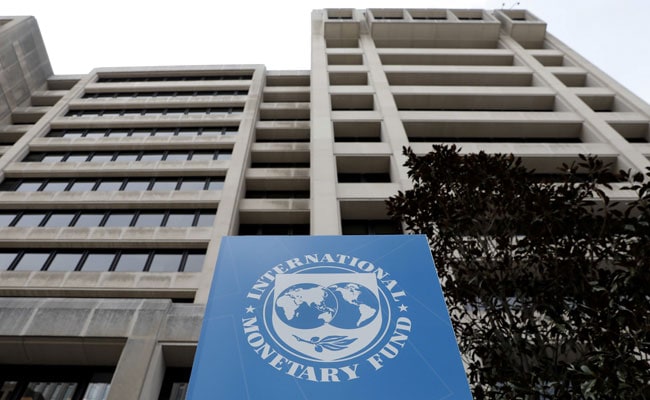
The IMF on Thursday urged advanced economies in the G20 to extend and improve their debt relief initiative, warning that many countries face a dire crisis without the help.
"We may see economic collapse in some countries unless G20 creditors agree to accelerate debt restructurings and suspend debt service while the restructurings are being negotiated," IMF chief Kristalina Georgieva said in a blog, adding that it is critical private creditors also offer relief.
The G20 Debt Service Suspension Initiative (DSSI) expires at the end of the year, and without a renewal, countries would face financial pressure and spending cuts just as new Covid-19 variants are spreading and interest rates are expected to rise, she said.
"Debt challenges are pressing and the need for action is urgent. The recent Omicron variant is a stark reminder that the pandemic will be with us for a while," Georgieva said in the blog co-authored by Ceyla Pazarbasioglu, director of the fund's Strategy, Policy, and Review Department.
Georgieva did not specify which economies faced a crisis, but referred simply to "low-income countries."
Advanced economies in the Group of 20 announced the program last year amid the Covid-19 pandemic, which hit poor countries the hardest, hampering the ability of those governments to service their debt and support their people.
The G20 twice extended the DSSI, but the IMF and World Bank have been urging creditors to do more to help with the burgeoning debt load. There are 73 countries eligible for relief under the program.
Debt distress
The World Bank estimates that debt loads in poor countries surged 12 percent to a record $860 billion in 2020 amid the pandemic, and Georgieva said "about 60 percent of low-income countries are at high risk or already in debt distress."
Given the problems with the debt relief program and the common framework for dealing with private creditors, only three countries so far have applied for relief -- Chad, Ethiopia and Zambia -- and they have faced "significant delays."
The framework has "yet to deliver on its promise. This requires prompt action," she said. She noted that Chad's program is hung up due to the need to restructure a large amount owed to a private company.
And with inflation surging in major economies, central banks are pulling back on stimulus and expected to begin raising interest rates next year, which would increase debt service costs for poor nations and likely would see capital flee those countries.
"No doubt 2022 will be much more challenging with the tightening of international financial conditions on the horizon," Georgieva said.
The IMF is calling for improvements in the program, especially mechanisms to oblige private creditors to participate, which would encourage more poor countries to make use of the DSSI.
In addition, "a comprehensive and sustained debt service payment standstill for the duration of the negotiation would provide relief to the debtor at a time when it is under stress," she said.

-
Where You Live Shapes How You Get To Work | The Reason Why

Two-wheelers are the most popular way to get to work in India, accounting for nearly 43% of workplace commutes.
-
High US Salaries, No Green Card Certainty: The Financial Calculation Facing Indian H-1B Families
The suspension of PERM processing at eight technology employers does not cancel existing H-1B visas. What it does is force a question many Indian families have been avoiding: is the US salary worth tying your career and family plans to one employer?
-
Unhedged Position: Can India See An Indonesia-Style Time Correction?
The Nifty is trading below levels it first clocked in 2024. Is there, then, as I have suggested in the headline, potential that the current time correction drags on painfully for the next three-five, even ten years?
-
Navigating Friction And Energy Realities: An Analysis Of Marco Rubio's October Visit To India
Occurring at a critical juncture marked by stalled trade negotiations and escalating geopolitical pressures over global energy supplies, the visit offers a profound window into modern US-India relations.
-
India Exports Capital. Why Not Export Trusteeship?
The big question, then, is whether India can build an institution that global borrowers, investors, banks, and lawyers can trust, even without an Indian connection.
-
France's Economy & Politics Are In Crisis | The Reason Why
Let's look at how the French economy and politics evolved under Nicolas Sarkozy, Franois Hollande and Emmanuel Macron.
-
You May Inherit The Business. You Must Earn Its Credibility.
Succession tests the founder's ability to share authority as much as it tests the next generation's readiness to assume it.
-
Signing Deals Is One Thing; Making Them Work Is Another | The Week In Whys
Sometimes, things don't turn out as planned. Indian companies have lost some bids to rivals, some projects won't produce until 2030.
-
FOMC Wall, PERM Suspension, Hospital Stocks | Talking Points This Week
A PERM suspension would directly affect green-card sponsorship rather than H-1B visas, so the near-term earnings impact could remain relatively limited. The key question is whether this marks a new phase in US scrutiny of Indian IT.
-
Everything, Everywhere, All At Once: Dalal Street's Week To Forget | Joining The Dots
Visa curbs, a Starlink spat and cancer drug caps: what connects this week's shocks for Indian markets









