Intel CEO’s Bid To Revive Company Overshadowed By Bleak Outlook
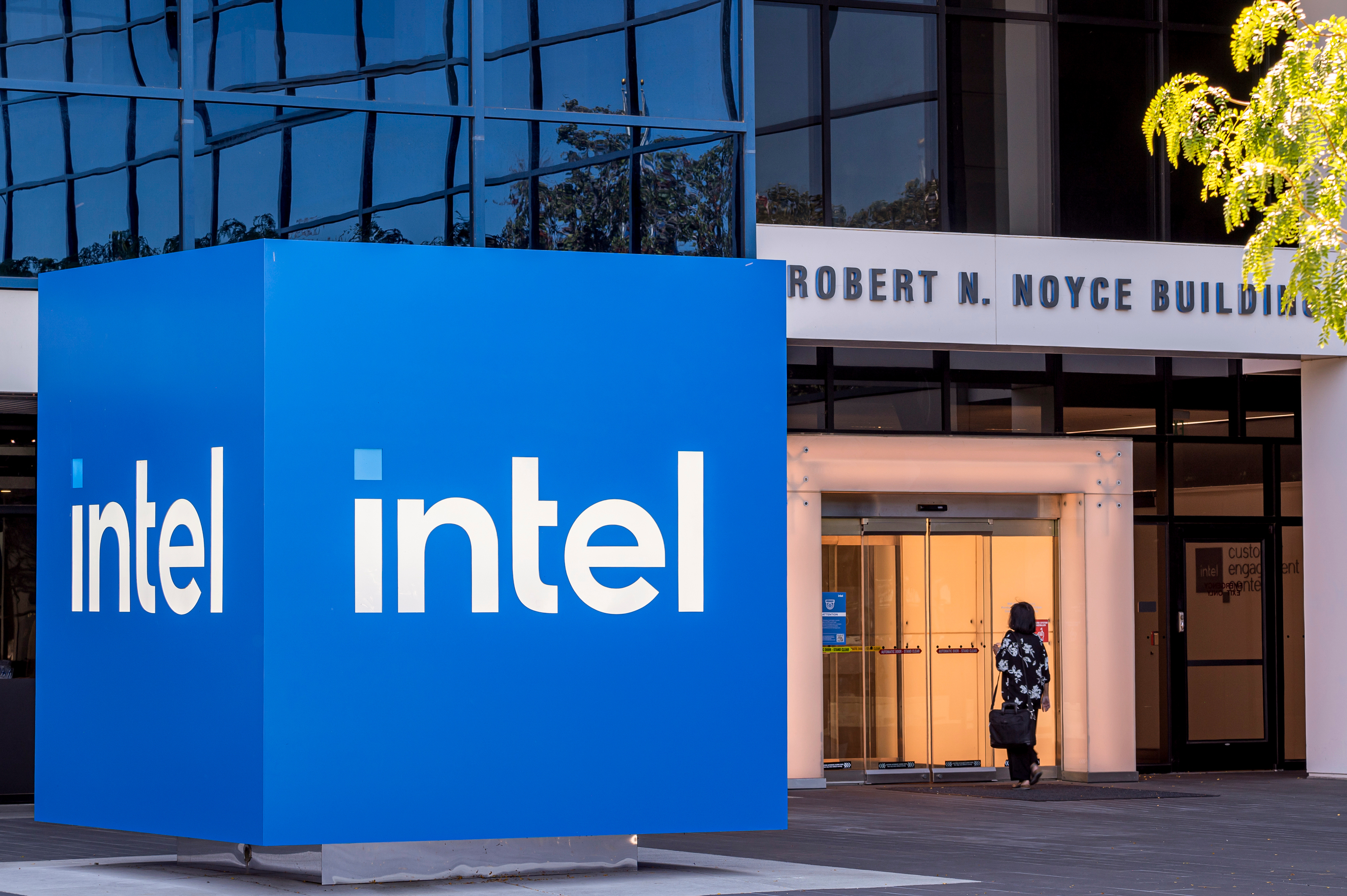
Intel Corp. Chief Executive Officer Lip-Bu Tan gave investors a stark diagnosis of the chipmaker's problems on Thursday, along with the sense that it will take a while to fix them.
Tan, delivering his first earnings report as CEO, said Intel's bureaucratic corporate culture needs a shake-up, so he's going to cut jobs, remove layers of management and force everyone back to the office. His prescriptions for other areas of malaise — such as Intel's struggling foundry business, which makes chips for outside customers — were more vague.
What's most clear is Intel's short-term woes are even worse than feared. The company gave a revenue forecast for the current quarter that was well below what analysts projected. And Intel's chief financial officer warned that a tariff-fueled recession could torpedo chip demand. The grim outlook sent Intel shares sliding more than 5% in late trading.
“Even with costs cuts and strategic moves, Intel still faces several external challenges, namely increasing competition, lack of competitive products within AI markets, and no meaningful customers for its foundry business,” Edward Jones analyst Logan Purk said in a note. “This was a disappointing quarter for Intel and continues its string of weaker earnings results.”
The company doesn't yet have an estimate for the one-time expenses associated with the job cuts, but expects operating costs to be reduced to about $17 billion this year and $16 billion in 2026. Bloomberg News reported this week that Intel is planning to slash its employee ranks by more than 20%.

Tan, a 65-year-old chip industry veteran, took the CEO job last month. The board hired him after predecessor Pat Gelsinger struggled to restore the competitiveness of Intel's products. Gelsinger was ousted late last year after sliding sales and mounting red ink doomed his comeback bid.
A bright spot for Intel: First-quarter sales came in at $12.7 billion, topping predictions. The chipmaker follows Texas Instruments Inc. in delivering stronger results for that period than analysts had projected. But Intel's weak forecast suggests that the the uptick in demand was just a blip — driven at least in part by a rush of orders ahead of looming tariffs being threatened by the US, China and others.
“The current macro environment is creating elevated uncertainty across the industry, which is reflected in our outlook,” Intel Chief Financial Officer David Zinsner said in the earnings report. Zinsner said he doesn't currently have an estimate for the size of the workforce reduction.
In a separate memo to employees, Tan said he wanted to change the company's culture. That includes requiring staff to work in-person four days a week starting Sept. 1.
“Our existing policy is that our hybrid employees should spend approximately three days per week on site,” Tan said. “Adherence to this policy has been uneven at best. I strongly believe that our sites need to be vibrant hubs of collaboration that reflect our culture in action.”
He said the layoffs would begin in the current quarter. “We must balance our reductions with the need to retain and recruit key talent,” Tan said in the memo. “These decisions will not be made lightly.”
Thursday's earnings conference call was the first time Tan has faced questions from Wall Street on how he plans to resurrect the company's fortunes, something he's said “won't happen overnight.”
Gelsinger had concentrated on Intel's factory network, once its most powerful asset. He laid out plans to spend tens of billions of dollars on giving the company the world's best production technology again, and luring rivals into using it as outsourced provider of manufacturing.
Intel investors have speculated in recent months that the company might be broken up, with its product-design arm separated from the manufacturing division. When asked how much time a turnaround would take or whether such a split might occur, the CEO didn't give concrete plans. He preferred to offer more insight into what's currently not working. Still, cost cutting is a clear priority. Spending on new plants and equipment this year will be further slashed by $2 billion to help shore up finances.
Intel's plants need to be able to balance the twin goals of providing leading technology for its internal product divisions and wining the trust of external customers, he said. But for the company's product lines, particularly AI-related offerings, “clearly there's no quick fix,” he said.
Tan was brought in to help correct a massive misstep. Intel has so far missed out on one of the biggest bonanzas in the semiconductor industry's history: the explosion of artificial intelligence computing. Nvidia Corp.'s dominance in that area has allowed it to far surpass Intel in revenue and market valuation.
Second-quarter revenue will be between $11.2 billion and $12.4 billion, the company said. That compared with a $12.9 billion average analyst estimate.
In the first quarter, Intel had a loss of 19 cents a share. Analysts estimated a loss of 22 cents a share on sales of $12.31 billion. Last year, Intel's annual revenue was down about $26 billion from its peak in 2021. It's now less than half the size of Nvidia by that measure, and analysts aren't predicting a rapid rebound anytime soon.
Intel's CFO said the company shares Wall Street's concern that a good start to the year might not reflect underlying demand and may have been helped by stocking up ahead of tariffs.
“That probably pulled some demand we would have seen beyond the first quarter into the first quarter and softened up the second quarter,” he said.
Intel shares, after several years of being shunned by investors, have performed relatively well in 2025, eking out a 7.2% gain. The Philadelphia Stock Exchange Semiconductor Index, in contrast, has fallen almost 16%.
Looking ahead, the company is concerned that consumer spending and investment in areas such as data center infrastructure may decline. Uncertainty about tariffs is making the environment harder to predict and prompted Intel to offer a wider range of sales forecasts.

Intel's adjusted gross margin — the percentage of sales remaining after excluding the cost of production — was 39.2% in the first quarter and will be 36.5% in the current period. At its peak, Intel regularly reported gross margin of well above 60%. Nvidia's is above 70%.
The new round of job cuts, following a roughly 15,000 reduction last year, may bring it more in line with that new scale — and what competitors are achieving with fewer workers. Nvidia has about a third of Intel's staff, and manufacturing leader Taiwan Semiconductor Manufacturing Co. gets double Intel's revenue with about 30,000 fewer people on its payroll.

-
Midterm Rally Lasted A Day. The Hard Reality Of A Divided US May Last Two Years | Opinion

Between a contested AI boom, a debt ceiling that arrives in 2027 and a president with every incentive to act alone, the next two years may prove more volatile than the first day's rally suggests.
-
Blue Wave Will Derail the AI Trade but Won't Dismantle the AI Era | Unhedged Position
The Democrats' sweep of the US Congress will see politics collide with economic forces both over the long and short term.
-
It's Time To Take The GST Council's Bet On Trust Global
Payment records can prove India's services exports, and clear, proportionate rules can bring foreign digital sellers into the tax net.
-
Opinion | India at 38: From Innovation Overperformer to Innovation Powerhouse
India now has 453 VC-backed deep science startups, 18 of them late-stage, after 117 percent growth since 2020. Laurus Labs, at USD 9.3 billion, is the most valuable deep science company in any middle-income economy outside China.
-
Navigating Energy Crossroads: S Jaishankar's Call For Diversified Supply Chains At G20 Ministerial Meeting
As geopolitical fault lines continue to test maritime trade routes and commodity flows, Jaishankar's message remains pertinent: true economic resilience requires open markets, protected transit lines, and a genuine commitment to multilateral cooperation rather than coercion.
-
Indians Are Travelling, But Not Every Journey Is A Holiday | The Week In Whys
Pilgrims, patients and working women are the real travellers, and the system hasn't quite caught up with them.
-
Getting To Work Costs Women More | The Reason Why
It is not just about women paying more than men. It is about women paying much more in cities than in villages.
-
AI Bias In Investing Cannot Be Eliminated, But It Can Be Governed
Framing is a particularly important example as identical financial information presented in terms of gains rather than losses can lead an LLM to reach a different assessment.
-
Joining The Dots | Dark Skies, Steady Diya: Why Hope Holds This Diwali
With war, a weak rupee and foreign outflows weighing on sentiment, policymakers at the NDTV World Summit and market veterans at NDTV Profit Ignite: Diwali Edition offered the same advice: stay invested and filter out the noise.









