Insolvency And Bankruptcy Code May Help Unlock Rs 25,000 Crore Bad Loans: Report
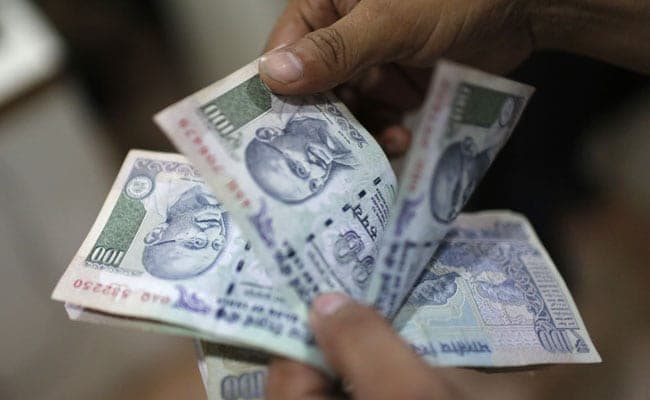
New Delhi: Effective implementation of Insolvency and Bankruptcy Code can potentially release about Rs 25,000 crore of capital over the next 4-5 years currently locked in bad loans, according to a report.
"If implemented successfully, the code will help India's banking sector catch up with or even exceed the recovery rates of 32 per cent and average time taken of 2.8 years in other emerging markets," said an Assocham-Crisil joint study.
It said the capital released can be deployed for other productive lending which could help in credit expansion. Insolvency and Bankruptcy Code, 2016 seeks to consolidate and amend laws relating to reorganisation as well as insolvency resolution of corporate persons, partnership firms and individuals in a time-bound manner.
Economic Affairs Secretary Shaktikanta Das last month had expressed hope that the Bankruptcy and Insolvency law would become operational by the end of this year.
Under the new law, notified in May, employees, creditors and shareholders would have powers to initiate winding up a process at the first sign of financial stress such as serious default in repayment of bank loan.
Highlighting that the code will contain slippages into non-performing assets (NPAs) by spawning better credit discipline, the study noted that the Reserve Bank of India (RBI) has tightened norms for wilful defaulters, which, together with implementation of the code, will enhance recoveries from such borrowers and improve credit discipline.
The study also said that this legislation could improve recovery rate of asset reconstruction companies (ARCs) which has been low at an average of 36 per cent, with resolution taking about five years.
"With greater certainty of outcome and faster resolutions expected because of the code, the interest of both domestic and foreign investors in lower-rated paper will increase over a period of time", the study said.
It also said the code will help in protecting the creditors' interest when entrepreneurs or start-ups become insolvent and wind up their business, as the capital can be reallocated to efficient businesses. Besides, it will help entrepreneurs in initiating insolvency proceedings voluntarily.
However, the study highlighted various challenges like the current bad loan problems, time in development of an insolvency ecosystem, more burden on debt recovery tribunals, inter-creditor conflicts and limited market for secondary/used industrial assets like plant and machinery.

-
High US Salaries, No Green Card Certainty: The Financial Calculation Facing Indian H-1B Families

The suspension of PERM processing at eight technology employers does not cancel existing H-1B visas. What it does is force a question many Indian families have been avoiding: is the US salary worth tying your career and family plans to one employer?
-
Unhedged Position: Can India See An Indonesia-Style Time Correction?
The Nifty is trading below levels it first clocked in 2024. Is there, then, as I have suggested in the headline, potential that the current time correction drags on painfully for the next three-five, even ten years?
-
Navigating Friction And Energy Realities: An Analysis Of Marco Rubio's October Visit To India
Occurring at a critical juncture marked by stalled trade negotiations and escalating geopolitical pressures over global energy supplies, the visit offers a profound window into modern US-India relations.
-
India Exports Capital. Why Not Export Trusteeship?
The big question, then, is whether India can build an institution that global borrowers, investors, banks, and lawyers can trust, even without an Indian connection.
-
France's Economy & Politics Are In Crisis | The Reason Why
Let's look at how the French economy and politics evolved under Nicolas Sarkozy, Franois Hollande and Emmanuel Macron.
-
You May Inherit The Business. You Must Earn Its Credibility.
Succession tests the founder's ability to share authority as much as it tests the next generation's readiness to assume it.
-
Signing Deals Is One Thing; Making Them Work Is Another | The Week In Whys
Sometimes, things don't turn out as planned. Indian companies have lost some bids to rivals, some projects won't produce until 2030.
-
FOMC Wall, PERM Suspension, Hospital Stocks | Talking Points This Week
A PERM suspension would directly affect green-card sponsorship rather than H-1B visas, so the near-term earnings impact could remain relatively limited. The key question is whether this marks a new phase in US scrutiny of Indian IT.
-
Everything, Everywhere, All At Once: Dalal Street's Week To Forget | Joining The Dots
Visa curbs, a Starlink spat and cancer drug caps: what connects this week's shocks for Indian markets
-
India Is Going Abroad For Critical Minerals. But It May Take Years To Pay Off | The Reason Why
Although India's steps are in the right direction, they remain modest compared with India's growing dependence.









