Infosys CEO Salil Parekh To Get Up To Rs 18.6 Crore In Salary And Variable Pay
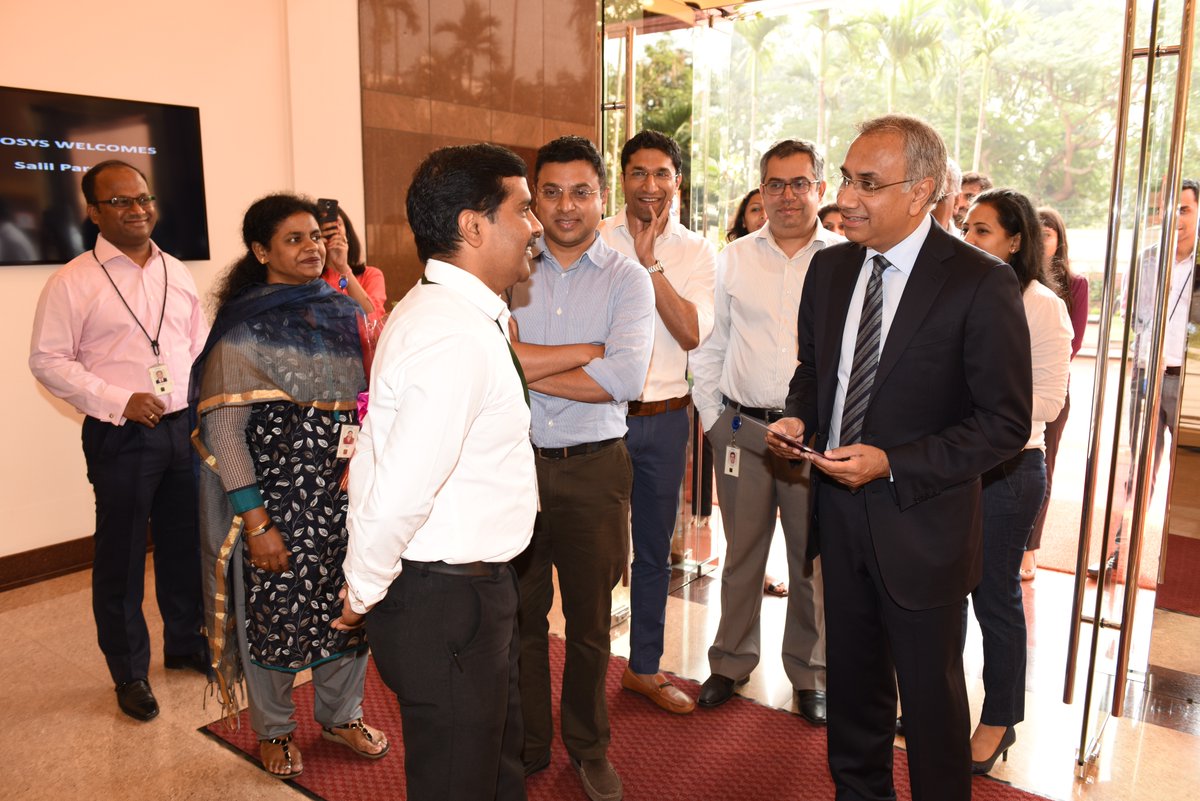
Salil Parekh, the newly appointed chief executive of Infosys Ltd., will draw an annual salary of up to Rs 18.6 crore, including the variable component.
For the first three months of 2018, Parekh will be paid an “initial variable pay” of Rs 2.37 crore, apart from fixed salary and other benefits, as per Infosys' postal ballot. Infosys has sought shareholder approval for Parekh's appointment, who assumed office on January 2 for a period of five years.
The ballot, which will be put to vote between Jan. 22 and Feb. 20, also seeks nod for the re-designation of UB Pravin Rao as chief operating officer and whole-time director. The results will be announced on or before Feb. 24.
As per the proposal, Parekh will get an annual fixed pay of Rs 6.5 crore. He will be eligible for maximum 125 percent of the annual variable pay of Rs 9.75 crore (which comes to up to Rs 12.18 crore), subject to achievement of certain milestones.
In addition, the ex-Capgemini executive will also receive Rs 3.25 crore in restricted stock units, Rs 13 crore in annual performance equity grants and a one-time equity grant of Rs 9.75 crore. The stock compensation will vest at various intervals during Parekh's term.
Vishal Sikka – the former chief who had stepped down in August last year after a protracted row with Infosys co-founders – had drawn a total compensation of Rs 45.11 crore in 2016-17. High salary hikes for the leadership team and huge severance packages being doled out to former employees were among key issued raised by the Infosys founders last year.
After the resignation of Sikka and Board members including chairman R Seshasayee, Infosys brought in co-founder Nandan Nilekani to steer the company. In December, it named Parekh as its new CEO and MD.
Parekh's contract also outlines the amount he will be paid in case the minimum performance targets are not met. "Should Mr Parekh fail to achieve minimum performance targets, his remuneration as proposed will fall to, Rs 6.5 crore annually of fixed salary and Rs 3.25 crore of annual equity grant," the postal ballot said.
Parekh's employment contract also stated that he will not be allowed to work with named competitors for six months from the day he leaves the company.
How That Compares To Peers?
- Wipro CEO Abidali Neemuchwala's pay package stood at $2.09 million, or around Rs 13.2 crore during fiscal 2017.
- Tata Consultancy Services CEO Rajesh Gopinathan took home Rs 6.22 crore during the same year.
Also Read: New Infosys CEO Salil Parekh Takes Charge

-
Why Amazon And Flipkart Are Struggling To Beat Meesho In India's Smaller Cities

With 274 million users and lowest-cost logistics, Meesho is defending its value commerce crown against giants like Amazon and Flipkart.
-
High US Salaries, No Green Card Certainty: The Financial Calculation Facing Indian H-1B Families
The suspension of PERM processing at eight technology employers does not cancel existing H-1B visas. What it does is force a question many Indian families have been avoiding: is the US salary worth tying your career and family plans to one employer?
-
Swiggy vs Eternal: Food Delivery's Two Rivals Are No Longer In The Same Race
Eternal is building a private AI assistant, dark.ai. Swiggy is still working out how to make Instamart pay, with an operating loss of Rs 895 crore in the July-September quarter while Blinkit stayed profitable.
-
Where You Live Shapes How You Get To Work | The Reason Why
Two-wheelers are the most popular way to get to work in India, accounting for nearly 43% of workplace commutes.
-
Unhedged Position: Can India See An Indonesia-Style Time Correction?
The Nifty is trading below levels it first clocked in 2024. Is there, then, as I have suggested in the headline, potential that the current time correction drags on painfully for the next three-five, even ten years?
-
Navigating Friction And Energy Realities: An Analysis Of Marco Rubio's October Visit To India
Occurring at a critical juncture marked by stalled trade negotiations and escalating geopolitical pressures over global energy supplies, the visit offers a profound window into modern US-India relations.
-
India Exports Capital. Why Not Export Trusteeship?
The big question, then, is whether India can build an institution that global borrowers, investors, banks, and lawyers can trust, even without an Indian connection.
-
France's Economy & Politics Are In Crisis | The Reason Why
Let's look at how the French economy and politics evolved under Nicolas Sarkozy, Franois Hollande and Emmanuel Macron.
-
You May Inherit The Business. You Must Earn Its Credibility.
Succession tests the founder's ability to share authority as much as it tests the next generation's readiness to assume it.
-
Signing Deals Is One Thing; Making Them Work Is Another | The Week In Whys
Sometimes, things don't turn out as planned. Indian companies have lost some bids to rivals, some projects won't produce until 2030.










