India's War On Cash Needed A Very Different Approach: Foreign Media
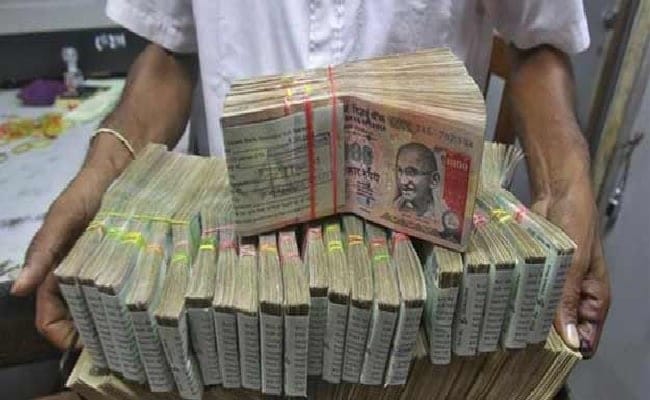
As India continues its scorched-earth campaign against cash, the question baffling many analysts is why a country so unfamiliar with digital payments would outlaw 86 percent of its currency, the most-favored method of settling transactions.
Sample the following three factoids from a study led by Tufts University researchers:
Fewer than 10 percent of Indians have ever used any kind of non-cash payment instrument. Less than 3 percent of the value transacted in the year ending March 2014 used cards. Fewer than 2 percent of Indians had used a mobile phone to receive a payment, compared with over 60 percent of Kenyans.
Beyond showing the enormity of the challenge facing Prime Minister Narendra Modi, these statistics are of little relevance now. What's done is done. With PM Modi asking people to embrace electronic payments as a way of life, investors want to know what shape these digital networks will take, and who'll own them: banks, or non-banks such as telcos and e-wallet apps? Either party's dominance will be wholly artificial.
Indians who have used a mobile phone to receive a payment
Less than 2%
The Tufts researchers see it differently. India, they say, has erred in choosing a bank-led model over a telecoms-led one. "Consumers have been left unaware of how they might use mobile phones for services other than communications, texting, or Facebook."
It's true that India doesn't have anything like China's Tenpay, controlled by Tencent Holdings Ltd., which runs the WeChat social network, or its larger rival Alipay, owned by Alibaba Group Holding Ltd.'s banking and payments affiliate, Ant Financial. Paytm, the most popular Indian wallet, is tiny versus Ant, which services 450 million customers in China and was valued by CLSA at $75 billion in September.
Although the Indian startup has witnessed explosive growth since the government's Nov. 8 currency ban, tapping opportunities isn't proving to be easy. Paytm launched an in-store payment app last month, only to withdraw it amid security concerns.
Paypal-style wallets, which customers fill from their bank accounts, won't pose too serious a challenge to traditional lenders. But Paytm, as well as mobile operators Bharti Airtel Ltd. and Reliance Industries Ltd., are close to establishing so-called payment banks that can accept customer deposits so long as they only invest in government bonds and don't make loans.
These newer payment systems could have an edge over ATMs and cards from commercial lenders. The latter are simply too smug. Even basic maintenance of infrastructure -- like switching ATMs out of Windows XP, which is no longer supported by Microsoft Corp. -- is a cost that full-service banks in India avoid incurring, blithely ignoring the security risks.
But with both banks and telcos suffering from a deficit of trust and access, neither should be the No. 1 choice for replacing cash. The only institution whose balance sheet people actually want is the one they've always used to settle transactions: the Reserve Bank of India.
That's not such a bad thing. The government could still meet its goal of a "less-cash" society if physical money were to be gradually replaced by a national digital currency, whose lawful use would be certified by a network of distributed ledgers. It would be an official bitcoin, or BharatCoin, as some commentators have called it.
The central bank's balance sheet is already available to the butcher, the baker and the candlestick maker, but only via cash. RBI has no idea who owns its currency. With BharatCoin, it would know the identity of owners, though transactions would be scrambled for privacy. As Gadfly's Tim Culpan and Christopher Langner have noted, the goal of a national digital currency is to take "the banking out of cash."
Even at the Bank of England, the idea is still just a research project. If PM Modi had embraced it, the pain of demonetization would have become unnecessary. Given people's preferences, it's still not too late to consider.
This column does not necessarily reflect the opinion of Bloomberg LP and its owners.
To contact the author of this story: Andy Mukherjee in Singapore at amukherjee@bloomberg.net To contact the editor responsible for this story: Katrina Nicholas at knicholas2@bloomberg.net
© 2016 Bloomberg L.P
(Except for the headline, this story has not been edited by NDTV staff and is published from a syndicated feed.)

-
High US Salaries, No Green Card Certainty: The Financial Calculation Facing Indian H-1B Families

The suspension of PERM processing at eight technology employers does not cancel existing H-1B visas. What it does is force a question many Indian families have been avoiding: is the US salary worth tying your career and family plans to one employer?
-
Unhedged Position: Can India See An Indonesia-Style Time Correction?
The Nifty is trading below levels it first clocked in 2024. Is there, then, as I have suggested in the headline, potential that the current time correction drags on painfully for the next three-five, even ten years?
-
Navigating Friction And Energy Realities: An Analysis Of Marco Rubio's October Visit To India
Occurring at a critical juncture marked by stalled trade negotiations and escalating geopolitical pressures over global energy supplies, the visit offers a profound window into modern US-India relations.
-
India Exports Capital. Why Not Export Trusteeship?
The big question, then, is whether India can build an institution that global borrowers, investors, banks, and lawyers can trust, even without an Indian connection.
-
France's Economy & Politics Are In Crisis | The Reason Why
Let's look at how the French economy and politics evolved under Nicolas Sarkozy, Franois Hollande and Emmanuel Macron.
-
You May Inherit The Business. You Must Earn Its Credibility.
Succession tests the founder's ability to share authority as much as it tests the next generation's readiness to assume it.
-
Signing Deals Is One Thing; Making Them Work Is Another | The Week In Whys
Sometimes, things don't turn out as planned. Indian companies have lost some bids to rivals, some projects won't produce until 2030.
-
FOMC Wall, PERM Suspension, Hospital Stocks | Talking Points This Week
A PERM suspension would directly affect green-card sponsorship rather than H-1B visas, so the near-term earnings impact could remain relatively limited. The key question is whether this marks a new phase in US scrutiny of Indian IT.
-
Everything, Everywhere, All At Once: Dalal Street's Week To Forget | Joining The Dots
Visa curbs, a Starlink spat and cancer drug caps: what connects this week's shocks for Indian markets
-
India Is Going Abroad For Critical Minerals. But It May Take Years To Pay Off | The Reason Why
Although India's steps are in the right direction, they remain modest compared with India's growing dependence.









