India's Top Economic Advisor Flunked the IAS Exam
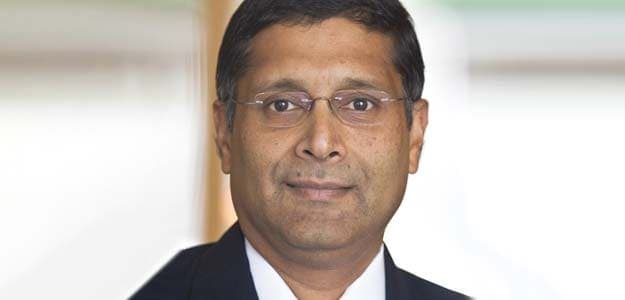
India's Chief Economic Advisor Arvind Subramanian on Friday said he had flunked his IAS entrance test and did not do very well in his academic career initially. Entrance for the Indian Administrative Service is considered to be one of the toughest exams in the country.
"Let me tell you that I failed the IAS exam. I failed in getting into the most prestigious stream at IMF. I wrote a mediocre PhD thesis. I had many many more academic papers rejected than accepted."
Mr Subramanian said he wanted to make the "confession" because he was known as "a very successful person, the chief economic adviser and so on".
An alumnus of St. Stephens College and IIM Ahmedabad, Mr Subramanian was a senior fellow at the Peterson Institute for International Economics and the Center for Global Development before taking up his new assignment as the chief economic advisor last year. He obtained his M.Phil and D.Phil from the University of Oxford. (Read: Who is Arvind Subramanian)
Mr Subramanian taught at Johns Hopkins' School for Advanced International Studies from 2008 to 2010 and at Harvard University's Kennedy School of Government from 1999 to 2000. He also served as an assistant director in the research department of the International Monetary Fund.
He has written extensively on subjects like growth, international trade, and World Trade Organization. He is also the author of 'Eclipse: Living in the Shadow of China's Economic Dominance' and is the co-author of "Who Needs to Open the Capital Account".
In 2011, Foreign Policy magazine named him among Top 100 Thinkers.
(With inputs from PTI)

-
Why Amazon And Flipkart Are Struggling To Beat Meesho In India's Smaller Cities

With 274 million users and lowest-cost logistics, Meesho is defending its value commerce crown against giants like Amazon and Flipkart.
-
High US Salaries, No Green Card Certainty: The Financial Calculation Facing Indian H-1B Families
The suspension of PERM processing at eight technology employers does not cancel existing H-1B visas. What it does is force a question many Indian families have been avoiding: is the US salary worth tying your career and family plans to one employer?
-
Swiggy vs Eternal: Food Delivery's Two Rivals Are No Longer In The Same Race
Eternal is building a private AI assistant, dark.ai. Swiggy is still working out how to make Instamart pay, with an operating loss of Rs 895 crore in the July-September quarter while Blinkit stayed profitable.
-
Where You Live Shapes How You Get To Work | The Reason Why
Two-wheelers are the most popular way to get to work in India, accounting for nearly 43% of workplace commutes.
-
Unhedged Position: Can India See An Indonesia-Style Time Correction?
The Nifty is trading below levels it first clocked in 2024. Is there, then, as I have suggested in the headline, potential that the current time correction drags on painfully for the next three-five, even ten years?
-
Navigating Friction And Energy Realities: An Analysis Of Marco Rubio's October Visit To India
Occurring at a critical juncture marked by stalled trade negotiations and escalating geopolitical pressures over global energy supplies, the visit offers a profound window into modern US-India relations.
-
India Exports Capital. Why Not Export Trusteeship?
The big question, then, is whether India can build an institution that global borrowers, investors, banks, and lawyers can trust, even without an Indian connection.
-
France's Economy & Politics Are In Crisis | The Reason Why
Let's look at how the French economy and politics evolved under Nicolas Sarkozy, Franois Hollande and Emmanuel Macron.
-
You May Inherit The Business. You Must Earn Its Credibility.
Succession tests the founder's ability to share authority as much as it tests the next generation's readiness to assume it.
-
Signing Deals Is One Thing; Making Them Work Is Another | The Week In Whys
Sometimes, things don't turn out as planned. Indian companies have lost some bids to rivals, some projects won't produce until 2030.










