India’s Payments Banks Trip On E-KYC Rules
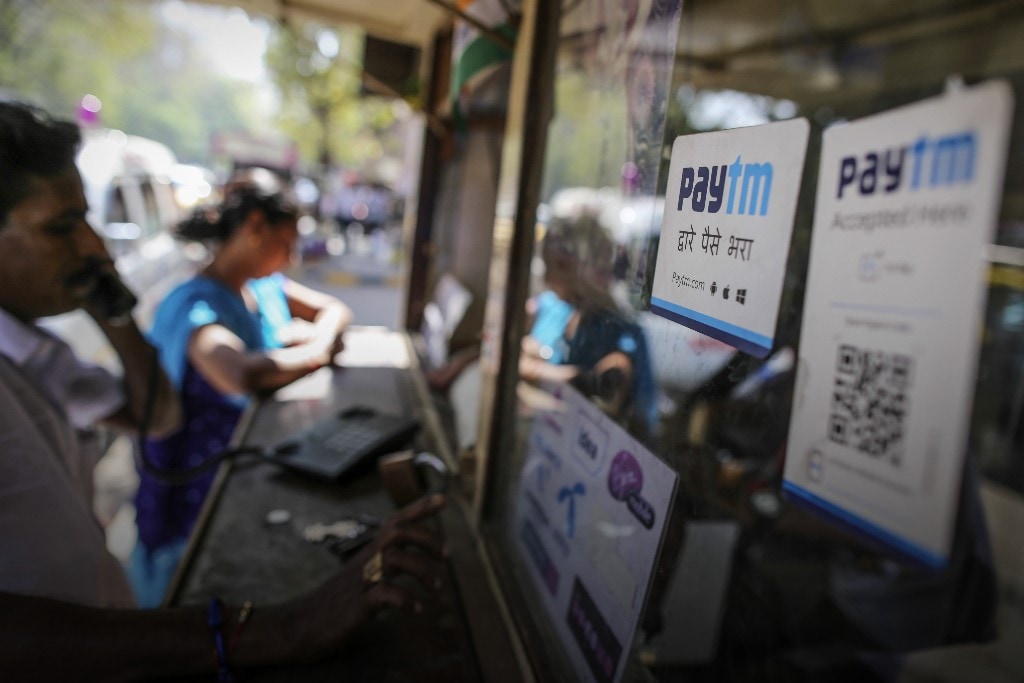
The Reserve Bank of India has barred atleast two payments banks from accepting new customers. The reason, say officials in the know, is the lack of strict compliance with a couple of banking provisions - including not just banking-related Know Your Customer norms but also provisions under the Prevention of Money Laundering Act.
Fino Payments Bank has been barred by the Reserve Bank of India from adding new customers. That's because some customer accounts were found to have more than the Rs 1 lakh deposit limit permitted to payments banks, said Fino in a statement to BloombergQuint.
“As per RBI's operating guidelines for payments banks the aggregate limit for customer in his/her bank account shall not exceed Rs 1 lakh. It was observed that a few Fino Payments Bank accounts had deposits in excess of this stipulated amount.”
The payments bank said that it is in the process of upgrading its processes and technology to support these changes. Meanwhile, all existing customer accounts continue to operate, it added.
The problem at Paytm Payments Bank seems larger.
On Wednesday, Mint had first reported that Paytm Payments Bank had been asked by the RBI to stop accepting new customers immediately. This was because the RBI made observations about the way in which Paytm Payments Bank was acquiring customers and its adherence to the KYC norms specified by the regulator.
BloombergQuint has now found out that the problem lies with the lack of robustness in electronic or e-KYC followed by most payment banks such as Paytm.
In e-KYC, the bank and the customer are not face to face and the bank may allow the customer to open a bank account using a one-time-password (OTP) authentication. To be sure, payments banks do also conduct a biometric verification of the customer within a year of opening the account, failing which, the bank account would cease to function.
But that's not enough.
According to a former RBI official who spoke to BloombergQuint on the condition of anonymity, typically non-banking payments companies used identity proof and proof of address as KYC documents. However, for banks, the KYC goes a step further than that, the former central banker said.
RBI's KYC guidelines specify that to allow a customer to have a functioning bank account, the bank must collect officially valid documents which could be an Aadhar card, PAN card, driver's licence, passport or utility bills.
And under PMLA the involvement of a banking official in on-boarding a new customer is necessary.
Since Paytm did not follow these processes fully, it was asked to stop adding new customers.
A senior official at PayTM, while speaking on conditions of anonymity, said that the regulator was in the process of reviewing PayTM's processes. The official said that the confusion was due to ambiguity in e-KYC norms of the regulator.
No official statement was forthcoming from Paytm.
To be sure, PayTM Payments currently does not allow customers to complete e-KYC on its mobile application or website. The bank asks its customers to either physically submit their KYC documents at a PayTM outlet or offers to send a representative of the bank to the customer's location.
Payment banks must ensure full compliance while providing customers technology-based innovation, said one sector expert.
Banking is a highly regulated industry. For the regulator compliance is sacrosanct. Once you upgrade yourself into a bank, there is no compromise on the compliance with regulation. There are some robust regulations in place for the sector. The RBI won't shy away from levying a penalty if it finds issues with compliance. It is more out of prudence that some of these companies are being asked to pause their business activities and ensuring that they follow the norms.Naresh Makhijani, partner, KPMG
This is not the first time that payments banks are facing restrictions placed by RBI. Earlier this year, the banking regulator imposed a penalty of Rs 5 crore on Airtel Payments Bank for breaching operating guidelines and Know Your Customer norms.
The bank allegedly opened payment bank accounts of mobile consumers without their informed consent. The bank allegedly used customers' Aadhaar number to do so. This first prompted the Unique Identification Authority of India – the custodian of Aadhaar to temporarily bar the bank from from conducting Aadhaar-based the e-KYC and subsequently penalised it. This was followed by RBI action.
In July, Airtel Payments Bank confirmed that it had received necessary approvals to resume acceptance of new customers.

-
A New Samvat Wishlist: Inclusive Prosperity And Human Development

India has strengthened its economic foundations through infrastructure, digital access and enterprise. Its next growth chapter must deepen productivity, create better livelihoods and widen participation in prosperity.
-
Love, Sex Aur Dhokha: The Audacious Plot To Spy On Jensen Huang
A Taipei dinner, a Singapore chip buyer and a suspected Chinese asset: inside the alleged spy operation that got close to NVIDIA's Jensen Huang.
-
Ten Things I Learnt This Samvat
Patience can be a trap. Cheap stocks can stay cheap. Leverage can wipe you out. What did Samvat 2082 teach us? Niraj Shah writes on 10 lessons from the year gone by.
-
Talking Points This Week: Tech Nerves, FII Buying, And A Faraway Banking Shock
The global markets are not shining this Diwali. The exception in the large markets is, India.
-
Midterm Rally Lasted A Day. The Hard Reality Of A Divided US May Last Two Years | Opinion
Between a contested AI boom, a debt ceiling that arrives in 2027 and a president with every incentive to act alone, the next two years may prove more volatile than the first day's rally suggests.
-
Blue Wave Will Derail the AI Trade but Won't Dismantle the AI Era | Unhedged Position
The Democrats' sweep of the US Congress will see politics collide with economic forces both over the long and short term.
-
It's Time To Take The GST Council's Bet On Trust Global
Payment records can prove India's services exports, and clear, proportionate rules can bring foreign digital sellers into the tax net.
-
Opinion | India at 38: From Innovation Overperformer to Innovation Powerhouse
India now has 453 VC-backed deep science startups, 18 of them late-stage, after 117 percent growth since 2020. Laurus Labs, at USD 9.3 billion, is the most valuable deep science company in any middle-income economy outside China.
-
Navigating Energy Crossroads: S Jaishankar's Call For Diversified Supply Chains At G20 Ministerial Meeting
As geopolitical fault lines continue to test maritime trade routes and commodity flows, Jaishankar's message remains pertinent: true economic resilience requires open markets, protected transit lines, and a genuine commitment to multilateral cooperation rather than coercion.









