Mangalore Refinery Buys 1 Million Barrels Of Russian Urals Crude For May Loading: Report
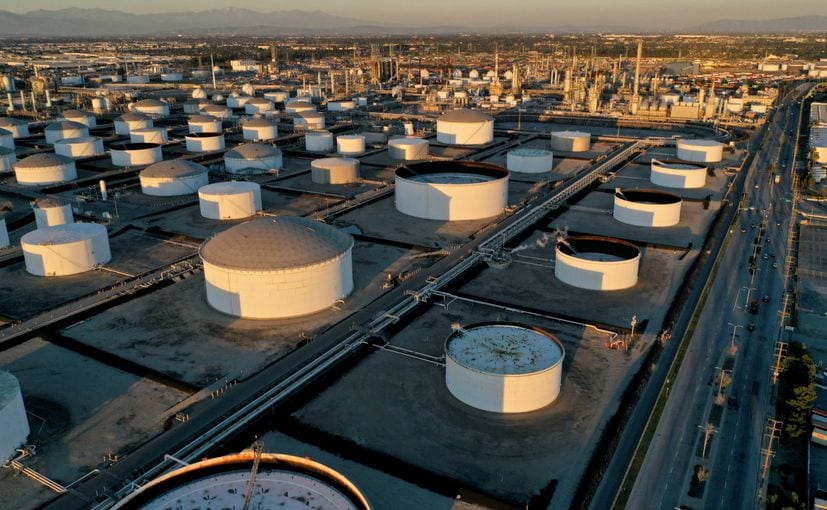
State-run Mangalore Refinery and Petrochemicals Limited (MRPL) has bought one million barrels of Russian Urals crude for May loading via a tender, three trade sources familiar with the deal said, a rare purchase driven by the discount offered.
Refiners in India, the world's third biggest oil importer and consumer, have been snapping up Russian oil through spot tenders since Russia's invasion of Ukraine on February 24, taking advantage of deep discounts as other buyers back away.
One of the sources said a European trader had sold the cargo. The price agreed for the deal was not immediately clear.
MRPL did not respond to a Reuters request for comment.
With MRPL's purchase, India has so far booked at least 14 million barrels of Russian oil since February 24, compared with nearly 16 million barrels in all of 2021, according to Reuters calculations.
The Urals oil discount to dated Brent has hit a record for the post-Soviet era as buyers stayed away from Russian oil. Unlike several Western countries, India has not banned Russian oil imports.
"We have started buying (Russian oil). We have received... quite a number of barrels, I would think about 3-4 days' supplies, and this will continue," Finance Minister Nirmala Sitharaman said last week.
"India's overall interest is what is kept in mind... I would put my country's national interest first, and I would keep my country's energy security first," she said, adding that if oil is available at a discount, "why shouldn't I buy it?".
The United States has said it will not set any "red line" for India on its energy imports from Russia, but does not want to see a "rapid acceleration" in purchases.

-
High US Salaries, No Green Card Certainty: The Financial Calculation Facing Indian H-1B Families

The suspension of PERM processing at eight technology employers does not cancel existing H-1B visas. What it does is force a question many Indian families have been avoiding: is the US salary worth tying your career and family plans to one employer?
-
Swiggy vs Eternal: Food Delivery's Two Rivals Are No Longer In The Same Race
Eternal is building a private AI assistant, dark.ai. Swiggy is still working out how to make Instamart pay, with an operating loss of Rs 895 crore in the July-September quarter while Blinkit stayed profitable.
-
Where You Live Shapes How You Get To Work | The Reason Why
Two-wheelers are the most popular way to get to work in India, accounting for nearly 43% of workplace commutes.
-
Unhedged Position: Can India See An Indonesia-Style Time Correction?
The Nifty is trading below levels it first clocked in 2024. Is there, then, as I have suggested in the headline, potential that the current time correction drags on painfully for the next three-five, even ten years?
-
Navigating Friction And Energy Realities: An Analysis Of Marco Rubio's October Visit To India
Occurring at a critical juncture marked by stalled trade negotiations and escalating geopolitical pressures over global energy supplies, the visit offers a profound window into modern US-India relations.
-
India Exports Capital. Why Not Export Trusteeship?
The big question, then, is whether India can build an institution that global borrowers, investors, banks, and lawyers can trust, even without an Indian connection.
-
France's Economy & Politics Are In Crisis | The Reason Why
Let's look at how the French economy and politics evolved under Nicolas Sarkozy, Franois Hollande and Emmanuel Macron.
-
You May Inherit The Business. You Must Earn Its Credibility.
Succession tests the founder's ability to share authority as much as it tests the next generation's readiness to assume it.
-
Signing Deals Is One Thing; Making Them Work Is Another | The Week In Whys
Sometimes, things don't turn out as planned. Indian companies have lost some bids to rivals, some projects won't produce until 2030.
-
FOMC Wall, PERM Suspension, Hospital Stocks | Talking Points This Week
A PERM suspension would directly affect green-card sponsorship rather than H-1B visas, so the near-term earnings impact could remain relatively limited. The key question is whether this marks a new phase in US scrutiny of Indian IT.









