Sleep Deprived, Extra Hours: How Bankers Work Under Mega IPO Frenzy
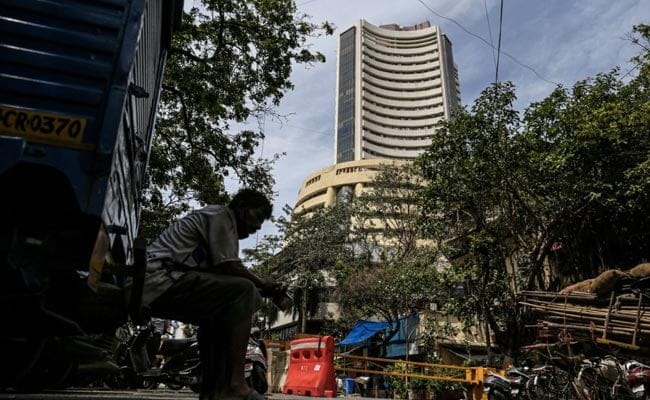
India's investment bankers are set for their most rewarding year as local initial public offerings head for an all-time high despite the devastation brought about by a deadly Covid-19 wave. Listings in Mumbai have already raised $10.2 billion this year, according to data compiled by Bloomberg. Banks steering those offerings have raked in record fees of almost Rs 1,400 crore, more than double the amount they earned during the previous peak in 2017, figures provided by New Delhi-based Prime Database show.
The bumper pool of fees has become all the more significant for the bankers in an especially harrowing year. A massive surge in coronavirus infections in April and May reached the doorsteps of Mumbai's urban affluent, a group that's usually insulated from the country's worst disasters. Bankers were among those who struggled to arrange oxygen tanks and intensive-care beds for loved ones, all the while juggling their workload in the midst of all the IPOs.
“There were cases of bankers who showed up for work despite a death in the immediate family,” said Nipun Goel, president of investment banking at IIFL Securities Ltd. in Mumbai. “I was shocked to see my colleague on Zoom calls. He said, ‘let's get this done,' as he wanted to keep his mind occupied.”

Photo Credit: Bloomberg
India is no exception to a global IPO frenzy in which companies ranging from technology startups to jewelers and drugmakers have raised a record $476 billion worldwide this year. Liquidity, low interest rates and demand from retail investors are spurring firms to go public.
At least 64 Indian businesses have hit the equity capital markets in 2021 as a pandemic-defying stock rally took the S&P BSE Sensex to a record. The benchmark is Asia's best performing major index this year. First-time share sales could reach 1 trillion rupees in 2021, said Jayasankar Venkataraman, head of equity capital markets at Kotak Mahindra Capital Co. in Mumbai.
“We are working 24/7,” Venkataraman said. “When the market is good it is quite natural for issuers to accelerate their listing plans.”
Startups Fest
Zomato Ltd., a food-delivery startup backed by Jack Ma's Ant Group Co., raised $1.3 billion in a July listing, fetching bankers about Rs 240 crore in fees, Bloomberg-compiled data show. SoftBank Group Corp.-backed digital-payments startup Paytm has filed to mop up as much as 166 billion rupees.
A mega IPO is in the works, but that's slated for early next year. The Indian government is considering selling as much as 10% of state-owned Life Insurance Corp. of India, seeking a valuation of at least $109 billion in what would be the nation's biggest IPO yet.
Like in other parts of the world, the pandemic has accelerated the adoption of digital platforms in India, helping shorten the process. The so-called road shows in which arrangers hop from city to city making pitches to investors are now entirely wrapped up in a matter of hours with Zoom calls, from many weeks in the past.

Photo Credit: Bloomberg
“The efficiency has improved tremendously and bankers are multitasking without travel schedules,” said Kotak Mahindra's Venkataraman, who boarded a plane for the first time in a year in February.
Earlier, bankers used to devote less time to their families thanks to demands of constant travel, but with the lockdowns, work-from-home and other curbs, they don't complain about that anymore, he said. Despite being at home, their loved ones still miss them because the bankers end up spending most of their time on conference calls or with their eyes glued to their computer and phone screens.
Sleep-Deprived
“Work-life balance for investment bankers, primarily the junior ones, has gone for a toss,” said Vijay Vaishnav, founder of Indusion Consulting Services Pvt., an executive search firm in Mumbai. “They are telling us they are sleep-deprived due to the kind of fundraising pipeline.”
To help make things easier, some financial institutions like Mumbai-based ICICI Securities Ltd. that are partially open -- including during late hours -- are providing transport facilities to ferry staff between office and home in the sprawling metropolis. A few are even paring back smaller IPOs to focus on larger and more lucrative issuances.
Ajay Saraf, executive director and head of investment banking at ICICI Securities, said he's decided to manage only offerings above 10 billion rupees. “It's crazy,” he said, referring to the rush of IPOs.
Hiring More
Others such as Citigroup Inc. are stepping up hiring to cope with the workload. The U.S. bank, which has had a presence in the South Asian country since 1902, said this month that it added eight new positions to its investment banking team -- mostly juniors -- boosting the local crew by 25% to 40.
While these bankers may not see any major change in their fixed compensations, a massive increase in their variables is on the cards as most of the arrangers have more than surpassed their annual targets, said Indusion Consulting's Vaishnav.
“I have not seen such vibrancy and all-round buoyancy in my past 25 years,” said IIFL Securities' Goel. “A lot of it is about the thrill and satisfaction of bringing newer stories to the market. Money is just a byproduct.”
(Except for the headline, this story has not been edited by NDTV staff and is published from a syndicated feed.)

-
High US Salaries, No Green Card Certainty: The Financial Calculation Facing Indian H-1B Families

The suspension of PERM processing at eight technology employers does not cancel existing H-1B visas. What it does is force a question many Indian families have been avoiding: is the US salary worth tying your career and family plans to one employer?
-
Swiggy vs Eternal: Food Delivery's Two Rivals Are No Longer In The Same Race
Eternal is building a private AI assistant, dark.ai. Swiggy is still working out how to make Instamart pay, with an operating loss of Rs 895 crore in the July-September quarter while Blinkit stayed profitable.
-
Where You Live Shapes How You Get To Work | The Reason Why
Two-wheelers are the most popular way to get to work in India, accounting for nearly 43% of workplace commutes.
-
Unhedged Position: Can India See An Indonesia-Style Time Correction?
The Nifty is trading below levels it first clocked in 2024. Is there, then, as I have suggested in the headline, potential that the current time correction drags on painfully for the next three-five, even ten years?
-
Navigating Friction And Energy Realities: An Analysis Of Marco Rubio's October Visit To India
Occurring at a critical juncture marked by stalled trade negotiations and escalating geopolitical pressures over global energy supplies, the visit offers a profound window into modern US-India relations.
-
India Exports Capital. Why Not Export Trusteeship?
The big question, then, is whether India can build an institution that global borrowers, investors, banks, and lawyers can trust, even without an Indian connection.
-
France's Economy & Politics Are In Crisis | The Reason Why
Let's look at how the French economy and politics evolved under Nicolas Sarkozy, Franois Hollande and Emmanuel Macron.
-
You May Inherit The Business. You Must Earn Its Credibility.
Succession tests the founder's ability to share authority as much as it tests the next generation's readiness to assume it.
-
Signing Deals Is One Thing; Making Them Work Is Another | The Week In Whys
Sometimes, things don't turn out as planned. Indian companies have lost some bids to rivals, some projects won't produce until 2030.
-
FOMC Wall, PERM Suspension, Hospital Stocks | Talking Points This Week
A PERM suspension would directly affect green-card sponsorship rather than H-1B visas, so the near-term earnings impact could remain relatively limited. The key question is whether this marks a new phase in US scrutiny of Indian IT.









