India's Household FMCG Consumption Hits Nine-Quarter Low In January–March
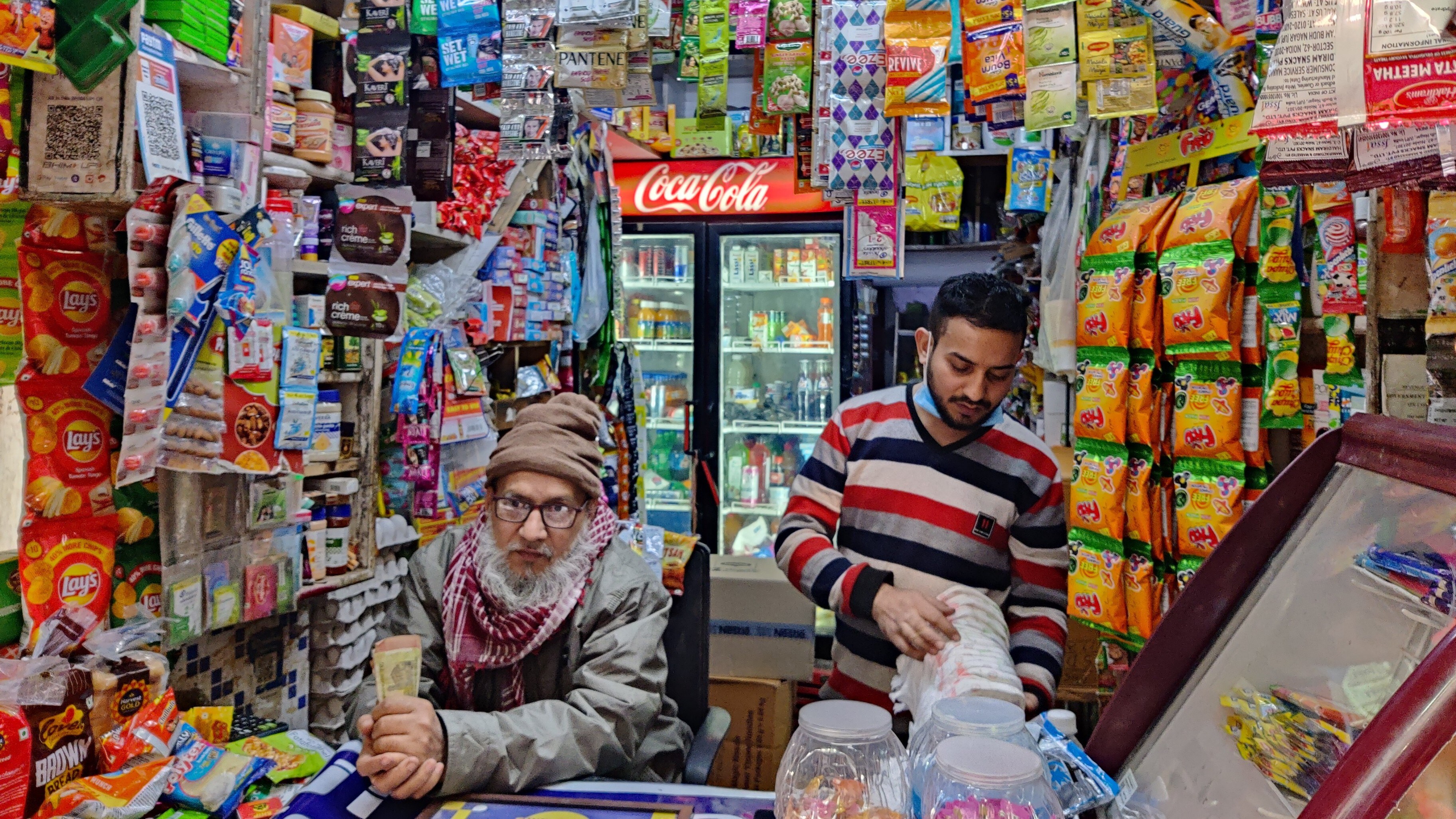
Household consumption of daily groceries to personal care products grew 3.5% between January and March — its slowest pace since the third quarter of fiscal 2023, according to market researcher Kantar.
This marks a notable slowdown despite inflation peaking in October 2024 and gradually tapering off thereafter, implying that evolving consumer choices are becoming a significant factor influencing spending.
In fact, the last time the quarterly growth even touched a 5% mark was in the fourth quarter of the financial year ending March 2024, underscoring persistent sluggishness in the sector, the latest FMCG Pulse report from Kantar's Worldpanel division showed.
A breakdown analysis reveals urban markets grew 4.4%, while rural areas lagged at 2.7%. For the full year ending March 2025, too, urban continued to outpace rural.
However, that does not mean urban growth is uniform. There are pockets within this market that are under stress.
The report suggests that the volume growth of the 22 listed FMCG companies tracked by Kantar is a modest 2.1%, compared to 3.8% for the broader branded market, reflecting recent earnings trends. Meanwhile, unbranded products saw a massive growth of 8.4% in the year.
This is in stark contrast to consumption patterns in rural areas, where branded companies are performing better — with listed brands growing at 5.1% and the overall branded market at 4%, while the growth of unbranded products is trailing at 2.3%.
"This is not happening in a vacuum," explains K Ramakrishnan, managing director at Kantar Worldpanel.
Major listed companies, whose brands are often highly penetrated, have crafted a strong rural strategy, building loyalty and an expansive distribution network. "Therefore, the rural shopper, who is generally becoming more aspirational and mimicking the urban shopper, is gravitating towards these brands. This accentuates even more during tougher economic times."
Conversely, urban consumers are increasingly becoming brand agnostic even as digital shopping has yet to significantly sway market shares or volumes. "The availability of brands and the proliferation of advertising on mobile phones are shifting perceptions on packaging, pricing, and branding among the urban shoppers," Ramakrishnan said.
Consumers are now caring more about quality, appearance, and the story behind a product than just the price, according to the report. That's why, from the fourth quarter of FY24 to Q4 FY25, the average price per kilogram of fast-moving consumer goods has increased by Rs 8, even though people are buying more unbranded and smaller brand products, noted Kantar.
Kantar, however, remains bullish about the outlook, anticipating both urban and rural FMCG growth building up in the coming quarters driven by factors such as premiumisation and improving macroeconomic factors.
Consumers made 156 shopping trips to grocery stores in the previous financial year, unchanged since a year ago. That still means an average household shops for FMCG once every 56 hours. But the basket size increased in both value and number of packs. Data shows that they bought 26 more packs this fiscal year than last year, and the average pack size across categories increased by around 15 grams while the average price growth stood at Rs 3 per kg.
"This indicates confidence returning to the shopper," Ramakrishnan said. "In addition to this, premiumisation continues, with moderate consumption growth, which leads us to believe that we would see moderate to strong growth in urban FMCG building up in the coming quarters. If the macroeconomic factors remain favourable, we should also see rural recovery as we head into the second half of the year."

-
Blue Wave Will Derail the AI Trade but Won't Dismantle the AI Era | Unhedged Position

The Democrats' sweep of the US Congress will see politics collide with economic forces both over the long and short term.
-
It's Time To Take The GST Council's Bet On Trust Global
Payment records can prove India's services exports, and clear, proportionate rules can bring foreign digital sellers into the tax net.
-
Opinion | India at 38: From Innovation Overperformer to Innovation Powerhouse
India now has 453 VC-backed deep science startups, 18 of them late-stage, after 117 percent growth since 2020. Laurus Labs, at USD 9.3 billion, is the most valuable deep science company in any middle-income economy outside China.
-
Navigating Energy Crossroads: S Jaishankar's Call For Diversified Supply Chains At G20 Ministerial Meeting
As geopolitical fault lines continue to test maritime trade routes and commodity flows, Jaishankar's message remains pertinent: true economic resilience requires open markets, protected transit lines, and a genuine commitment to multilateral cooperation rather than coercion.
-
Indians Are Travelling, But Not Every Journey Is A Holiday | The Week In Whys
Pilgrims, patients and working women are the real travellers, and the system hasn't quite caught up with them.
-
Getting To Work Costs Women More | The Reason Why
It is not just about women paying more than men. It is about women paying much more in cities than in villages.
-
AI Bias In Investing Cannot Be Eliminated, But It Can Be Governed
Framing is a particularly important example as identical financial information presented in terms of gains rather than losses can lead an LLM to reach a different assessment.
-
Joining The Dots | Dark Skies, Steady Diya: Why Hope Holds This Diwali
With war, a weak rupee and foreign outflows weighing on sentiment, policymakers at the NDTV World Summit and market veterans at NDTV Profit Ignite: Diwali Edition offered the same advice: stay invested and filter out the noise.
-
The Curious Case of Equitas Small Finance Bank And A CEO Who Quit For Stock
PN Vasudevan believes persistent investor concerns over a perceived conflict of interest had become a governance overhang on Equitas Small Finance Bank's stock, even as the lender improved profitability and asset quality.










