India's Exports Grew 4% In September, Says UN Trade Body
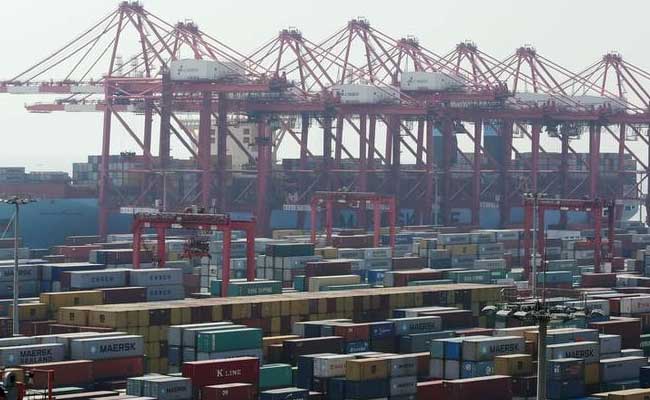
Export growth declined in India in the third quarter of 2020 relative to the same quarter last year, but picked up pace in September, according to a global trade update by the UN. The UNCTAD's new global trade update said that global trade recorded a 5 per cent drop in the third quarter of 2020, compared with the same period last year. This marks an improvement on the 19 per cent year-on-year plunge recorded in the second quarter, and the United Nations Conference on Trade and Development (UNCTAD) expects the frail recovery to continue in the fourth quarter.
India's export growth saw a decline of 6.1 per cent in the third quarter of 2020, compared to third quarter of last year. However, India recorded export growth of four per cent in September, it said.
Depending on how the COVID-19 pandemic evolves in the winter months, the UN trade and development body expects the value of global trade to contract by 7 per cent to 9 per cent with respect to 2019.
"The uncertain course of the pandemic will continue aggravating trade prospects in the coming months," UNCTAD Secretary-General Mukhisa Kituyi said. "Despite some ''green shoots'' we can't rule out a slowdown in production in certain regions or sudden increases in restrictive policies."
Although a 7 per cent to 9 per cent decrease would be a negative finish for the year, Mr Kituyi said it's a much more positive result than was expected in June, when the UNCTAD had projected a 20 per cent year-on-year drop for 2020.
Since then, trade trends have improved primarily thanks to the earlier-than-expected resumption of economic activities in Europe and east Asia, it said.
The UNCTAD said the sharp and widespread decline in international trade in Q2 2020 was similar for developing and developed countries. But exports from developing economies appear to be recovering faster.
Year-on-year growth of developing nations' exports improved from -17 per cent in the second quarter to -6 per cent in July, while those from developed nations increased from -22 per cent to -14 per cent. South-South trade - commerce among developing countries - has shown some resilience, with the year-on-year decline sitting at 8 per cent in July, up from 16 per cent in the second quarter.
The report's assessment of trade in different sectors said that the pandemic has hit the energy and automotive industries the hardest, while mitigation responses including teleworking and personal protection measures have led to strong growth in sectors such as communication equipment, office machinery, and textiles and apparel.
UNCTAD's analysis gives special attention to COVID-19 medical supplies, which include personal protective equipment, disinfectants, diagnostic kits, oxygen respirators and other related hospital equipment.
According to the report, exports of COVID-19 medical supplies from China, the European Union and the United States rose from about USD 25 billion to USD 45 billion per month between January and May 2020.
The increase in such trade, however, has primarily benefited wealthier nations, with middle- and low-income countries largely priced out from access to COVID-19 supplies, the report says.
The UNCTAD warns that if a COVID-19 vaccine becomes available, the access divide between residents in wealthy and poor countries could be even more drastic.
While some low-income countries have the capacity to locally manufacture some protective equipment, this may not be the case for vaccines, which require stronger manufacturing and logistics capacities.
The report calls on governments, the private sector and philanthropic sources to continue mobilizing additional funds to fight the COVID-19 pandemic in developing countries and to support financial mechanisms, such as the global COVAX initiative, to provide safe and effective COVID-19 vaccines to poor countries.

-
Love, Sex Aur Dhokha: The Audacious Plot To Spy On Jensen Huang

A Taipei dinner, a Singapore chip buyer and a suspected Chinese asset: inside the alleged spy operation that got close to NVIDIA's Jensen Huang.
-
Ten Things I Learnt This Samvat
Patience can be a trap. Cheap stocks can stay cheap. Leverage can wipe you out. What did Samvat 2082 teach us? Niraj Shah writes on 10 lessons from the year gone by.
-
Talking Points This Week: Tech Nerves, FII Buying, And A Faraway Banking Shock
The global markets are not shining this Diwali. The exception in the large markets is, India.
-
Midterm Rally Lasted A Day. The Hard Reality Of A Divided US May Last Two Years | Opinion
Between a contested AI boom, a debt ceiling that arrives in 2027 and a president with every incentive to act alone, the next two years may prove more volatile than the first day's rally suggests.
-
Blue Wave Will Derail the AI Trade but Won't Dismantle the AI Era | Unhedged Position
The Democrats' sweep of the US Congress will see politics collide with economic forces both over the long and short term.
-
It's Time To Take The GST Council's Bet On Trust Global
Payment records can prove India's services exports, and clear, proportionate rules can bring foreign digital sellers into the tax net.
-
Opinion | India at 38: From Innovation Overperformer to Innovation Powerhouse
India now has 453 VC-backed deep science startups, 18 of them late-stage, after 117 percent growth since 2020. Laurus Labs, at USD 9.3 billion, is the most valuable deep science company in any middle-income economy outside China.
-
Navigating Energy Crossroads: S Jaishankar's Call For Diversified Supply Chains At G20 Ministerial Meeting
As geopolitical fault lines continue to test maritime trade routes and commodity flows, Jaishankar's message remains pertinent: true economic resilience requires open markets, protected transit lines, and a genuine commitment to multilateral cooperation rather than coercion.
-
Indians Are Travelling, But Not Every Journey Is A Holiday | The Week In Whys
Pilgrims, patients and working women are the real travellers, and the system hasn't quite caught up with them.









