India’s EV Story Hits Its First Bump And It’s Not Demand
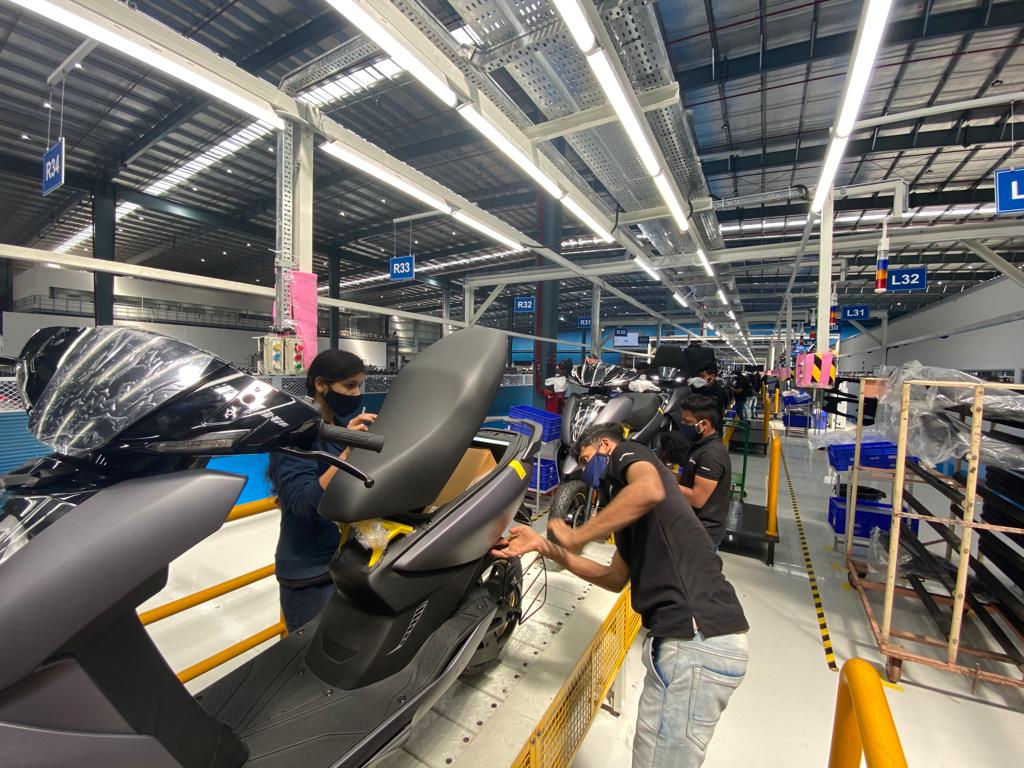
Indian makers of electric vehicles, especially two-wheelers, are now grappling with poor supply as Russia's war in Ukraine worsened the chip crunch. Lockdowns in China will only deepen supply shortages.
“We are not able to increase our volumes in tune with demand and capacities,” Sohinder Gill, chief executive officer at Hero Electric Vehicles Pvt., told BloombergQuint over the phone. India's largest battery-powered two-wheeler maker is losing out on 30-40% of the demand because of the poor supply. “It is a lost opportunity.”
The supply crunch marks the first major bump for India's nascent industry electric scooter industry. And it comes when demand for battery-powered mobility has spiked on rising fuel prices. Indians are also increasingly considering EVs as petrol-driven scooters have turned costlier on rising raw material prices and transition to stricter Bharat Stage VI emission norms.
Customers also avail benefits as the government offers incentives to boost adoption of EVs. The third-biggest emitter of greenhouse gases on the planet and home to cities with the world's worst air is promoting cleaner fuels.
Ola Electric Mobility Pvt., Bounce (WickedRide Adventure Services Pvt.), TVS Motor Co., Bajaj Auto Ltd. and Ather Energy Ltd. are among the bigger electric scooter brands in the country. The country's largest two-wheeler maker, Hero MotoCorp Ltd., is weeks away from launching a model. The nascent industry, which barely accounts for a percent of overall auto sales in the country, is working hard to ensure the demand boom is not missed.
But dealers of Ather Energy, Okinawa Autotech Pvt, Ampere Vehicles Pvt. and Hero Electric who spoke to BloombergQuint pointed out that the supply is not able to match the surge in demand.
A Bengaluru-based Ather Experience Centre executive said the waiting periods have stretched to 75-90 days from 15-20 days last year. Mukesh, a Hero Electric sales executive from Uttar Pradesh, said that he has stopped taking new orders in the absence of poor supply. “The demand has gone through the roof, but the supply hasn't kept pace with it.”
Hero Electric's Gill, also the director general of Society of Manufacturers of Electric Vehicles, said the industry would have clocked half-a-million (five lakh units) sales by the end of the financial year ended March 31, if not for supply constraints, covid-led disruptions and chip shortage. He now estimates the industry to hit 3.4 lakh.

Triple Whammy
The industry was already grappling with a shortage of chips, or the brains of electronic components. And just when the industry was hoping to come out of it, the Russian invasion of Ukraine disrupted the entire supply chain again.
Nearly 40% of the world's palladium comes from Russia and half of neon gas comes from Ukraine, two of the key ingredients in chips. And electric vehicles need more semiconductors.
Prices of raw materials have also gone up with surging demand for electric vehicles globally. Battery manufacturing costs have gone up by 25-30%, said Hemal Thakkar, director at Crisil Ltd.
Okinawa Autotech will be able to manage the crisis if the shortage doesn't extend beyond three months, said Jeetender Sharma, managing director and founder of the company. Their suppliers have stocked lithium-ion cells to manage the crisis for the next three months, he said.
Gill, however, said the logistics chain is badly hammered. “Whatever has been forecasted is taking 2x times. The whole supply chain is disrupted,” he said, adding that it will take few months to be back at normal levels. “When we talk to the battery guys and request 300,000 batteries, they say it will take six months. We believe that suppliers will have to work hard with us."
With fresh lockdowns in China to contain a new wave of the coronavirus, the supply disruption may deepen. EVs have direct or indirect dependence on China as it controls most of the mines globally, so any impact there will disrupt the industry, Gill said.
The industry targeted to sell 1 million EV units by the end of the upcoming fiscal. But that now seems unlikely, Gill said, as the first quarter will be a washout.

-
Talking Points This Week: Tech Nerves, FII Buying, And A Faraway Banking Shock

The global markets are not shining this Diwali. The exception in the large markets is, India.
-
Midterm Rally Lasted A Day. The Hard Reality Of A Divided US May Last Two Years | Opinion
Between a contested AI boom, a debt ceiling that arrives in 2027 and a president with every incentive to act alone, the next two years may prove more volatile than the first day's rally suggests.
-
Blue Wave Will Derail the AI Trade but Won't Dismantle the AI Era | Unhedged Position
The Democrats' sweep of the US Congress will see politics collide with economic forces both over the long and short term.
-
It's Time To Take The GST Council's Bet On Trust Global
Payment records can prove India's services exports, and clear, proportionate rules can bring foreign digital sellers into the tax net.
-
Opinion | India at 38: From Innovation Overperformer to Innovation Powerhouse
India now has 453 VC-backed deep science startups, 18 of them late-stage, after 117 percent growth since 2020. Laurus Labs, at USD 9.3 billion, is the most valuable deep science company in any middle-income economy outside China.
-
Navigating Energy Crossroads: S Jaishankar's Call For Diversified Supply Chains At G20 Ministerial Meeting
As geopolitical fault lines continue to test maritime trade routes and commodity flows, Jaishankar's message remains pertinent: true economic resilience requires open markets, protected transit lines, and a genuine commitment to multilateral cooperation rather than coercion.
-
Indians Are Travelling, But Not Every Journey Is A Holiday | The Week In Whys
Pilgrims, patients and working women are the real travellers, and the system hasn't quite caught up with them.
-
Getting To Work Costs Women More | The Reason Why
It is not just about women paying more than men. It is about women paying much more in cities than in villages.
-
AI Bias In Investing Cannot Be Eliminated, But It Can Be Governed
Framing is a particularly important example as identical financial information presented in terms of gains rather than losses can lead an LLM to reach a different assessment.









