Maize Supply Key To India's Ethanol Blending Target: Shree Renuka Sugars' Executive Chairman
India is reportedly planning to increase its ethanol blending target in petrol from 20% to 30% by 2030. Achieving this ambitious goal will require a substantial increase in ethanol production—about 15 to 16 billion litres annually—according to Atul Chaturvedi, executive chairman at Shree Renuka Sugars Ltd.
“The sugar sector can only give about seven billion litres of ethanol. And at 30% blending, our back-of-the-envelope calculation tells us India would need about 15-16 billion litres of ethanol. These are only ballpark numbers. And to achieve that, you need a massive supply from the maize or the grain sector," he told NDTV Profit.
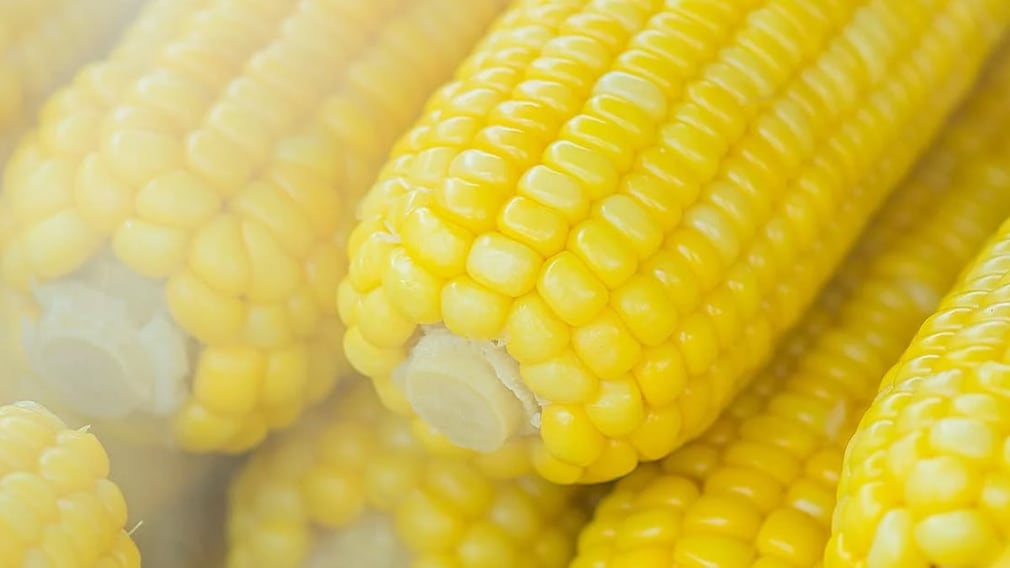
The grain sector, or maize in particular, will have to chip in with closer to about something like 25 to 30 million tonnes of maize that needs to be diverted, he said.
Chaturvedi mentioned Brazil as a global benchmark, noting that even a country with decades of experience in ethanol blending is still at 27%.
“It is a challenging target because, even Brazil, which has been blending for a very long time, has achieved only about 27%. This is after they have already introduced flex fuel to cars and 100% ethanol cars,” he said.
He also flagged possible disruptions to India's oilseed sector, stemming from increased maize use. A byproduct of maize distillation, DDGS (Distiller's Dried Grains with Solubles), competes with soya meal, potentially impacting soybean crushing.
“Using maize for ethanol brings its own challenges. For example, one of the byproducts of maize distillation is DDGS. And DDGS is dampening the demand for soya meal in the country big time," the top executive said.
So, soyabean crushing can get affected, and with the farmers getting better returns from maize compared to soya, I think the oilseed sector, in particular, soyabean, could be in serious trouble going forward, he said.
With feedstock availability emerging as the key hurdle, Chaturvedi emphasised the importance of upgrading existing sugar distilleries to handle dual feedstock—cane during the crushing season and maize in the off-season. This should be given preference over increasing the capacity of sugar distilleries, and this practice is already being adopted by players in the sugar industry.
Achieving this target requires a massive amount of feedstock, which is not available today. India will have to use both cane, juice, and the heavy supply from the sugar sector and the grain sector, Chaturvedi said. "So I think both will have to go in tandem and expanding the capacity of sugar distilleries is possibly not the right answer. What the sugar industry would be doing, and they've already started doing, is to convert these units into dual feed."
"So when the season is there, you use the cane, and when the off-season approaches, you use maize because the same distillery can handle both. So you would possibly see capex in the form of having dual feedstock,” he said.
Shree Renuka Sugars is already operating at 125% ethanol capacity during the season and is actively exploring dual-feed expansion, leveraging Karnataka's strong maize production, Chaturvedi said.
Shares of Shree Renuka Sugars were trading 1.2% higher at Rs 28.7 on the NSE at 1 p.m. on Wednesday, while the benchmark Nifty 50 was 0.07% higher at 23,343 points.

-
A New Samvat Wishlist: Inclusive Prosperity And Human Development

India has strengthened its economic foundations through infrastructure, digital access and enterprise. Its next growth chapter must deepen productivity, create better livelihoods and widen participation in prosperity.
-
Love, Sex Aur Dhokha: The Audacious Plot To Spy On Jensen Huang
A Taipei dinner, a Singapore chip buyer and a suspected Chinese asset: inside the alleged spy operation that got close to NVIDIA's Jensen Huang.
-
Ten Things I Learnt This Samvat
Patience can be a trap. Cheap stocks can stay cheap. Leverage can wipe you out. What did Samvat 2082 teach us? Niraj Shah writes on 10 lessons from the year gone by.
-
Talking Points This Week: Tech Nerves, FII Buying, And A Faraway Banking Shock
The global markets are not shining this Diwali. The exception in the large markets is, India.
-
Midterm Rally Lasted A Day. The Hard Reality Of A Divided US May Last Two Years | Opinion
Between a contested AI boom, a debt ceiling that arrives in 2027 and a president with every incentive to act alone, the next two years may prove more volatile than the first day's rally suggests.
-
Blue Wave Will Derail the AI Trade but Won't Dismantle the AI Era | Unhedged Position
The Democrats' sweep of the US Congress will see politics collide with economic forces both over the long and short term.
-
It's Time To Take The GST Council's Bet On Trust Global
Payment records can prove India's services exports, and clear, proportionate rules can bring foreign digital sellers into the tax net.
-
Opinion | India at 38: From Innovation Overperformer to Innovation Powerhouse
India now has 453 VC-backed deep science startups, 18 of them late-stage, after 117 percent growth since 2020. Laurus Labs, at USD 9.3 billion, is the most valuable deep science company in any middle-income economy outside China.
-
Navigating Energy Crossroads: S Jaishankar's Call For Diversified Supply Chains At G20 Ministerial Meeting
As geopolitical fault lines continue to test maritime trade routes and commodity flows, Jaishankar's message remains pertinent: true economic resilience requires open markets, protected transit lines, and a genuine commitment to multilateral cooperation rather than coercion.









