India's Demonetisation Drive Drags Down Nepal's Economy
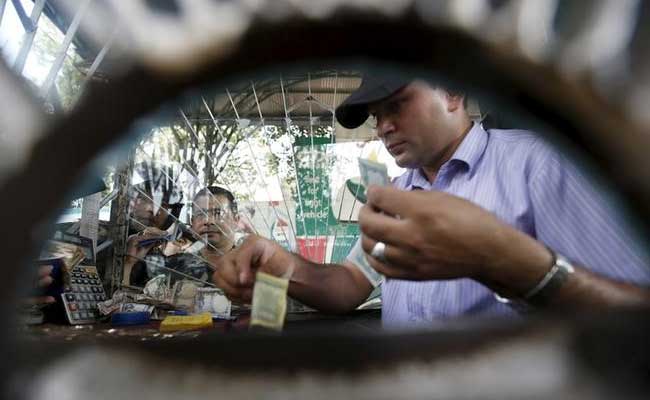
Kathmandu/New Delhi: India's scrapping of high-value bank notes last month has dragged down economic growth in neighbouring Nepal with trade, remittances and tourist numbers all down, BMI Research, a group company of the Fitch rating agency, said on Wednesday.
BMI has revised down its forecast for land-locked Nepal's economy, saying that India's demonetisation could shave Nepal's growth down to 2.2 percent for this fiscal year to July 2017, from an earlier estimate of 2.5 percent.
Nepal's $21 billion economy was already suffering with growth at less than 0.8 percent in the 2015-16 fiscal year after earthquakes in 2015 that killed about 9,000 people.
"The disruption in funds from India is likely to weigh on ongoing reconstruction efforts," the research agency said in a report, adding that Nepal's economy was heavily reliant on India for trade, jobs and aid.
The announcement by Prime Minister Narendra Modi on November 8 to ban 500- and 1,000-rupee notes was intended to flush out billions of dollars in unaccounted wealth and hit the finances of militants suspected of using fake currency.
The Nepal Rastra Bank, the central bank, has now banned Indian currency, saying it wanted a formal communication from the Indian central bank about new Indian bank notes being brought into circulation.
"Until such a notice is received, we will not accept the new Indian notes," said central bank official Rajendra Pandit.
That leaves thousands of Nepalis doing informal trade along the open border with India without the means to receive or make payments for their business.
Nepali Prime Minister Pushpa Kamal Dahal, a former Maoist rebel commander, spoke to PM Modi after the currency ban to ask for arrangements for the exchange of the now defunct Indian cash held in Nepal, but that has yet to happen.
The inflow of Indian tourists to Nepal, who account for a quarter of about 800,000 visitors a year, has fallen. Many Indian tourists have traditionally carried Indian currency for payments in Nepal.
In addition, Nepal depends heavily on funds from workers in India, who sent home $640 million in 2016, or about 2.6 percent of Nepal's gross domestic product.
Thousands of Nepali migrants are returning home as Indian businesses cut production following the cash crunch.

-
Midterm Rally Lasted A Day. The Hard Reality Of A Divided US May Last Two Years | Opinion

Between a contested AI boom, a debt ceiling that arrives in 2027 and a president with every incentive to act alone, the next two years may prove more volatile than the first day's rally suggests.
-
Blue Wave Will Derail the AI Trade but Won't Dismantle the AI Era | Unhedged Position
The Democrats' sweep of the US Congress will see politics collide with economic forces both over the long and short term.
-
It's Time To Take The GST Council's Bet On Trust Global
Payment records can prove India's services exports, and clear, proportionate rules can bring foreign digital sellers into the tax net.
-
Opinion | India at 38: From Innovation Overperformer to Innovation Powerhouse
India now has 453 VC-backed deep science startups, 18 of them late-stage, after 117 percent growth since 2020. Laurus Labs, at USD 9.3 billion, is the most valuable deep science company in any middle-income economy outside China.
-
Navigating Energy Crossroads: S Jaishankar's Call For Diversified Supply Chains At G20 Ministerial Meeting
As geopolitical fault lines continue to test maritime trade routes and commodity flows, Jaishankar's message remains pertinent: true economic resilience requires open markets, protected transit lines, and a genuine commitment to multilateral cooperation rather than coercion.
-
Indians Are Travelling, But Not Every Journey Is A Holiday | The Week In Whys
Pilgrims, patients and working women are the real travellers, and the system hasn't quite caught up with them.
-
Getting To Work Costs Women More | The Reason Why
It is not just about women paying more than men. It is about women paying much more in cities than in villages.
-
AI Bias In Investing Cannot Be Eliminated, But It Can Be Governed
Framing is a particularly important example as identical financial information presented in terms of gains rather than losses can lead an LLM to reach a different assessment.
-
Joining The Dots | Dark Skies, Steady Diya: Why Hope Holds This Diwali
With war, a weak rupee and foreign outflows weighing on sentiment, policymakers at the NDTV World Summit and market veterans at NDTV Profit Ignite: Diwali Edition offered the same advice: stay invested and filter out the noise.









