India's Credit Growth May Dip Further After Touching Record Lows Due To Covid Surge
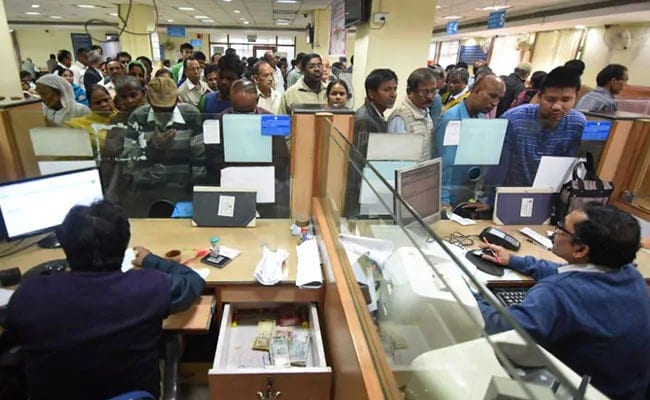
Indian bank credit growth hit a record low in fiscal 2020-21 and is expected to languish near those levels this year as a massive surge of COVID-19 infections risks denting India's economic recovery and forces lenders to turn cautious again. Credit growth touched a record low of 5.6 per cent in financial year 2021, recently released Reserve Bank of India (RBI) data showed, and it slipped even further in April.
"We were estimating credit growth of 8-9 per cent for this financial year, but due to the rise in COVID-19 cases, a higher mortality rate and lockdowns in several parts of the country, downward risks have arisen," said Karthik Srinivasan, analyst at ICRA.
India's total number of COVID-19 cases passed 18 million on Friday and its official death numbers topped 200,000, although many fear the real toll may be much higher.
Some fear credit growth may worsen as a dramatic improvement in macroeconomic outlook anytime soon looks unlikely.
"Demand for credit is restrained while supply side conditions are far from conducive, and may even turn more challenging as policy support fades...The deterioration in the risk profile of borrowers is a major handicap," ANZ economists Sanjay Mathur and Krystal Tan wrote in a recent research note.
Risk-averse savers, however, have continued to park funds in term deposits with banks amid high volatility in stock markets and high gold prices. This has led to banks' deposit growth remaining fairly strong compared to 2019 levels.
Lending on the other hand, particularly to corporates, was muted in 2020/21, and analysts and bankers rule out any major improvement for at least two quarters.
With several industries seeing capacity utilisation of less than 75 per cent, they have put expansion and borrowing plans on hold with commercial paper (CPs) borrowings also falling.
Banking system liquidity, however, remains flushed.
"Lending picked up slightly at the end of last year but due to this challenging second (coronavirus) wave we're all focusing on collections more than growing the book," said a banker at a state-owned bank.
"Banks are on wait-and-watch mode for lending right now," he added.
The central bank has said it will ensure ample liquidity so that there is sufficient credit available for productive sectors of the economy and markets for absorbing the government's massive borrowing programme.
Net durable liquidity has remained above 8 trillion rupees on average since November last year.
Despite the RBI's assurances on liquidity, lending has remained weak. Though the cost of borrowing has fallen steeply since last year and more credit has been made available to banks to lend, there have been very few takers of these loans.
The credit-deposit ratio shows how much of each rupee of deposit is extended by the bank as actual credit disbursal and is thus one of the basic credit growth indicators in the economy.
The continued fall in the CD ratio indicates credit demand has been a bigger problem than credit supply, and the banks' recent risk averseness due to a potential rise in bad debt could further aggravate this situation.

-
A New Samvat Wishlist: Inclusive Prosperity And Human Development

India has strengthened its economic foundations through infrastructure, digital access and enterprise. Its next growth chapter must deepen productivity, create better livelihoods and widen participation in prosperity.
-
Love, Sex Aur Dhokha: The Audacious Plot To Spy On Jensen Huang
A Taipei dinner, a Singapore chip buyer and a suspected Chinese asset: inside the alleged spy operation that got close to NVIDIA's Jensen Huang.
-
Ten Things I Learnt This Samvat
Patience can be a trap. Cheap stocks can stay cheap. Leverage can wipe you out. What did Samvat 2082 teach us? Niraj Shah writes on 10 lessons from the year gone by.
-
Talking Points This Week: Tech Nerves, FII Buying, And A Faraway Banking Shock
The global markets are not shining this Diwali. The exception in the large markets is, India.
-
Midterm Rally Lasted A Day. The Hard Reality Of A Divided US May Last Two Years | Opinion
Between a contested AI boom, a debt ceiling that arrives in 2027 and a president with every incentive to act alone, the next two years may prove more volatile than the first day's rally suggests.
-
Blue Wave Will Derail the AI Trade but Won't Dismantle the AI Era | Unhedged Position
The Democrats' sweep of the US Congress will see politics collide with economic forces both over the long and short term.
-
It's Time To Take The GST Council's Bet On Trust Global
Payment records can prove India's services exports, and clear, proportionate rules can bring foreign digital sellers into the tax net.
-
Opinion | India at 38: From Innovation Overperformer to Innovation Powerhouse
India now has 453 VC-backed deep science startups, 18 of them late-stage, after 117 percent growth since 2020. Laurus Labs, at USD 9.3 billion, is the most valuable deep science company in any middle-income economy outside China.
-
Navigating Energy Crossroads: S Jaishankar's Call For Diversified Supply Chains At G20 Ministerial Meeting
As geopolitical fault lines continue to test maritime trade routes and commodity flows, Jaishankar's message remains pertinent: true economic resilience requires open markets, protected transit lines, and a genuine commitment to multilateral cooperation rather than coercion.









