India’s Corporate Stress Falls To Lowest In Five Years: Credit Suisse
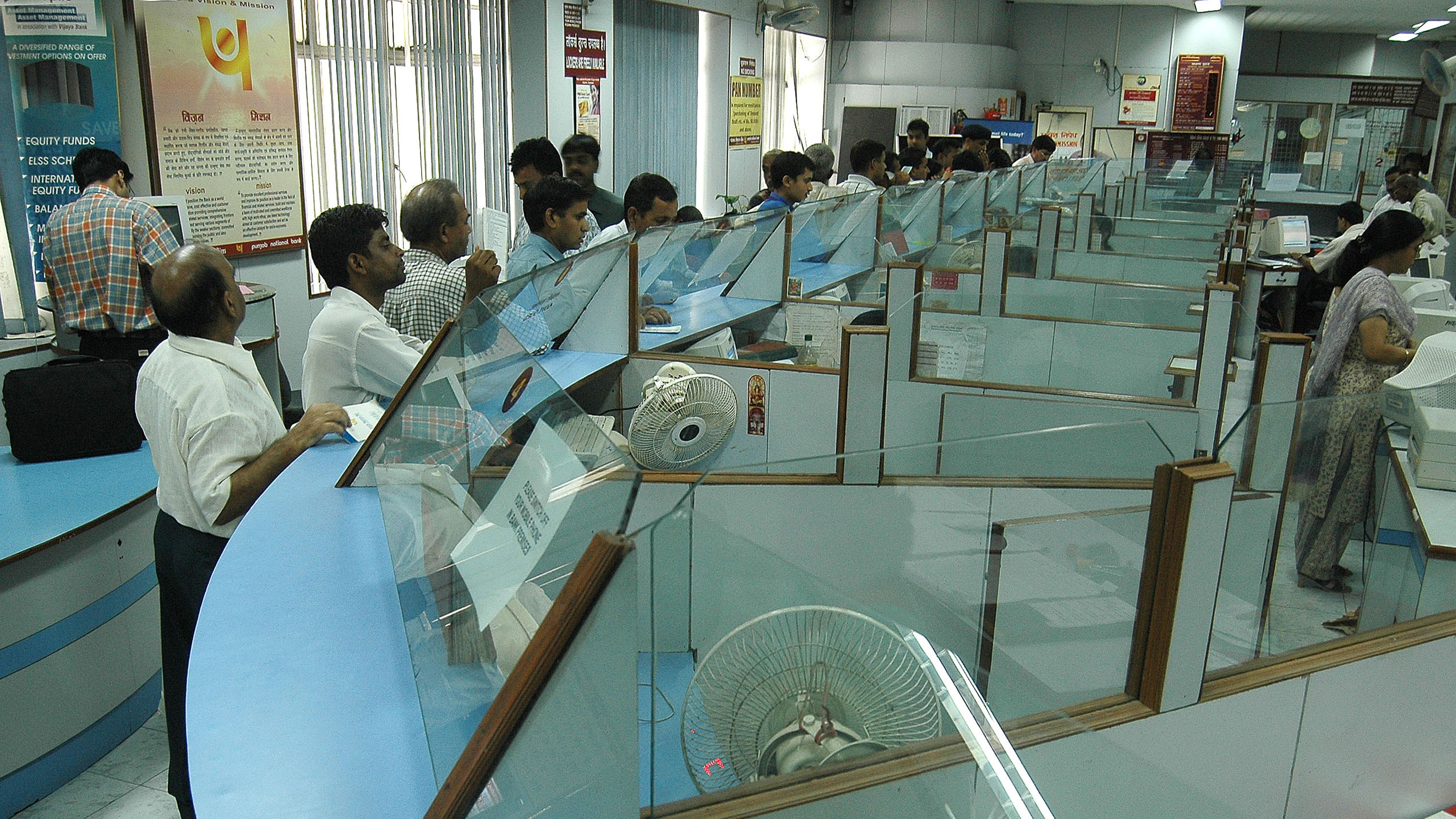
India's corporate stress level fell to its lowest in five years in the quarter ended September, led by a recovery in metals and telecom sector.
The share of debt among stressed Indian companies across sectors, which have an interest coverage ratio of less than one, has reduced sharply to 35% in the July-September quarter of fiscal ending March 2021, Credit Suisse said in its ‘India Corporate Health Tracker' report published on Nov. 19. Total share of debt with stressed companies across sectors fell to Rs 15 lakh crore in the second quarter from Rs 23.8 lakh crore in the three months ended June, according to the report.
An interest coverage ratio of less than one indicates that the company can't meet its immediate interest payment obligations due to poor financial health.

Corporate stress had surged after India imposed one of the world's harshest lockdowns to contain spreading of the coronavirus pandemic. That froze all but essential services, severely hitting auto and industrial sectors, and pushed the economy toward a rare annual contraction in more than four decades. Activities resumed slowly after the curbs were eased.
“Post Covid-19, incremental stress on corporate India appears limited and this is also reflected in the recent commentary from bank managements as well as rating agencies highlighting limited demand for restructuring in the corporate segments,” Credit Suisse said in the report.
The recovery in corporate stress levels was mainly led by companies in the metal and telecom sector, which saw a reduction in debt compared to others.
The metal sector made up for one-third of the reduction in the share of debt among stressed companies on improved profitability due to rising steel prices. That was aided by the exit of Tata Steel Ltd. and Steel Authority of India Ltd. from the stressed corporates list, along with profits returning to pre-Covid levels for JSW Steel Ltd. and Hindalco Industries Ltd., the report said. Overall, the share of debt for the metal sector has gone down to about 5% in the second quarter of FY21 from 16% in the preceding three months.
For the telecom sector, the share of debt fell 100 basis points sequentially to 15% in the second quarter. This was primarily driven by Bharti Airtel Ltd. exiting the stressed corporates list after several quarters of steady improvement, causing the share of debt within the sector to fall to 55% from 98% over the last several quarters.
Separately, the share of debt with loss-making companies also fell to 23% from 28-30% pre-Covid, the report said.
While the power sector saw some improvement in plant load factor, or capacity utilisation, from the first-quarter lows, it remained relatively low at 52%. “This along with improvement in merchant tariffs have led to some increase in profitability.” Within the power sector, the share of debt with companies having interest coverage less than 1 fell to 40% from 45% last quarter. That, the report said, was led by the exit of Tata Power Ltd. Adani Power Ltd. and Reliance Power Ltd., adjusting for one-offs, continue to have interest coverage less than 1. The share of debt for the power sector, however, has gone up to 11% in second quarter from 8% in the three months ended June.
The moderation in credit costs following the spike in corporate stress levels in the first half was also expected to drive recovery in the return on equities for banks, especially large lenders including Axis Bank Ltd., ICICI Bank Ltd., HDFC Bank Ltd. and State Bank of India, the report said.
This may be a relief for Indian banks as their non-performing loans were expected to rise 4 percentage points to 12.5% of total advances by March 2021, the highest in 20 years, according to the Reserve Bank of India's semi-annual Financial Stability Report released in July. The bad loan ratio could rise to 14.7% if economic conditions continue to worsen due to protracted lockdowns, the central bank had then said.
(Corrects earlier version that misstated the share of power sector debt.)

-
Navigating Energy Crossroads: S Jaishankar's Call For Diversified Supply Chains At G20 Ministerial Meeting

As geopolitical fault lines continue to test maritime trade routes and commodity flows, Jaishankar's message remains pertinent: true economic resilience requires open markets, protected transit lines, and a genuine commitment to multilateral cooperation rather than coercion.
-
Indians Are Travelling, But Not Every Journey Is A Holiday | The Week In Whys
Pilgrims, patients and working women are the real travellers, and the system hasn't quite caught up with them.
-
Getting To Work Costs Women More | The Reason Why
It is not just about women paying more than men. It is about women paying much more in cities than in villages.
-
AI Bias In Investing Cannot Be Eliminated, But It Can Be Governed
Framing is a particularly important example as identical financial information presented in terms of gains rather than losses can lead an LLM to reach a different assessment.
-
Joining The Dots | Dark Skies, Steady Diya: Why Hope Holds This Diwali
With war, a weak rupee and foreign outflows weighing on sentiment, policymakers at the NDTV World Summit and market veterans at NDTV Profit Ignite: Diwali Edition offered the same advice: stay invested and filter out the noise.
-
The Curious Case of Equitas Small Finance Bank And A CEO Who Quit For Stock
PN Vasudevan believes persistent investor concerns over a perceived conflict of interest had become a governance overhang on Equitas Small Finance Bank's stock, even as the lender improved profitability and asset quality.
-
Talking Points This Week: AI Cash Burn, A Tiger Comeback And An India That Still Finds Its Own Path
India is not immune to higher oil or tighter global liquidity, yet its earnings base is broader, its domestic policy levers are still available.
-
Foreign Investors Own Half Of HDFC Bank and ICICI Bank. An LTCG Cut Could Matter Most Here
Foreign portfolio investors have US$115 billion parked in HDFC Bank, ICICI Bank. If the government cuts long-term capital gains tax, Jefferies says returning foreign money could land here first.
-
'Never Seen This Level Of Negativity': Sandeep Tandon Says The Next Rally May Be Closer Than You Think
Veteran investor Sandeep Tandon says foreign selling is easing, large-caps are due a comeback and mid-caps are crowded, while he turns positive on gold, power and pharma this Diwali.










