Indian Railways Opens Doors For Contractual Hiring In Select Categories
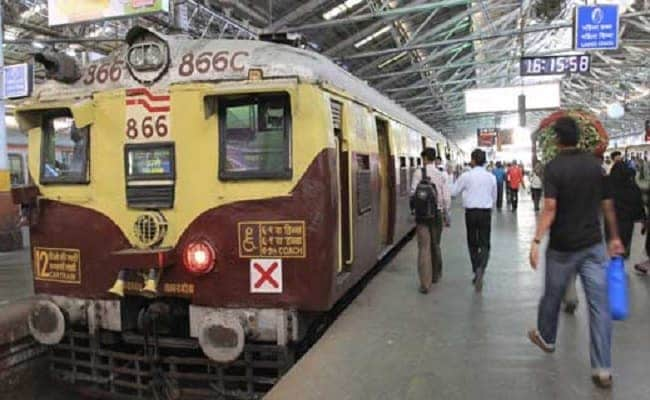
New Delhi: To avoid the time-consuming railway recruitment board route, Indian Railways has opened the doors for contractual engagement in certain categories against existing vacancies to tide over shortage of staff in some key areas.
Besides, it has also decided to engage retired staff for preserving and reviving railway heritage properties such as steam locomotives, vintage coaches and signals, among others.
"Since these retired employees are equipped with the skills to handle steam engines, semaphore signals and other steam-powered equipment, they can be re-hired to do the job on contract," a senior Railways official told new agency IANS.
Zonal heads are being empowered to engage retired employees having adequate skills for consulting and guiding the process of revival and preservation of heritage items.
To mitigate problems arising out of acute shortage of stenographers/PAs affecting efficient functioning of offices, the railways have allowed hiring of data entry operators or executive assistant against an existing vacancy of stenographer on contractual basis, according to the latest Railways order.
"Zonal heads have been authorised to finalise the number of persons to be hired against such vacancies in consultation with concerned departments and the proposed remuneration shall be commensurate with the general work schedule of such hired personnel," the official said.
Considered to be part of the reform measures being undertaken to improve functioning in the public sector behemoth, a series of steps is under active considerations to unfold in near future.
The upper age limit for engagement of retired railway staff is 65 years.
Earlier, the railways had decided to re-hire retired staff at unmanned level crossings.

-
Navigating Friction And Energy Realities: An Analysis Of Marco Rubio's October Visit To India

Occurring at a critical juncture marked by stalled trade negotiations and escalating geopolitical pressures over global energy supplies, the visit offers a profound window into modern US-India relations.
-
India Exports Capital. Why Not Export Trusteeship?
The big question, then, is whether India can build an institution that global borrowers, investors, banks, and lawyers can trust, even without an Indian connection.
-
France's Economy & Politics Are In Crisis | The Reason Why
Let's look at how the French economy and politics evolved under Nicolas Sarkozy, Franois Hollande and Emmanuel Macron.
-
You May Inherit The Business. You Must Earn Its Credibility.
Succession tests the founder's ability to share authority as much as it tests the next generation's readiness to assume it.
-
Signing Deals Is One Thing; Making Them Work Is Another | The Week In Whys
Sometimes, things don't turn out as planned. Indian companies have lost some bids to rivals, some projects won't produce until 2030.
-
FOMC Wall, PERM Suspension, Hospital Stocks | Talking Points This Week
A PERM suspension would directly affect green-card sponsorship rather than H-1B visas, so the near-term earnings impact could remain relatively limited. The key question is whether this marks a new phase in US scrutiny of Indian IT.
-
Everything, Everywhere, All At Once: Dalal Street's Week To Forget | Joining The Dots
Visa curbs, a Starlink spat and cancer drug caps: what connects this week's shocks for Indian markets
-
India Is Going Abroad For Critical Minerals. But It May Take Years To Pay Off | The Reason Why
Although India's steps are in the right direction, they remain modest compared with India's growing dependence.
-
When Everyone Has AI, What Gives You An Edge?
India's young workforce is entering an uncertain world of work where powerful AI tools are becoming widely accessible. The advantage will belong to those who combine deep expertise with digital fluency, and the distinctly human capabilities that technology cannot manufacture.
-
Wrong Labels, High Pesticide Residues Holding Back Agri Exports | The Reason Why
India needs stronger domestic food-safety and labelling standards, with best practices becoming part of everyday business for farmers, traders and food companies.










