Cabinet Approves 5MHz 4G Spectrum For Indian Railways: What You Need To Know
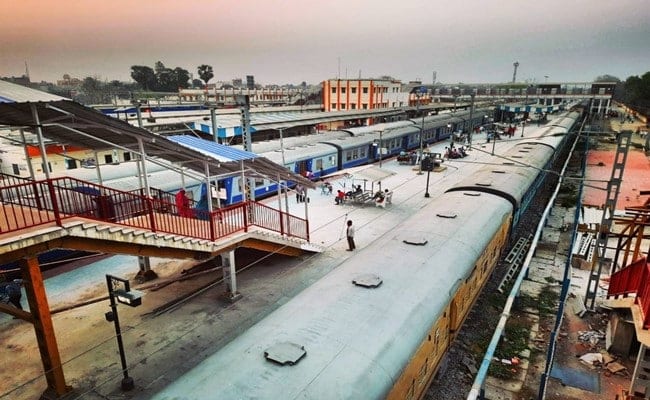
Bringing a strategic shift to Indian Railway operations, the central government today approved the allotment of 5 MHz spectrum in 700 MHz frequency band to the national transporter, with an aim to ensure safety and security services for passengers at stations and trains. According to a recent tweet shared by Railway Ministry Piyush Goyal, the estimated investment of the total project is more than Rs 25,000 crore. The 4MHz 4G spectrum network will also ensure seamless communication with the loco pilots and guards of the railway network.
Govt led by PM @NarendraModi ji has approved allotment of spectrum to Railways to ensure safe, secure, & efficient operations
June 9, 2021
This #AatmanirbharRail will:
???? Use indigenous Train Collision Avoidance System
???? Bring Investment of ₹25,000+ Cr
???? Enable remote asset monitoring pic.twitter.com/ENQza4dNTZAccording to a statement released by the Ministry of Railways on Wednesday, June 9, the authorities intend to provide LTE or long-term evolution, based mobile train radio communication on its route, with the allotment of the 5MHz 4G spectrum system. The project will be completed in the next five years, according to the railway ministry.
How will the 4MHz 4G spectrum help the Indian Railways network?
- The system will provide secure voice, video as well as data communication services for operational, safety, and security applications of the national transporter's network.
- The long-term evolution system will be used for modern signalling and ensuring train protection while maintaining constant communication between loco pilots and guards.
- The system will also allow the Internet of Things (IoT) based remote asset monitoring especially of railway coaches, wagons, locos, and live video feed of CCTV cameras in the coaches to ensure efficient and faster train operations.
- It will help in increasing the line capacity to accommodate more trains using the existing infrastructure. It will also reduce transportation cost and provide higher efficiency across the network.
According to the statement, the spectrum charges may be levied based on the formula basis as prescribed by the Department of Telecommunications (DoT) for the royalty charges and license fee for the captive use as recommended by the Telecom Regulatory Authority of India.
Additionally, Indian Railways also approved TCAS or train collision avoidance system, an indigenously developed automatic train protection system, which will help in avoiding train collisions, reducing accidents to strengthen passenger safety.“This decision will contribute significantly to the modernization of railway communication infrastructure, improving the safety of travel and also the quality of signalling for operations. The recommendations of TRAI seem to have been accepted with the spectrum being allocated specifically for captive usage and not commercial use, with a royalty charge and license fee applicability payable to the DoT,'' said Tony Verghese, Partner, J Sagar Associates.
The wi-fi enhancement capabilities for end customers will not be a focus for now, however, the implementation of safer and faster journeys, resulting in increased revenues,'' he added.

-
Talking Points This Week: Tech Nerves, FII Buying, And A Faraway Banking Shock

The global markets are not shining this Diwali. The exception in the large markets is, India.
-
Midterm Rally Lasted A Day. The Hard Reality Of A Divided US May Last Two Years | Opinion
Between a contested AI boom, a debt ceiling that arrives in 2027 and a president with every incentive to act alone, the next two years may prove more volatile than the first day's rally suggests.
-
Blue Wave Will Derail the AI Trade but Won't Dismantle the AI Era | Unhedged Position
The Democrats' sweep of the US Congress will see politics collide with economic forces both over the long and short term.
-
It's Time To Take The GST Council's Bet On Trust Global
Payment records can prove India's services exports, and clear, proportionate rules can bring foreign digital sellers into the tax net.
-
Opinion | India at 38: From Innovation Overperformer to Innovation Powerhouse
India now has 453 VC-backed deep science startups, 18 of them late-stage, after 117 percent growth since 2020. Laurus Labs, at USD 9.3 billion, is the most valuable deep science company in any middle-income economy outside China.
-
Navigating Energy Crossroads: S Jaishankar's Call For Diversified Supply Chains At G20 Ministerial Meeting
As geopolitical fault lines continue to test maritime trade routes and commodity flows, Jaishankar's message remains pertinent: true economic resilience requires open markets, protected transit lines, and a genuine commitment to multilateral cooperation rather than coercion.
-
Indians Are Travelling, But Not Every Journey Is A Holiday | The Week In Whys
Pilgrims, patients and working women are the real travellers, and the system hasn't quite caught up with them.
-
Getting To Work Costs Women More | The Reason Why
It is not just about women paying more than men. It is about women paying much more in cities than in villages.
-
AI Bias In Investing Cannot Be Eliminated, But It Can Be Governed
Framing is a particularly important example as identical financial information presented in terms of gains rather than losses can lead an LLM to reach a different assessment.









