Indian Job Market To Witness 22% Churn In 5 Years: World Economic Forum
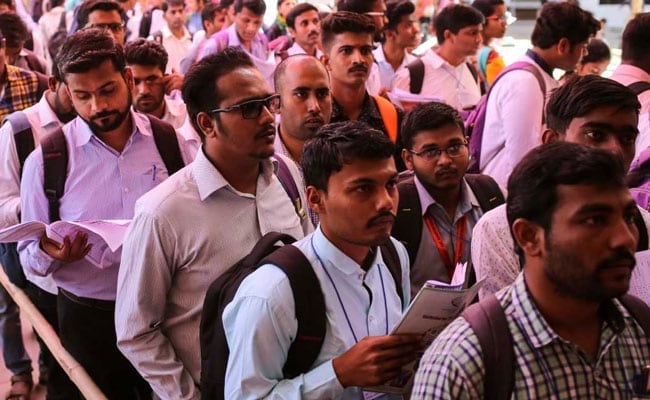
The Indian job market is estimated to witness 22 per cent churn over the next five years, with top emerging roles coming from AI, machine learning and data segments, a new study showed on Monday.
Globally, the job market churn is estimated at 23 per cent, with 69 million new jobs expected to be created and 83 million eliminated by 2027, the World Economic Forum said in its latest Future of Jobs report.
"Almost a quarter of jobs (23 per cent) are expected to change in the next five years through growth of 10.2 per cent and decline of 12.3 per cent (globally)," the WEF said.
According to the estimates of the 803 companies surveyed for the report, employers anticipate 69 million new jobs to be created and 83 million eliminated among the 673 million jobs corresponding to the dataset, a net decrease of 14 million jobs, or 2 per cent of current employment.
Regarding India, it said 61 per cent of companies think broader applications of ESG (environment, social and governance) standards will drive job growth, followed by increased adoption of new technologies (59 per cent) and broadening digital access (55 per cent).
Top roles for industry transformation in India would be AI (artificial intelligence) and machine learning specialists, and data analysts and scientists, it added.
The report also found that manufacturing and oil and gas sectors have the highest level of green skill intensity globally, with India, the US and Finland featuring at the top of the list for the oil and gas sector.
Also, more populous economies such as India and China were more positive than the global average when compared with countries' viewpoints on talent availability while hiring.
On the other hand, India figured among the seven countries where job growth was slower for social jobs than non-social jobs.
In India, 97 per cent of respondents said that the preferred source of funding for training was 'funded by organisation' as against the global average of 87 per cent.
The WEF said that macro trends, including the green transition, ESG standards and localisation of supply chains are the leading drivers of job growth globally, with economic challenges, including high inflation, slower economic growth and supply shortages, posing the greatest threat.
Advancing technology adoption and increasing digitisation will cause significant labour market churn, with an overall net positive in job creation, it added.
"For people around the world, the past three years have been filled with upheaval and uncertainty for their lives and livelihoods, with COVID-19, geopolitical and economic shifts, and the rapid advancement of AI and other technologies now risks adding more uncertainty," said Saadia Zahidi, Managing Director, World Economic Forum.
"The good news is that there is a clear way forward to ensure resilience. Governments and businesses must invest in supporting the shift to the jobs of the future through the education, reskilling and social support structures that can ensure individuals are at the heart of the future of work," she added.
The survey covered 803 companies - collectively employing more than 11.3 million workers - in 27 industry clusters and 45 economies from all world regions.
The WEF said technology continues to pose both challenges and opportunities to labour markets, but employers expect most technologies to contribute positively to job creation.
The fastest-growing roles are being driven by technology and digitalisation. Big data ranks at the top among technologies seen to create jobs. The employment of data analysts and scientists, big data specialists, AI machine learning specialists and cybersecurity professionals is expected to grow on average by 30 per cent by 2027.
At the same time, the fastest declining roles are also being driven by technology and digitalisation, with clerical or secretarial roles, including bank tellers, cashiers and data entry clerks expected to decline fastest.
Also, while expectations of the displacement of physical and manual work by machines have decreased, reasoning, communicating and coordinating - all traits with a comparative advantage for humans - are expected to be more automatable in future.
Artificial intelligence, a key driver of potential algorithmic displacement, is expected to be adopted by nearly 75 per cent of surveyed companies and is expected to lead to high churn - with 50 per cent of organisations expecting it to create job growth and 25 per cent anticipating it to result in job losses.
However, the largest absolute gains in jobs will come from education and agriculture. The report found that jobs in the education industry are expected to grow by about 10 per cent, leading to 3 million additional jobs for vocational education teachers and university and higher education teachers.
Jobs for agricultural professionals, especially agricultural equipment operators, graders and sorters, are expected to see a 15-30 per cent increase, leading to an additional 4 million jobs.
Globally, six in 10 workers will require training before 2027, but only half of the employees are seen to have access to adequate training opportunities today.
At the same time, the report estimates that, on average, 44 per cent of an individual worker's skills will need to be updated.
In response to the cost-of-living crisis, 36 per cent of companies recognise that offering higher wages could help them attract talent. Yet, companies are planning to mix both investment and displacement to make their workforce more productive and cost-effective.
Four in five surveyed companies plan to invest in learning and training on the job as well as automating processes in the next five years.

-
High US Salaries, No Green Card Certainty: The Financial Calculation Facing Indian H-1B Families

The suspension of PERM processing at eight technology employers does not cancel existing H-1B visas. What it does is force a question many Indian families have been avoiding: is the US salary worth tying your career and family plans to one employer?
-
Unhedged Position: Can India See An Indonesia-Style Time Correction?
The Nifty is trading below levels it first clocked in 2024. Is there, then, as I have suggested in the headline, potential that the current time correction drags on painfully for the next three-five, even ten years?
-
Navigating Friction And Energy Realities: An Analysis Of Marco Rubio's October Visit To India
Occurring at a critical juncture marked by stalled trade negotiations and escalating geopolitical pressures over global energy supplies, the visit offers a profound window into modern US-India relations.
-
India Exports Capital. Why Not Export Trusteeship?
The big question, then, is whether India can build an institution that global borrowers, investors, banks, and lawyers can trust, even without an Indian connection.
-
France's Economy & Politics Are In Crisis | The Reason Why
Let's look at how the French economy and politics evolved under Nicolas Sarkozy, Franois Hollande and Emmanuel Macron.
-
You May Inherit The Business. You Must Earn Its Credibility.
Succession tests the founder's ability to share authority as much as it tests the next generation's readiness to assume it.
-
Signing Deals Is One Thing; Making Them Work Is Another | The Week In Whys
Sometimes, things don't turn out as planned. Indian companies have lost some bids to rivals, some projects won't produce until 2030.
-
FOMC Wall, PERM Suspension, Hospital Stocks | Talking Points This Week
A PERM suspension would directly affect green-card sponsorship rather than H-1B visas, so the near-term earnings impact could remain relatively limited. The key question is whether this marks a new phase in US scrutiny of Indian IT.
-
Everything, Everywhere, All At Once: Dalal Street's Week To Forget | Joining The Dots
Visa curbs, a Starlink spat and cancer drug caps: what connects this week's shocks for Indian markets
-
India Is Going Abroad For Critical Minerals. But It May Take Years To Pay Off | The Reason Why
Although India's steps are in the right direction, they remain modest compared with India's growing dependence.









