Factory Growth Hits 10-Month High In November On Strong Demand
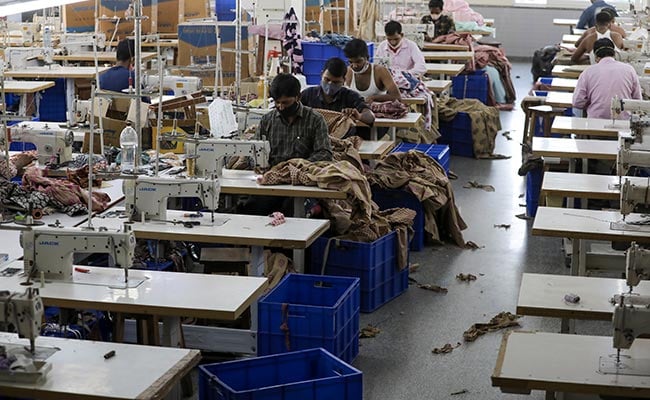
India's manufacturing activity grew at the fastest pace in 10 months in November, buoyed by a strong pick-up in demand, but higher inflationary pressure left factories worried about their future prospects, a private survey showed on Wednesday.
An easing of COVID-19 restrictions drove demand and boosted sales, indicating the economy was on the path to normalization.
Compiled by IHS Markit, the Purchasing Managers' Index rose to 57.6 in November from 55.9 in October. The reading was the highest since January and the fifth straight month above the 50-mark that separates growth from contraction.
"The Indian manufacturing industry continued to expand in November, with growth gathering pace and forward-looking indices generally pointing to further improvements in the months to come," said Pollyanna De Lima, economics associate director at IHS Markit.
"The fact that firms purchased additional inputs at a stronger rate amid efforts to restock, combined with recurring declines in inventories of finished goods and tentative signs of a pick-up in hiring activity, indicate that production volumes will likely expand further in the near-term."
New orders improved sharply - the strongest since February - mostly driven by domestic demand. That resulted in production rising for a fifth consecutive month and at the fastest pace in nine months.
Firms increased headcount to meet the elevated demand, ending a three-month sequence of reduction, although the pace of job creation was minimal.
But the optimism was darkened to some extent by soaring input price inflation. Barring October, the input prices sub-index was at the highest in almost eight years owing to supply constraints and rising transportation costs.
"Should raw material scarcity and shipping issues continue to feed through to purchasing prices, substantial increases in output charges could be seen and demand resilience would be tested," De Lima said.
Output prices continued to rise moderately, indicating firms passed on some of their additional cost burden to clients.
The Reserve Bank of India is not expected to raise interest rates until at least the beginning of next financial year, according to a recent Reuters poll, but it might consider a rate hike earlier to curb inflation.
India's economy expanded by 8.4 per cent in the July-September quarter from a year earlier, but economists said disruptions from the emerging Omicron coronavirus variant risked slowing the recovery, especially given the country's low vaccination rates.
(Except for the headline, this story has not been edited by NDTV staff and is published from a syndicated feed.)

-
Midterm Rally Lasted A Day. The Hard Reality Of A Divided US May Last Two Years | Opinion

Between a contested AI boom, a debt ceiling that arrives in 2027 and a president with every incentive to act alone, the next two years may prove more volatile than the first day's rally suggests.
-
Blue Wave Will Derail the AI Trade but Won't Dismantle the AI Era | Unhedged Position
The Democrats' sweep of the US Congress will see politics collide with economic forces both over the long and short term.
-
It's Time To Take The GST Council's Bet On Trust Global
Payment records can prove India's services exports, and clear, proportionate rules can bring foreign digital sellers into the tax net.
-
Opinion | India at 38: From Innovation Overperformer to Innovation Powerhouse
India now has 453 VC-backed deep science startups, 18 of them late-stage, after 117 percent growth since 2020. Laurus Labs, at USD 9.3 billion, is the most valuable deep science company in any middle-income economy outside China.
-
Navigating Energy Crossroads: S Jaishankar's Call For Diversified Supply Chains At G20 Ministerial Meeting
As geopolitical fault lines continue to test maritime trade routes and commodity flows, Jaishankar's message remains pertinent: true economic resilience requires open markets, protected transit lines, and a genuine commitment to multilateral cooperation rather than coercion.
-
Indians Are Travelling, But Not Every Journey Is A Holiday | The Week In Whys
Pilgrims, patients and working women are the real travellers, and the system hasn't quite caught up with them.
-
Getting To Work Costs Women More | The Reason Why
It is not just about women paying more than men. It is about women paying much more in cities than in villages.
-
AI Bias In Investing Cannot Be Eliminated, But It Can Be Governed
Framing is a particularly important example as identical financial information presented in terms of gains rather than losses can lead an LLM to reach a different assessment.
-
Joining The Dots | Dark Skies, Steady Diya: Why Hope Holds This Diwali
With war, a weak rupee and foreign outflows weighing on sentiment, policymakers at the NDTV World Summit and market veterans at NDTV Profit Ignite: Diwali Edition offered the same advice: stay invested and filter out the noise.









