Companies Swapping Dollar For Asian Currencies To Buy Russian Coal
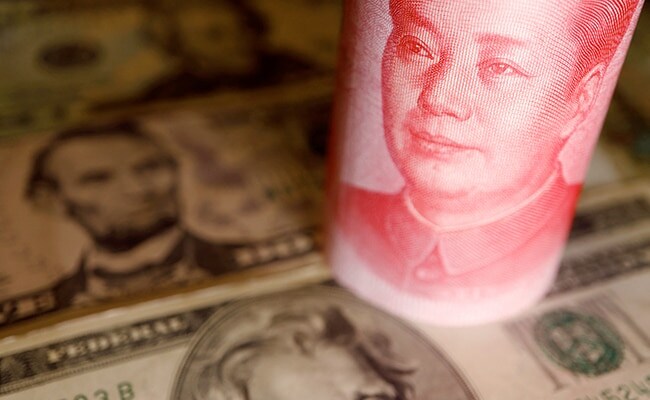
The Indian companies are using Asian currencies more often to pay for Russian coal imports, according to customs documents and industry sources, avoiding the US dollar and cutting the risk of breaching Western sanctions against Moscow.
Reuters previously reported on a large Indian coal deal involving the Chinese yuan, but the customs data underline how non-dollar settlements are becoming commonplace.
India has aggressively stepped up purchases of Russian oil and coal since the war in Ukraine began, helping to cushion Moscow from the effects of sanctions and allowing New Delhi to secure raw materials at discounts compared to supplies from other countries.
Russia became India's third-largest coal supplier in July, with imports rising by over a fifth compared with June to a record 2.06 million tonnes.
In June, Indian buyers paid for at least 742,000 tonnes of Russian coal using currencies other than the US dollar, according to a summary of deals compiled by a trade source based in India using customs documents and shared with Reuters, equal to 44% of the 1.7 million of tonnes of Russian imports that month.
Indian steelmakers and cement manufacturers have bought Russian coal using the United Arab Emirates dirham, Hong Kong dollar, yuan and euro in recent weeks, according to customs documents separately reviewed by Reuters.
The yuan accounted for 31% of the non-U.S. dollar payments for Russian coal in June and the Hong Kong dollar for 28%. The euro made up under a quarter and the Emirati dirham around one-sixth, the data from the trade source showed.
Ministry of Finance, which administers the customs board, did not respond to emails seeking comment confirming the documents. The Ministry of Commerce and Industry declined to comment.
The Reserve Bank of India also did not respond to requests for comment.
The RBI has approved payments for commodities in the Indian rupee, a move it expects to boost bilateral trade with Russia in its own currency.
The US dollar has been the dominant currency for Indian commodity imports, traders said, and the greenback makes up most of the country's foreign exchange reserves.
For deals in a currency other than the dollar, lenders would potentially have to send dollars to bank branches in the country of the original currency, or banks they have tie-ups with, in exchange for that currency to settle the trade.
KEEPING DOLLAR AT A DISTANCE
Two traders based in India that purchase coal for domestic customers and a trader based in Europe that deals with Russian coal said they expected the share of non-dollar transactions for Russian coal to increase as banks and other parties explore ways of cushioning themselves against any further tightening of sanctions.
Buying Russian coal using the US dollar is not illegal for Indian firms.
Reuters was able to corroborate customs documents for four of the 11 vessels in the summary of Russian coal trades in June provided by the trade source, which showed payments made using the yuan, euro and the Emirati dirham, using shiptracking data and by speaking to a private customs agent based in India.
Another three vessels in the 11 deals in the trader's summary were paid for using the Hong Kong dollar and the yuan, two trade sources familiar with the transactions confirmed.
In one of those three deals, Jindal Steel and Power Ltd (JSPL) imported 79,721 tonnes of so-called PCI coal in the vessel Zheng Kai from Russia's Ust-Luga port using yuan, according to the two sources.
Rival steelmaker Arcelormittal Nippon Steel India shipped in 35,000 tonnes of Russian anthracite coal using euros, a customs document dated June 15 showed.
JSPL and Arcelormittal Nippon declined to comment.
Non-dollar imports continued into July.
Two Indian customs documents from last month reviewed by Reuters showed that Indian companies agreed to pay for Russian coal using Hong Kong dollars and Emirati dirhams.
JK Lakshmi Cement imported 10,000 tonnes of Russian thermal coal in the bulk vessel Ada, according to a customs document dated July 20. The invoice was valued at 14.62 million Emirati dirhams ($3.98 million), and trader Swiss Singapore facilitated the deal.
JK Lakshmi did not respond to calls or emails requesting a comment. Swiss Singapore, owned by Indian conglomerate Aditya Birla Group, did not respond to requests seeking comment.
Indian coal trader Chettinad Logistics imported 25,000 tonnes of Russian thermal coal from Singapore-based trader Avani Resources and paid in Hong Kong dollars, another customs document dated July 20 showed.
Reuters was unable to contact Chettinad Logistics. Avani did not respond to an email seeking comment.

-
Navigating Energy Crossroads: S Jaishankar's Call For Diversified Supply Chains At G20 Ministerial Meeting

As geopolitical fault lines continue to test maritime trade routes and commodity flows, Jaishankar's message remains pertinent: true economic resilience requires open markets, protected transit lines, and a genuine commitment to multilateral cooperation rather than coercion.
-
Indians Are Travelling, But Not Every Journey Is A Holiday | The Week In Whys
Pilgrims, patients and working women are the real travellers, and the system hasn't quite caught up with them.
-
Getting To Work Costs Women More | The Reason Why
It is not just about women paying more than men. It is about women paying much more in cities than in villages.
-
AI Bias In Investing Cannot Be Eliminated, But It Can Be Governed
Framing is a particularly important example as identical financial information presented in terms of gains rather than losses can lead an LLM to reach a different assessment.
-
Joining The Dots | Dark Skies, Steady Diya: Why Hope Holds This Diwali
With war, a weak rupee and foreign outflows weighing on sentiment, policymakers at the NDTV World Summit and market veterans at NDTV Profit Ignite: Diwali Edition offered the same advice: stay invested and filter out the noise.
-
The Curious Case of Equitas Small Finance Bank And A CEO Who Quit For Stock
PN Vasudevan believes persistent investor concerns over a perceived conflict of interest had become a governance overhang on Equitas Small Finance Bank's stock, even as the lender improved profitability and asset quality.
-
Talking Points This Week: AI Cash Burn, A Tiger Comeback And An India That Still Finds Its Own Path
India is not immune to higher oil or tighter global liquidity, yet its earnings base is broader, its domestic policy levers are still available.
-
Foreign Investors Own Half Of HDFC Bank and ICICI Bank. An LTCG Cut Could Matter Most Here
Foreign portfolio investors have US$115 billion parked in HDFC Bank, ICICI Bank. If the government cuts long-term capital gains tax, Jefferies says returning foreign money could land here first.
-
'Never Seen This Level Of Negativity': Sandeep Tandon Says The Next Rally May Be Closer Than You Think
Veteran investor Sandeep Tandon says foreign selling is easing, large-caps are due a comeback and mid-caps are crowded, while he turns positive on gold, power and pharma this Diwali.










