India-UAE CEPA: Tariff Cuts On Most Goods; Non-Gold Jewellery, Dairy Left Out
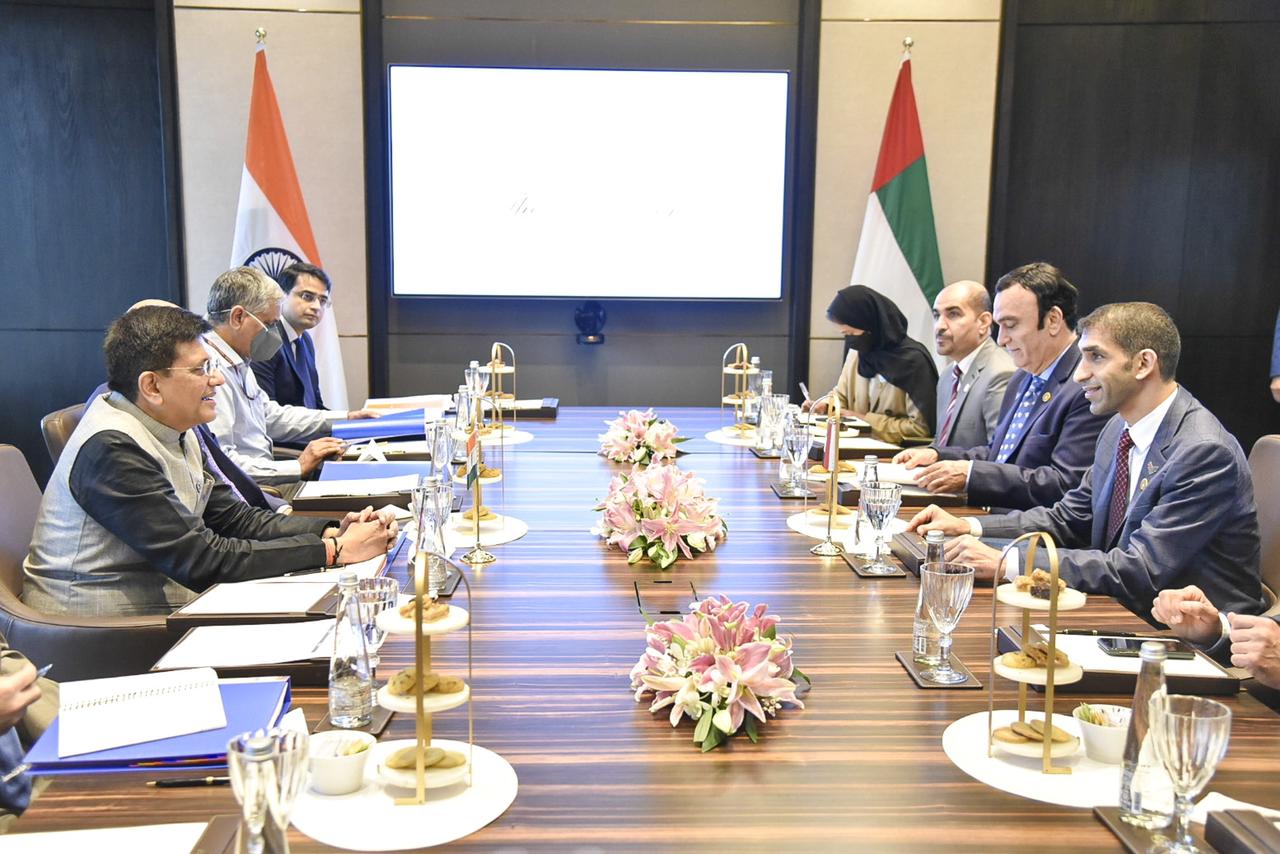
From mangoes to automobiles, India's free-trade pact with the United Arab Emirates will eliminate duties on 90% of the goods exported to the Gulf nation.
India-United Arab Emirates' Comprehensive Economic Partnership Agreement will come into force from May 1. According to the documents on the website of the Commerce Ministry, both the countries have agreed to remove customs duties on goods originating in either India or the UAE in the next four years.
The CEPA, signed on Feb. 18, was ratified by the government of the UAE over the March 26-27 weekend.
The top items exported to UAE are mineral fuels, mineral oils and products of their distillation, natural or cultured pearls, precious or semiprecious stones, and electrical machinery and equipment, and parts thereof, television image and sound recorders and reproducers, and parts.
The two countries have agreed on a comprehensive list of products for tariff reduction. For instance, the export duty on mangoes will be nil by the fifth year from the current effective rate of 30%.
The agreement will eliminate duties on 90% of India's exports to the UAE, covering sectors such as textiles, leather, engineering goods, footwear, sports goods, plastics, furniture, agricultural and wood products, medical devices, and automobiles, the ministry said.
There are exclusions though. Among prominent items excluded are jewellery with silver filigree work, whether or not plated or clad with other precious metal; silver jewellery with gems; other articles of jewellery; of metal clad with precious metal, and parts of metal clad with precious metal. Gold jewellery, however, is not on the exclusion list.
Other exclusions include dairy items such as milk and cream, skimmed milk, yogurt, butter milk, curd, and lassi; meat and edible offal of chicken not cut in pieces; meat and edible offal of ducks not cut in pieces; frozen Indian white shrimp; lobsters live, fresh or chilled; and crabs live, fresh or chilled.
India has offered tariff discounts on dates, petroleum products, petrochemicals, and metals, among other products.
The agreement prevents either country from nullifying or impairing any of the tariff concessions, except as provided in the agreement. It requires either country to reduce duties further if India or the UAE reduces the most-favoured nation applied rate of customs duty for any product to below the agreed duty rate in the CEPA.
All of these concessions will apply only on direct exports. Goods shipped via other countries or re-exported have been kept out of the agreement.
According to a statement by the Commerce Ministry, the UAE has offered duty elimination on more than 97% of its tariff lines, approximating to 99% of Indian exports to the UAE by value.
India and the UAE will not be adopting any non-tariff measure on the import and export of goods, except in accordance with its WTO rights and obligations or with the free-trade pact.
Any non-tariff measure seen as "an unnecessary obstacle to trade" can be escalated to the Committee on Trade in Goods, established under the agreement.
Dispute Settlement
The trade document states that both countries need to designate a "contact point" within 30 days of the agreement coming into force to facilitate communications on any dispute.
In case of a dispute that does not get resolved via consultation, "the Party that sought consultations may request the establishment of a panel".
The panel will comprise three members, who can neither be nationals of either of the countries, nor their permanent residents.

-
Talking Points This Week: Tech Nerves, FII Buying, And A Faraway Banking Shock

The global markets are not shining this Diwali. The exception in the large markets is, India.
-
Midterm Rally Lasted A Day. The Hard Reality Of A Divided US May Last Two Years | Opinion
Between a contested AI boom, a debt ceiling that arrives in 2027 and a president with every incentive to act alone, the next two years may prove more volatile than the first day's rally suggests.
-
Blue Wave Will Derail the AI Trade but Won't Dismantle the AI Era | Unhedged Position
The Democrats' sweep of the US Congress will see politics collide with economic forces both over the long and short term.
-
It's Time To Take The GST Council's Bet On Trust Global
Payment records can prove India's services exports, and clear, proportionate rules can bring foreign digital sellers into the tax net.
-
Opinion | India at 38: From Innovation Overperformer to Innovation Powerhouse
India now has 453 VC-backed deep science startups, 18 of them late-stage, after 117 percent growth since 2020. Laurus Labs, at USD 9.3 billion, is the most valuable deep science company in any middle-income economy outside China.
-
Navigating Energy Crossroads: S Jaishankar's Call For Diversified Supply Chains At G20 Ministerial Meeting
As geopolitical fault lines continue to test maritime trade routes and commodity flows, Jaishankar's message remains pertinent: true economic resilience requires open markets, protected transit lines, and a genuine commitment to multilateral cooperation rather than coercion.
-
Indians Are Travelling, But Not Every Journey Is A Holiday | The Week In Whys
Pilgrims, patients and working women are the real travellers, and the system hasn't quite caught up with them.
-
Getting To Work Costs Women More | The Reason Why
It is not just about women paying more than men. It is about women paying much more in cities than in villages.
-
AI Bias In Investing Cannot Be Eliminated, But It Can Be Governed
Framing is a particularly important example as identical financial information presented in terms of gains rather than losses can lead an LLM to reach a different assessment.









