India Different Than In 2013: Morgan Stanley's "Transformation" Report
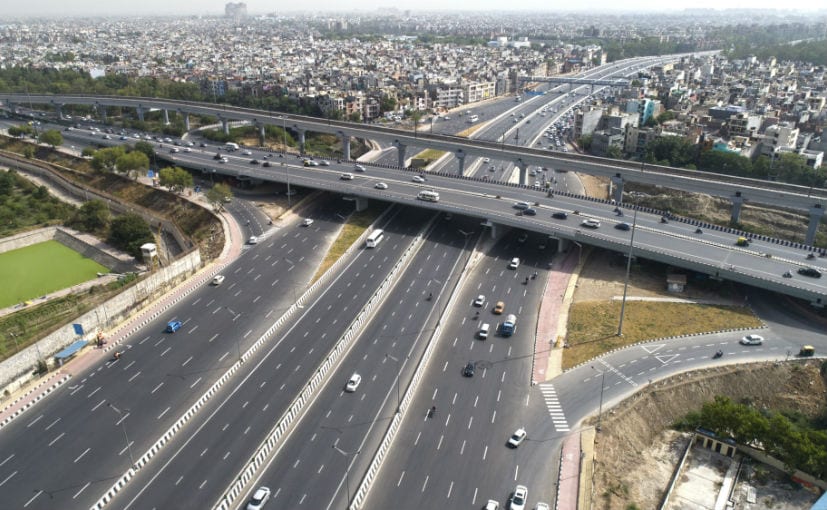
India, under Prime Minister Narendra Modi, has transformed, gaining a position in the world order and becoming a key driver for Asia and global growth, said Morgan Stanley.
In a report, Morgan Stanley said significant scepticism about India, particularly with overseas investors, ignores the significant changes that have taken place in India, especially since 2014.
India of today, the report said, is different from what it was in 2013.
"This India is different from what it was in 2013. In a short span of 10 years, India has gained positions in the world order with significant positive consequences for the macro and market outlook," it said. "India has transformed in less than a decade."
Listing the 10 big changes that have happened since Prime Minister Narendra Modi took office in 2014, the brokerage said bringing corporate tax at par with peers and infrastructure investment picking pace are one of the biggest supply-side policy reforms.
Also, the rising collection of GST -- the uniform tax that replaced more than a dozen different central and state taxes -- and the rising share of digital transactions as a percentage of GDP indicate the formalisation of the economy.
Transfer of subsidies to accounts of beneficiaries, insolvency and bankruptcy code, flexible inflation targeting, focus on FDI, government support for corporate profits, a new law for real estate sector and MNC sentiment at multi-year high were other significant changes, it said.
Manufacturing and capital spending as a percentage of GDP has continuously risen, Morgan Stanley said, adding export market share is projected to more than double to 4.5 per cent by 2031.

India, according to the report, "will emerge as a key driver for Asia and global growth." On the skepticism about India, particularly with overseas investors, who say India has not delivered its potential -- despite it being the second-fastest growing economy and among the top-performing stock markets over the past 25 years -- and that equity valuations are too rich, it said, such a view ignores the significant changes that have taken place in India, especially since 2014.
The report highlighted the 10 big changes, including supply-side policy reforms, formalisation of the economy, Direct Benefit Transfer, Insolvency and Bankruptcy Code, focus on FDI and flexible inflation targeting. These changes are because of India's policy choices, and their implications for its economy and market.

As a result, the report expects a new cycle in manufacturing and capex, as the share of both will rise in GDP. It also estimates that India's export market share will rise to 4.5 per cent by 2031, nearly 2 times from 2021 levels, with broadbased gains across goods and services exports and there would be a major shift in consumption basket.
"As India's per capita income increases from USD 2,200 currently to about USD 5,200 by F2032, this will have major implications for change in the consumption basket, with an impetus to discretionary consumption," it said.
In a matter of a few years, India has also become the global leader in digital transactions and real-time payments.

As per the report, inflation would remain benign and less volatile, which would imply shallower rate cycles and benign trend in current account deficit.
The share of profits in GDP has doubled from all-time lows in 2020 and are set to rise further – maybe even double from here– leading to strong absolute and relative earnings, it said, adding, this explains India's apparently rich headline equity valuations.
As India's reliance on global capital market flows has reduced, the market's sensitivity to a US recession and US Fed rate changes also seems to be fading, it added.
The report said, a global recession, a fragmented general election outcome in 2024, sharp rise in commodity prices due to supply outages and shortages in skilled labour supply are key risks to India's growth.

-
Unhedged Position: Can India See An Indonesia-Style Time Correction?

The Nifty is trading below levels it first clocked in 2024. Is there, then, as I have suggested in the headline, potential that the current time correction drags on painfully for the next three-five, even ten years?
-
Navigating Friction And Energy Realities: An Analysis Of Marco Rubio's October Visit To India
Occurring at a critical juncture marked by stalled trade negotiations and escalating geopolitical pressures over global energy supplies, the visit offers a profound window into modern US-India relations.
-
India Exports Capital. Why Not Export Trusteeship?
The big question, then, is whether India can build an institution that global borrowers, investors, banks, and lawyers can trust, even without an Indian connection.
-
France's Economy & Politics Are In Crisis | The Reason Why
Let's look at how the French economy and politics evolved under Nicolas Sarkozy, Franois Hollande and Emmanuel Macron.
-
You May Inherit The Business. You Must Earn Its Credibility.
Succession tests the founder's ability to share authority as much as it tests the next generation's readiness to assume it.
-
Signing Deals Is One Thing; Making Them Work Is Another | The Week In Whys
Sometimes, things don't turn out as planned. Indian companies have lost some bids to rivals, some projects won't produce until 2030.
-
FOMC Wall, PERM Suspension, Hospital Stocks | Talking Points This Week
A PERM suspension would directly affect green-card sponsorship rather than H-1B visas, so the near-term earnings impact could remain relatively limited. The key question is whether this marks a new phase in US scrutiny of Indian IT.
-
Everything, Everywhere, All At Once: Dalal Street's Week To Forget | Joining The Dots
Visa curbs, a Starlink spat and cancer drug caps: what connects this week's shocks for Indian markets
-
India Is Going Abroad For Critical Minerals. But It May Take Years To Pay Off | The Reason Why
Although India's steps are in the right direction, they remain modest compared with India's growing dependence.
-
When Everyone Has AI, What Gives You An Edge?
India's young workforce is entering an uncertain world of work where powerful AI tools are becoming widely accessible. The advantage will belong to those who combine deep expertise with digital fluency, and the distinctly human capabilities that technology cannot manufacture.









