India Supports Release Of Oil From US Reserves To Cool Prices, Says Minister
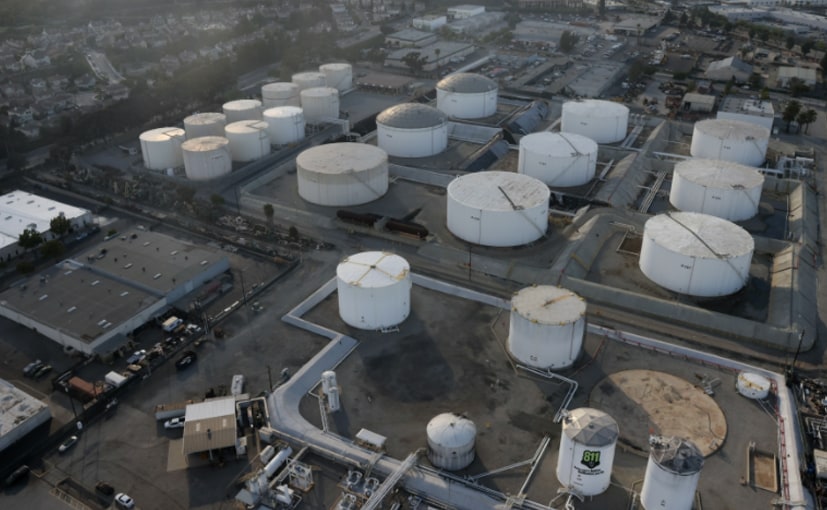
As oil prices dived on news that the US was considering record release from the reserves, India on Thursday said it supports the initiative to let out from the strategic stockpile to cool rising oil prices.
Oil prices plunged on Thursday on news that the United States was considering releasing up to 180 million barrels from its strategic petroleum reserve (SPR).
International benchmark Brent crude fell around 4 per cent to $108.85 per barrel at around 1:30 pm.
"Government of India (GoI) is closely monitoring global energy markets situation in the backdrop of evolving geopolitical events," Minister of State for Petroleum and Natural Gas Rameswar Teli said in a written reply to a question in Lok Sabha.
The government, he said, "is ready to take all appropriate action, as deemed fit, including supporting initiatives for releases from SPR, for mitigating market volatility and calming the rise in crude oil prices." In November 2021, in a bid to control inflationary pressures, India, in consultation and parallelly with major energy consumers, had agreed to release 5 million barrels from its SPR.
Oil prices earlier this month surged to 14-year record highs on Russia's invasion of Ukraine and subsequent supply concerns, driving spikes in inflation across the global economy.
While the International Energy Agency (IEA) will hold an emergency meeting on Friday to discuss oil supply concerns, the Organization of Petroleum Exporting Countries and its allies including Russia (known as OPEC ) will meet later on Thursday.
OPEC is expected to maintain its existing deal to slowly increase production, after cutting output substantially during the Covid-19 pandemic and associated fall in demand.
Teli said India maintains SPR of 5.33 million tonne, or equivalent of about 9.5 days of crude oil requirement.
In addition, oil marketing companies (OMCs) currently have a capacity of 64.5 days.
"Hence, the total storage capacity of crude oil and petroleum products is 74 days," he said.
While OMCs paused retail price revision during the period when international oil prices spiked to a 14-year high of $139, petrol and diesel prices have been since March 22 revised 9 times, totalling Rs 6.4 per litre.
The opposition parties have accused the government of holding the rates when five states including Uttar Pradesh and Punjab went to the polls and raising prices after the elections were completed.
"Prices of petrol and diesel have been market-determined with effect from June 26, 2010, and October 19, 2014, respectively and are linked to the price of respective products in the international market," Teli said.
"Since then, the public sector OMCs take appropriate decision on pricing of petrol and diesel in line with international product prices, exchange rate, tax structure, inland freight and other cost elements." Besides petrol and diesel, cooking gas prices have also increased by Rs 50 per cylinder post ending of the elections.
"For domestic LPG, the government continues to modulate the effective price to consumer to insulate the common man from rise in international prices," he said without elaborating.
India is dependent on imports to meet 85 per cent of its oil needs.
Its major sources of crude oil are Iraq, Saudi Arabia, the UAE, Nigeria and the USA.
While OMCs have snapped distressed Russian oil being offered at a deep discount post-Ukraine war, Teli said: "less than 1 per cent of total crude oil (is) being imported from Russia in the year 2021-22 (till January)."
"Import of crude oil is carried out by Indian oil and refining companies in the public and private sector from diverse sources, including from sources in Russia, through business-to-business arrangements, based on techno-commercial considerations and domestic requirements," he added.

-
Talking Points This Week: Tech Nerves, FII Buying, And A Faraway Banking Shock

The global markets are not shining this Diwali. The exception in the large markets is, India.
-
Midterm Rally Lasted A Day. The Hard Reality Of A Divided US May Last Two Years | Opinion
Between a contested AI boom, a debt ceiling that arrives in 2027 and a president with every incentive to act alone, the next two years may prove more volatile than the first day's rally suggests.
-
Blue Wave Will Derail the AI Trade but Won't Dismantle the AI Era | Unhedged Position
The Democrats' sweep of the US Congress will see politics collide with economic forces both over the long and short term.
-
It's Time To Take The GST Council's Bet On Trust Global
Payment records can prove India's services exports, and clear, proportionate rules can bring foreign digital sellers into the tax net.
-
Opinion | India at 38: From Innovation Overperformer to Innovation Powerhouse
India now has 453 VC-backed deep science startups, 18 of them late-stage, after 117 percent growth since 2020. Laurus Labs, at USD 9.3 billion, is the most valuable deep science company in any middle-income economy outside China.
-
Navigating Energy Crossroads: S Jaishankar's Call For Diversified Supply Chains At G20 Ministerial Meeting
As geopolitical fault lines continue to test maritime trade routes and commodity flows, Jaishankar's message remains pertinent: true economic resilience requires open markets, protected transit lines, and a genuine commitment to multilateral cooperation rather than coercion.
-
Indians Are Travelling, But Not Every Journey Is A Holiday | The Week In Whys
Pilgrims, patients and working women are the real travellers, and the system hasn't quite caught up with them.
-
Getting To Work Costs Women More | The Reason Why
It is not just about women paying more than men. It is about women paying much more in cities than in villages.
-
AI Bias In Investing Cannot Be Eliminated, But It Can Be Governed
Framing is a particularly important example as identical financial information presented in terms of gains rather than losses can lead an LLM to reach a different assessment.









