Sensex Falls Over 500 Points Tracking A Global Sell-Off As Russia Fights Back On Sanctions
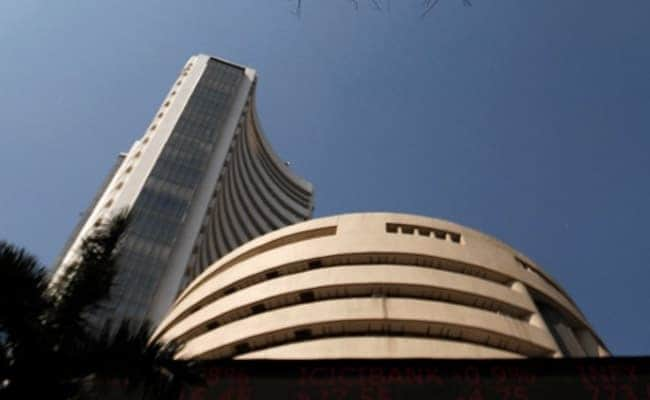
Indian equities fell on Wednesday, tracking a broader global equities sell-off as investors were rattled by economic growth fears and news that Russia will cut gas supplies to Eastern Europe added to the grim mood.
The 30-share BSE Sensex 30-share index fell over 500 points to about 56,819, and the broader NSE Nifty slipped nearly 1 per cent to below 17,038. Both the benchmarks gave up the gains from yesterday.
In the previous session, the Sensex index had jumped nearly 800 points to around 57,356, while the Nifty rose almost 1.5 per cent to about 17,200, after both the indexes had declined over 1 per cent on Monday.
Stocks across sectors lost ground, with all major Nifty sub-indexes in negative territory.
From the Sensex pack, Bajaj Finance, Bajaj Finserv, ICICI Bank, Titan, Dr Reddy's, Wipro, State Bank of India, Infosys, Maruti and UltraTech Cement emerged as the major laggards.
In contrast, Tata Steel, Asian Paints, HCL Technologies, TCS, Kotak Mahindra Bank, Reliance Industries and HDFC Bank were the gainers. Reliance Industrial Infrastructure Ltd (RIIL) was the top gainer, rising 20 per cent.
And on the other hand, for the third day in a row, shares of Future Group companies tumbled — Future Consumer crashed nearly 20 per cent, while Future Enterprises and Future Retail were down about 5 per cent, on increasing concerns that the group faces bankruptcy risk after the Reliance deal failed.
The risk-off sentiment was driven by Russia's latest move - to halt supplies to Poland and Bulgaria from today, which is viewed as a significant escalation in the Ukraine crisis.
In response to Western sanctions on Moscow for its attack on Ukraine, Moscow has demanded payments for its gas exports in roubles.
"The catalysts for these moves were yet more bellicose words from Russia over Ukraine and the announcement that Bulgaria and Poland would see their gas supplies from Russia shut off from today," noted Robert Carnell, Regional Head of Research - Asia-Pacific at ING.
That move sent oil and gas prices higher. Brent crude futures rose to near $106 a barrel. Crude prices rose about 3 per cent in the previous session in volatile trade.
Financial markets have already been reeling from the Russia-Ukraine war and the supply disruptions which have pushed up commodities prices.
That has led global inflation to multi-year highs, and in response, the expected aggressive monetary policy path, especially from the US Federal Reserve, has increased fears about world economic growth.
China's stringent restrictions have also weighed on investor sentiment, although the central bank there announced stimulus measures.
Still, the broader outlook shows that the Federal Reserve's expected streak of rate increases could hurt growth just when many economies have started to recover from the pandemic-driven slumps.
Investors have also been fretting about volatile commodity prices because of the Ukraine war, with the International Monetary Fund warning this week about stagflationary risks in Asia.
"The real worry for markets now is a possible sharp global slowdown triggered by the coming aggressive monetary tightening in the US, severe COVID-related lockdowns in China and worries in the euro zone caused by the Ukraine war," V K Vijayakumar, Chief Investment Strategist at Geojit Financial Services, told PTI.
The persistent capital outflows have also weighed on the Indian stock market. Indeed, the latest stock exchange data showed foreign institutional investors sold domestic shares worth Rs 1,174.05 crore on Tuesday when indices gained over 1 per cent.

-
Talking Points This Week: Tech Nerves, FII Buying, And A Faraway Banking Shock

The global markets are not shining this Diwali. The exception in the large markets is, India.
-
Midterm Rally Lasted A Day. The Hard Reality Of A Divided US May Last Two Years | Opinion
Between a contested AI boom, a debt ceiling that arrives in 2027 and a president with every incentive to act alone, the next two years may prove more volatile than the first day's rally suggests.
-
Blue Wave Will Derail the AI Trade but Won't Dismantle the AI Era | Unhedged Position
The Democrats' sweep of the US Congress will see politics collide with economic forces both over the long and short term.
-
It's Time To Take The GST Council's Bet On Trust Global
Payment records can prove India's services exports, and clear, proportionate rules can bring foreign digital sellers into the tax net.
-
Opinion | India at 38: From Innovation Overperformer to Innovation Powerhouse
India now has 453 VC-backed deep science startups, 18 of them late-stage, after 117 percent growth since 2020. Laurus Labs, at USD 9.3 billion, is the most valuable deep science company in any middle-income economy outside China.
-
Navigating Energy Crossroads: S Jaishankar's Call For Diversified Supply Chains At G20 Ministerial Meeting
As geopolitical fault lines continue to test maritime trade routes and commodity flows, Jaishankar's message remains pertinent: true economic resilience requires open markets, protected transit lines, and a genuine commitment to multilateral cooperation rather than coercion.
-
Indians Are Travelling, But Not Every Journey Is A Holiday | The Week In Whys
Pilgrims, patients and working women are the real travellers, and the system hasn't quite caught up with them.
-
Getting To Work Costs Women More | The Reason Why
It is not just about women paying more than men. It is about women paying much more in cities than in villages.
-
AI Bias In Investing Cannot Be Eliminated, But It Can Be Governed
Framing is a particularly important example as identical financial information presented in terms of gains rather than losses can lead an LLM to reach a different assessment.









