India Said Close To Finalising Nationwide Battery-Swap Details
(Bloomberg) -- India plans to release final details of a nationwide battery-swapping policy for electric two- and three-wheelers later this month, according to a person familiar with the matter and a document seen by Bloomberg News.
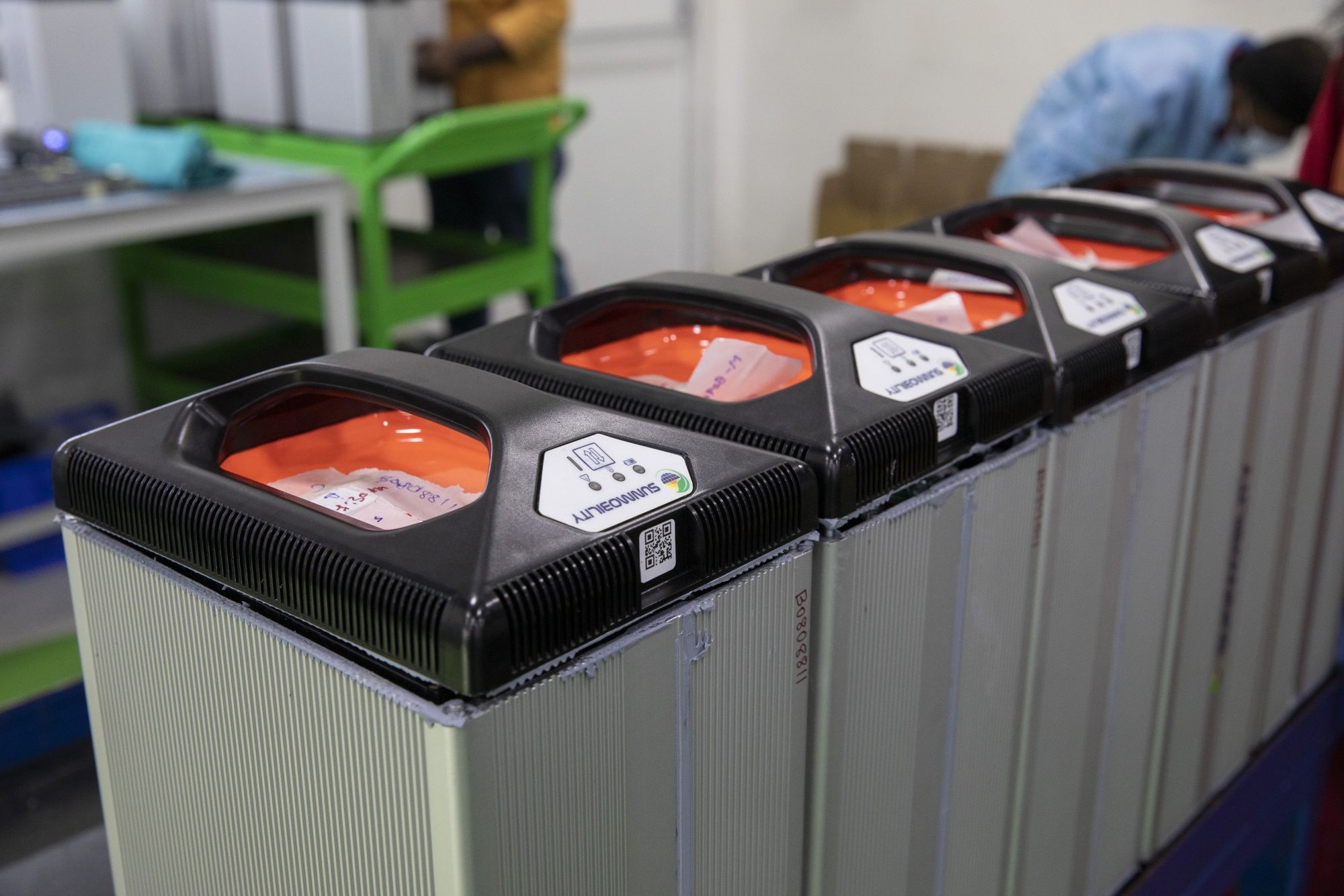
Key to the program, first mooted in the federal budget in February, is the government's desire to standardize the size of batteries to make them compatible with all vehicles using swap stations, the 40-page document shows. While India won't immediately introduce standardized batteries for swap stations as it would need “close coordination” among swapping-point operators, that will be the long-term goal, the document states.
Replacing expended batteries with fresh ones in a matter of minutes has the potential to expedite India's push toward electrifying the world's biggest two-wheeler market, where lack of charging stations is a key hurdle to EV adoption. Switching to cleaner transport is crucial for India to achieve its goal of cutting 1 billion tons of carbon dioxide emissions by the end of this decade and turning net carbon zero by 2070.
Representatives from the Ministry of Road Transport and Highways, responsible for implementing the policy, didn't immediately respond to a request for comment.
In India, battery swapping is mainly used by electric scooters and rickshaws that make up e-commerce delivery fleets. By 2030, about 30% of all vehicles sold in India will be electric but they'll mostly be two- and three-wheelers; electric passenger cars will make up only about 5% of total EV sales, consultancy Arthur D. Little estimates.
In an effort to increase EV uptake, the government has increased subsidies for electric two-wheeler purchases and launched bulk procurement tenders for electric three-wheelers and buses. It's also offered 259 billion rupees ($3.3 billion) of production-linked incentives to boost domestic EV manufacturing.
To leave room for innovation in battery technology, India won't enforce the use of the same type of cells just yet, according to the document, which canvassed around 100 stakeholders.
It would be preferable, however, if the battery packs weigh not more than 10 kilograms (22 pounds), so they're not too heavy for any person to use, and have a minimum 1 kilowatt-hour capacity, it said. They should also have a cylindrical cell format and chemistries including lithium iron phosphate and nickel manganese cobalt.
Some battery pack developers and scooter makers have pushed back against standardization, the person familiar with the matter said, asking not to be identified because the discussions are private. They worry interoperability will slow innovation considering how rapidly the technology is evolving, the person said.
Another reason why some scooter makers oppose standardization is because battery design accounts for a large part of the way a two- or three-wheeler is constructed, and importantly, is how a brand differentiates itself, the person said.
More stories like this are available on bloomberg.com
©2022 Bloomberg L.P.

-
A New Samvat Wishlist: Inclusive Prosperity And Human Development

India has strengthened its economic foundations through infrastructure, digital access and enterprise. Its next growth chapter must deepen productivity, create better livelihoods and widen participation in prosperity.
-
Love, Sex Aur Dhokha: The Audacious Plot To Spy On Jensen Huang
A Taipei dinner, a Singapore chip buyer and a suspected Chinese asset: inside the alleged spy operation that got close to NVIDIA's Jensen Huang.
-
Ten Things I Learnt This Samvat
Patience can be a trap. Cheap stocks can stay cheap. Leverage can wipe you out. What did Samvat 2082 teach us? Niraj Shah writes on 10 lessons from the year gone by.
-
Talking Points This Week: Tech Nerves, FII Buying, And A Faraway Banking Shock
The global markets are not shining this Diwali. The exception in the large markets is, India.
-
Midterm Rally Lasted A Day. The Hard Reality Of A Divided US May Last Two Years | Opinion
Between a contested AI boom, a debt ceiling that arrives in 2027 and a president with every incentive to act alone, the next two years may prove more volatile than the first day's rally suggests.
-
Blue Wave Will Derail the AI Trade but Won't Dismantle the AI Era | Unhedged Position
The Democrats' sweep of the US Congress will see politics collide with economic forces both over the long and short term.
-
It's Time To Take The GST Council's Bet On Trust Global
Payment records can prove India's services exports, and clear, proportionate rules can bring foreign digital sellers into the tax net.
-
Opinion | India at 38: From Innovation Overperformer to Innovation Powerhouse
India now has 453 VC-backed deep science startups, 18 of them late-stage, after 117 percent growth since 2020. Laurus Labs, at USD 9.3 billion, is the most valuable deep science company in any middle-income economy outside China.
-
Navigating Energy Crossroads: S Jaishankar's Call For Diversified Supply Chains At G20 Ministerial Meeting
As geopolitical fault lines continue to test maritime trade routes and commodity flows, Jaishankar's message remains pertinent: true economic resilience requires open markets, protected transit lines, and a genuine commitment to multilateral cooperation rather than coercion.









