Wealth Manager 360 One Plans New Fund Amid Growth Drive
(Bloomberg) --
One of India's largest wealth managers is moving to capitalize on the country's free market haven, with plans to base a $200 million fund there managed by investor Ruchir Sharma.
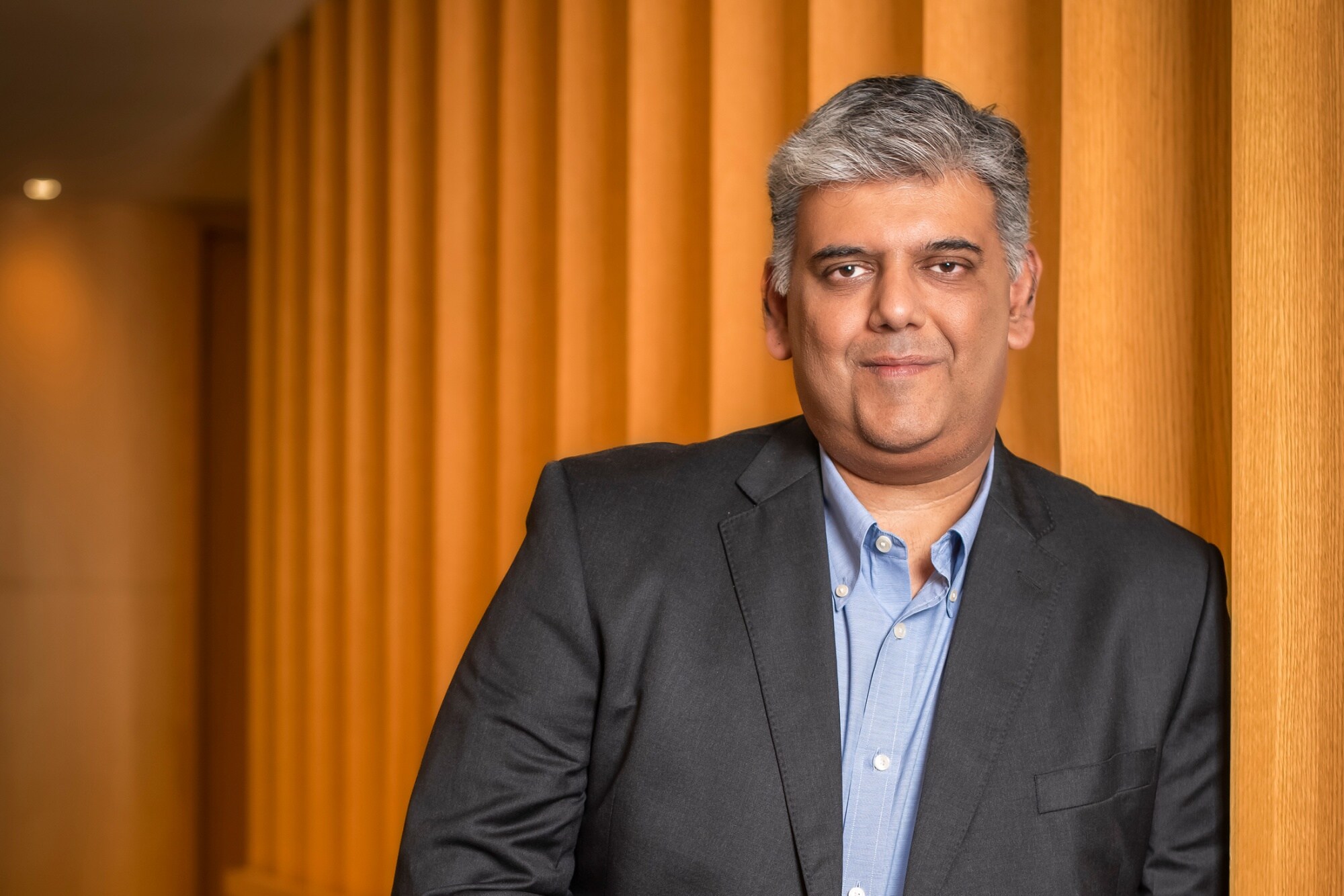
Bain Capital-backed 360 ONE WAM Ltd. will raise cash from domestic clients for a feeder fund for the emerging markets-focused EM Revival Master Fund managed by Sharma's Breakout Capital, according to the firm's co-founder Karan Bhagat.
India's central bank recently introduced new rules allowing resident Indians to open foreign currency accounts at Gujarat International Finance Tec-City, seeking to make the financial hub more attractive to investors. Also know as GIFT City, the center has been a flagship project of Indian Prime Minister Narendra Modi.
The fund is 360 One's first to be denominated in dollars, open to Indian residents and based in the country. The Mumbai-based firm also plans to open offices in Dubai and three to four other locations popular with the Indian diaspora as they look to invest back in their home country, Bhagat said.
“It is early days but we will set up more funds for our clients in GIFT City, for money to come into the country and also to invest offshore,” Bhagat said.
360 One manages about 4.6 trillion rupees ($55 billion) on behalf of roughly 2900 families in India. It already has feeder funds in Singapore that invest in offshore opportunities for resident Indians, he said.
The fund's manager, Breakout Capital, named after Sharma's book Breakout Nations, is a partnership the Morgan Stanley veteran started with the backing of Rockefeller Capital Management when he joined the wealth manager in 2022. Sharma had been head of emerging markets and chief global strategist when he was at Morgan Stanley.
Global, Local Opportunities
Bhagat is bullish on wealth management in India, where the number of individuals with more than $30 million of assets is expected to grow by 50% between 2023 and 2028, according to a Knight Frank wealth report.
He cites second and third generation owners of family businesses who are looking to sell because their ambitions lay elsewhere, hence creating big liquidity events, as big opportunities. The country's booming startup scene is also accumulating wealth for employees, founders and investors, Bhagat said.
Meanwhile, wealthy Indians living abroad are looking for ways to invest in the country, he said, leading to money managers adding staff in cities where they are concentrated.
As well as expanding overseas, Bhagat said 360 One is looking to broaden the types of clients it serves in the country, where it currently has 28 offices in 14 cities.
Since its 2008 founding, it has focused on individuals with more than 500 million rupees of wealth to invest. It's now shifting some relationship managers to focus on an even wealthier cohort, Bhagat said, and the scope of services they will offer will need to be broader.
“They want personal bankers to effectively be investment bankers,” he said of those clients, adding that roughly 10% of its 240 relationship managers will exclusively service the segment.
Bhagat is also expecting wealth creation in India's smaller cities, and will begin to service clients in that segment too. “The big revolution in Tier 2, Tier 3 cities will happen in the 50 million rupees to 250 million rupees range,” Bhagat said.
All of that should help the firm grow its profits by as much as 25% annually, according to Bhagat. “Obviously if you add 20%, 25% growth for three, four years, it becomes fairly large,” he said.
More stories like this are available on bloomberg.com
©2024 Bloomberg L.P.

-
Navigating Friction And Energy Realities: An Analysis Of Marco Rubio's October Visit To India

Occurring at a critical juncture marked by stalled trade negotiations and escalating geopolitical pressures over global energy supplies, the visit offers a profound window into modern US-India relations.
-
India Exports Capital. Why Not Export Trusteeship?
The big question, then, is whether India can build an institution that global borrowers, investors, banks, and lawyers can trust, even without an Indian connection.
-
France's Economy & Politics Are In Crisis | The Reason Why
Let's look at how the French economy and politics evolved under Nicolas Sarkozy, Franois Hollande and Emmanuel Macron.
-
You May Inherit The Business. You Must Earn Its Credibility.
Succession tests the founder's ability to share authority as much as it tests the next generation's readiness to assume it.
-
Signing Deals Is One Thing; Making Them Work Is Another | The Week In Whys
Sometimes, things don't turn out as planned. Indian companies have lost some bids to rivals, some projects won't produce until 2030.
-
FOMC Wall, PERM Suspension, Hospital Stocks | Talking Points This Week
A PERM suspension would directly affect green-card sponsorship rather than H-1B visas, so the near-term earnings impact could remain relatively limited. The key question is whether this marks a new phase in US scrutiny of Indian IT.
-
Everything, Everywhere, All At Once: Dalal Street's Week To Forget | Joining The Dots
Visa curbs, a Starlink spat and cancer drug caps: what connects this week's shocks for Indian markets
-
India Is Going Abroad For Critical Minerals. But It May Take Years To Pay Off | The Reason Why
Although India's steps are in the right direction, they remain modest compared with India's growing dependence.
-
When Everyone Has AI, What Gives You An Edge?
India's young workforce is entering an uncertain world of work where powerful AI tools are becoming widely accessible. The advantage will belong to those who combine deep expertise with digital fluency, and the distinctly human capabilities that technology cannot manufacture.
-
Wrong Labels, High Pesticide Residues Holding Back Agri Exports | The Reason Why
India needs stronger domestic food-safety and labelling standards, with best practices becoming part of everyday business for farmers, traders and food companies.










