India’s Big Brother May Be Getting Too Big
(Bloomberg View) -- To govern India is to be constantly overwhelmed. So much needs to be done, and there's so little to do it with. It's hardly surprising that the Indian state is rarely ambitious. It seeks to manage, not to transform.
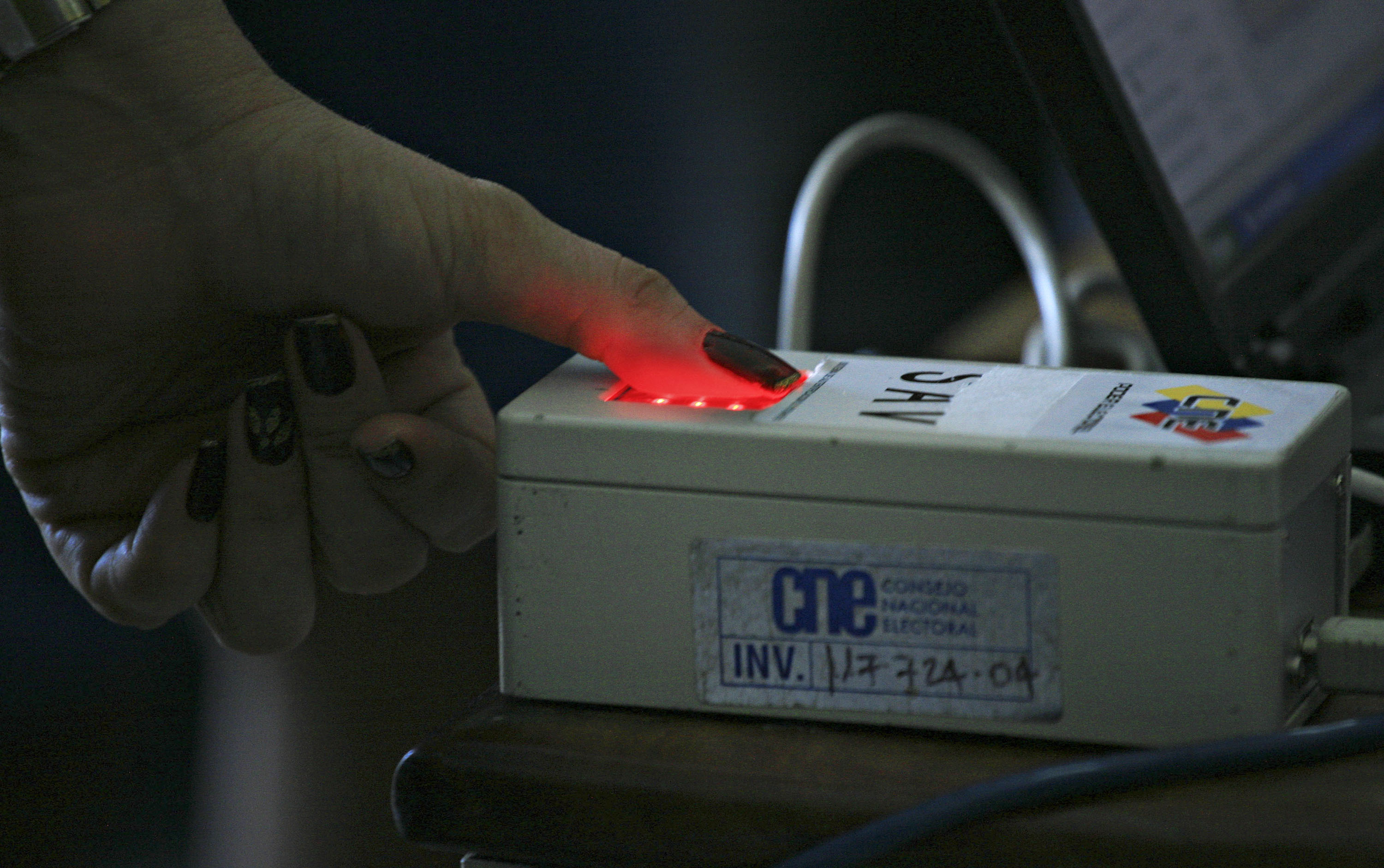
One recent government initiative, less than a decade old, is by contrast epic in scope: the attempt to provide every resident of India with a unique, biometrics-linked ID number. This gratifyingly big program, however, is in danger of getting too big.
In India, proving one's identity is painful and sometimes impossible. Last week, merely in order to replace a SIM card that had stopped working, I had to provide three different forms of identification, including a recent rent agreement. Unless you can show you're tied to a particular location, the Indian state doesn't trust you -- odd for a country where a quarter of the population migrates at one time or another.
And I at least have, or can lay my hands on, this sort of paperwork. For the vast majority of Indians, that's long been impossible. Unable to prove their identity, they've also been unable to open bank accounts, take out insurance or even access basic government services.
The Unique ID project, or Aadhaar, was supposed to solve this problem. Those of India's 1.3 billion residents who lacked documents would have their fingerprints recorded -- and their irises scanned, just in case -- and receive a number in return. That number would serve as a unique identifier, a stand-in for all other forms of identification. If needed, it could be used to borrow money, tap into a pension account and so on. If ever you had to prove your identity to access some service, the provider would check your fingerprints against a central database, which would then say, “Yes, this person is attached to this unique number, as surely as she is attached to her fingers.”
It was a simple, lightweight, elegant solution. I was entranced the moment I first heard of it, convinced it was critically necessary. The costs seemed minimal: The original planners of Aadhaar, under India's last administration, pledged it would be simple and voluntary.
And, indeed, the program has fulfilled much of its promise. Over a billion Aadhaar numbers have now been handed out. A new mobile phone network from the Reliance Industries Ltd. conglomerate recently used the Aadhaar network to enroll 100 million subscribers in three months -- in the same country where I ran around with a large folder stuffed with papers to replace my own SIM card. The government now has the option of transferring welfare payments directly to Aadhaar-linked bank accounts, cutting out India's notoriously corrupt middlemen.
But things have also begun to go wrong. Promises that Aadhaar would be lightweight, voluntary and safe have been broken. The lightweight bit went first: Instead of just turning up and submitting your fingerprints, you had to submit various proofs of your address as well. This was not just cumbersome; it also meant that you were once again tied to a particular location.
Problems have multiplied under the current government. Instead of keeping Aadhar voluntary and limited to the programs that require it, the government may soon force Indians to use their ID number to access a ludicrously long list of services. Just in the last couple of months, news has emerged of plans to require a Unique ID to withdraw pension money, as well as to buy train tickets, to make plane reservations, even to attend a cricket match in Bengaluru. Most shockingly, the program might be used to make it more difficult for kids to access free lunches at school, which had been one of India's most useful policy interventions in recent decades.
On the one hand, this is sadly typical behavior from the Indian state; in a country where nothing works, bureaucrats tend to seize on the one thing that does and wear it out until it doesn't work anymore. On the other hand, it's vaguely sinister. The government seems to be building up an Orwellian, ever-more-complete picture of every citizen. To what end, precisely? How does my pattern of cricket-watching figure in its plans for good governance?
Worst of all are constant concerns about the security of the Unique ID system. Aadhaar's designers promised us robust privacy legislation, but the current government has shown no interest in passing such a law -- unsurprisingly, since its official stance is that Indians have no fundamental right to privacy.
In the absence of any legal protections, citizens are left trusting Aadhaar's administrators, a body called the Unique ID Authority of India. You'd think the UIDAI, being so very powerful, would be carefully overseen and clearly accountable. But it isn't. It doesn't even behave like a regular government agency; after an article appeared this month worrying about vulnerabilities in the Aadhaar system, a police complaint was filed against the author.
Aadhaar is one of the world's grandest policy experiments, a genuinely brilliant way to use technology to make a billion people's lives simpler. India's government needs to recognize that its most exceptional achievement is in danger of being transformed into something much darker.
This column does not necessarily reflect the opinion of the editorial board or Bloomberg LP and its owners.
Barry Ritholtz is a Bloomberg View columnist. He founded Ritholtz Wealth Management and was chief executive and director of equity research at FusionIQ, a quantitative research firm. He blogs at the Big Picture and is the author of “Bailout Nation: How Greed and Easy Money Corrupted Wall Street and Shook the World Economy.”
To contact the author of this story: Mihir Sharma at m.s.sharma@gmail.com.
To contact the editor responsible for this story: Nisid Hajari at nhajari@bloomberg.net.
For more columns from Bloomberg View, visit http://www.bloomberg.com/view.
Also Read: Here's Why You May Never Find Out If Your Aadhaar Data Has Been Hacked

-
Navigating Energy Crossroads: S Jaishankar's Call For Diversified Supply Chains At G20 Ministerial Meeting

As geopolitical fault lines continue to test maritime trade routes and commodity flows, Jaishankar's message remains pertinent: true economic resilience requires open markets, protected transit lines, and a genuine commitment to multilateral cooperation rather than coercion.
-
Indians Are Travelling, But Not Every Journey Is A Holiday | The Week In Whys
Pilgrims, patients and working women are the real travellers, and the system hasn't quite caught up with them.
-
Getting To Work Costs Women More | The Reason Why
It is not just about women paying more than men. It is about women paying much more in cities than in villages.
-
AI Bias In Investing Cannot Be Eliminated, But It Can Be Governed
Framing is a particularly important example as identical financial information presented in terms of gains rather than losses can lead an LLM to reach a different assessment.
-
Joining The Dots | Dark Skies, Steady Diya: Why Hope Holds This Diwali
With war, a weak rupee and foreign outflows weighing on sentiment, policymakers at the NDTV World Summit and market veterans at NDTV Profit Ignite: Diwali Edition offered the same advice: stay invested and filter out the noise.
-
The Curious Case of Equitas Small Finance Bank And A CEO Who Quit For Stock
PN Vasudevan believes persistent investor concerns over a perceived conflict of interest had become a governance overhang on Equitas Small Finance Bank's stock, even as the lender improved profitability and asset quality.
-
Talking Points This Week: AI Cash Burn, A Tiger Comeback And An India That Still Finds Its Own Path
India is not immune to higher oil or tighter global liquidity, yet its earnings base is broader, its domestic policy levers are still available.
-
Foreign Investors Own Half Of HDFC Bank and ICICI Bank. An LTCG Cut Could Matter Most Here
Foreign portfolio investors have US$115 billion parked in HDFC Bank, ICICI Bank. If the government cuts long-term capital gains tax, Jefferies says returning foreign money could land here first.
-
'Never Seen This Level Of Negativity': Sandeep Tandon Says The Next Rally May Be Closer Than You Think
Veteran investor Sandeep Tandon says foreign selling is easing, large-caps are due a comeback and mid-caps are crowded, while he turns positive on gold, power and pharma this Diwali.










