10 Things To Know About India Post Payments Bank Savings Accounts
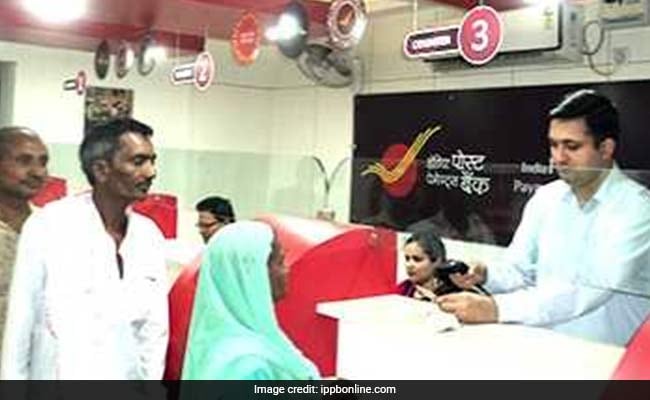
India Post Payments Bank or IPPB, which started its countrywide operations in September 2018, offers three kinds of savings account at present. The payments bank offers three types of savings accounts - regular, digital and basic - and current account, according to India Post Payments Bank's website - ippbonline.com. IPPB, which aims to leverage the network of nearly 1.55 lakh post offices, is a government-owned payments bank which caters to urban and rural areas, with primary focus on the rural segment.
Here are 10 things to know about the three types of savings accounts you can open at IPPB (India Post Payments Bank):
1. Interest rate: India Post Payments Bank pays interest at the rate of 4 per cent in the three types of savings account, according to its portal. The interest is paid on a quarterly basis.
2. How to open account: While the regular and basic savings accounts can be opened by visiting IPPB access points, the digital savings account can be opened through the bank's mobile app, IPPB Mobile App. Currently, the mobile app is available on the Android platform.
(Also read: Looking for a post office saving plan? All about fixed deposit and recurring deposit compared)
3. Cash withdrawal limit: In the regular and digital savings accounts, IPPB permits the customer to make any number of withdrawals in a month without any charges, unlike the basic savings account. In the basic savings account, the bank permits four withdrawals a month free of cost.
4. Balance requirement: Among other features, all three types of IPPB savings accounts - regular savings account, basic savings account and digital savings account - can be opened and operated with zero balance (nil balance), according to the IPPB website. The payments bank does not require the customer to maintain any particular balance to ensure operability. In other words, the customer is not charged a penalty for failing to keep any deposit in the account.
5. Maximum balance: IPPB allows a maximum end-of-day (EoD) balance of Rs 1 lakh in all three types of savings accounts.
6. Link to Post Office Savings Account (POSA): India Post Payments Bank gives the customer an option to link his or her Post Office Savings Accounts with the regular and basic savings accounts. This option, however, is not available with the digital savings account, according to the IPPB website. A Post Office Savings Account is one of the nine savings schemes offered by India Post, through its network of more than 1.5 lakh post offices. In case the customer subscribes to the POSA service, any end-of-day balance above Rs 1 lakh in the IPPB regular and basic savings accounts is transferred to the savings scheme account.
(Also read: Saving schemes post office: Find out the annual return in each scheme)
7. Free quarterly statement: IPPB provides one account statement to the customer per quarter free of cost under certain conditions. The customer is required to make a minimum of one transaction in a quarter to be eligible for the free statement for that quarter.
8. Paid statement: For any additional bank statement, India Post Payments Bank charges a fee of Rs 50, according to its website.
9. Money transfer: The three savings accounts offer instant wire transfer service IMPS. Immediate Payment Service or IMPS enables round-the-clock electronic money transfer, also known as wire transfer.
10. Free services: All three savings accounts - regular, basic and digital - come with a number of facilities free of cost. These include SMS alerts, standing instruction and bill payment.

-
Blue Wave Will Derail the AI Trade but Won't Dismantle the AI Era | Unhedged Position

The Democrats' sweep of the US Congress will see politics collide with economic forces both over the long and short term.
-
It's Time To Take The GST Council's Bet On Trust Global
Payment records can prove India's services exports, and clear, proportionate rules can bring foreign digital sellers into the tax net.
-
Opinion | India at 38: From Innovation Overperformer to Innovation Powerhouse
India now has 453 VC-backed deep science startups, 18 of them late-stage, after 117 percent growth since 2020. Laurus Labs, at USD 9.3 billion, is the most valuable deep science company in any middle-income economy outside China.
-
Navigating Energy Crossroads: S Jaishankar's Call For Diversified Supply Chains At G20 Ministerial Meeting
As geopolitical fault lines continue to test maritime trade routes and commodity flows, Jaishankar's message remains pertinent: true economic resilience requires open markets, protected transit lines, and a genuine commitment to multilateral cooperation rather than coercion.
-
Indians Are Travelling, But Not Every Journey Is A Holiday | The Week In Whys
Pilgrims, patients and working women are the real travellers, and the system hasn't quite caught up with them.
-
Getting To Work Costs Women More | The Reason Why
It is not just about women paying more than men. It is about women paying much more in cities than in villages.
-
AI Bias In Investing Cannot Be Eliminated, But It Can Be Governed
Framing is a particularly important example as identical financial information presented in terms of gains rather than losses can lead an LLM to reach a different assessment.
-
Joining The Dots | Dark Skies, Steady Diya: Why Hope Holds This Diwali
With war, a weak rupee and foreign outflows weighing on sentiment, policymakers at the NDTV World Summit and market veterans at NDTV Profit Ignite: Diwali Edition offered the same advice: stay invested and filter out the noise.
-
The Curious Case of Equitas Small Finance Bank And A CEO Who Quit For Stock
PN Vasudevan believes persistent investor concerns over a perceived conflict of interest had become a governance overhang on Equitas Small Finance Bank's stock, even as the lender improved profitability and asset quality.










