India Mulls Higher Price For Crude Extracted Using Costlier Techniques
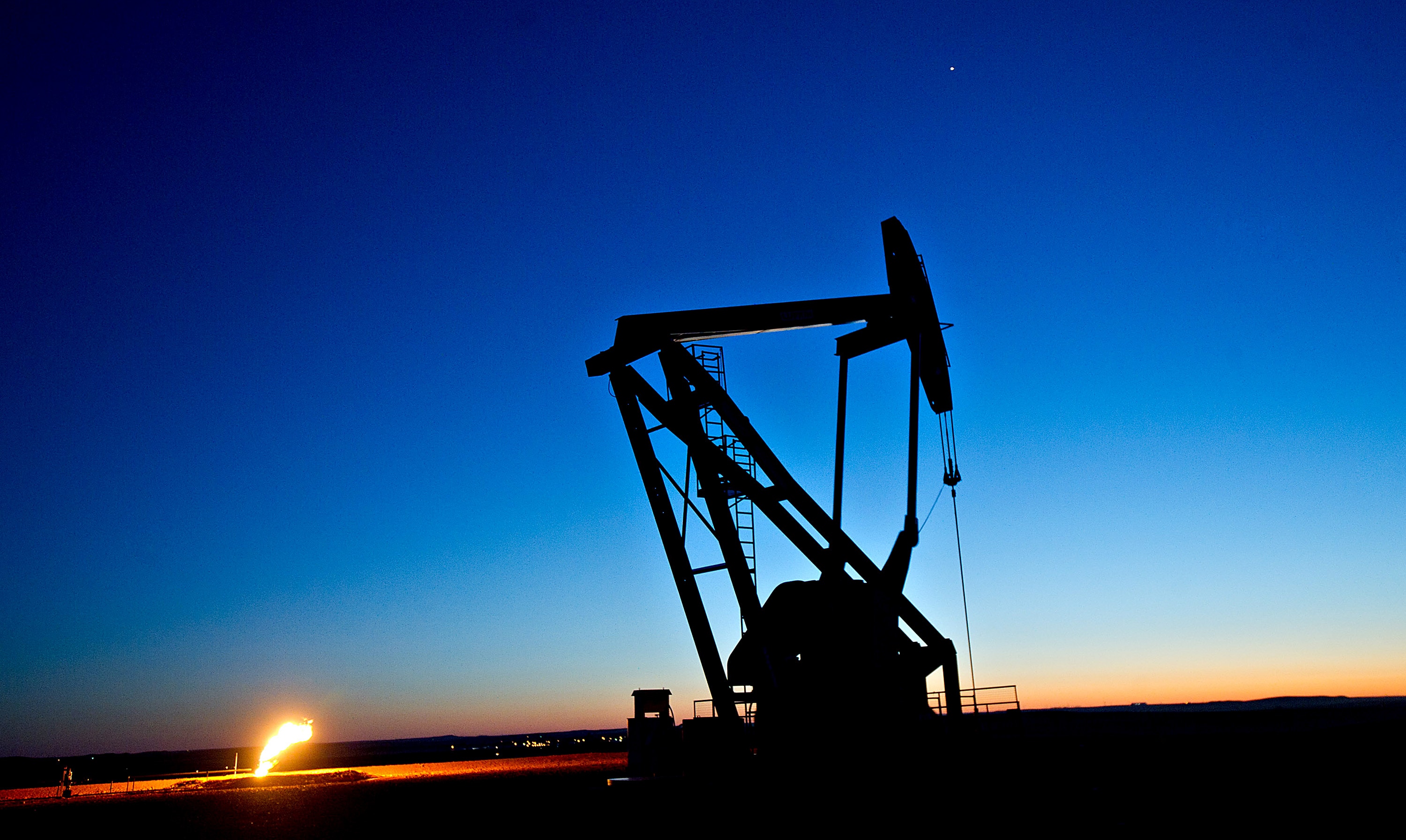
Explorers like Oil and Natural Gas Corporation Ltd. stand to gain as India plans to incentivise oil producers that use costlier methods like injecting gas or liquid into fossil fuel reserves to boost output.
A draft policy released by the Directorate General of Hydrocarbons suggests up to 50 percent waiver in oil cess and up to 10 percent higher wellhead price for production using enhanced oil recovery for up to 10 years. It's invited comments from stakeholders by Jan. 16.
The policy is aimed at helping the government meet its target to reduce oil imports by 10 percent by 2022. Imported crude contributes about 80 percent of the consumption in Asia's second-largest economy, and rising prices widen the current account deficit besides stoking inflation.
“The draft is forward looking. Not only does it demonstrate the government's intent to boost domestic production but also factors in the learning of the past,” said Deepak Mahurkar, partner and leader (oil and gas), PwC. The production sharing contract prevalent till 2016 didn't allow unconventional production methods. “Also, the input cost-based recovery led to disputes and investor disappointment. This policy proposes both: incentives to unconventional production and outcome-based evaluation.”
State-run ONGC got a third of its output in the year ended March 2017 by employing such methods that help extract oil not recovered from a reservoir by traditional techniques.
Enhanced or improved oil recovery includes methods to boost the output by increasing the pressure in the reservoir, displacing the crude oil, and improving the flow by changing fluid properties like density and viscosity. The best technique depends on temperature, pressure, and depth of the reservoir.
ONGC, which has been using such methods, stands to particularly gain from the proposed incentives. Higher exploration costs when oil prices are low threatened its ability to sustain production, it said in its annual report for the year ended March.
The draft said there shall be an incentive equivalent to 10 percent of gas wellhead price on the gross production for 10 years. The incentive shall be capped at $0.6 per million British Thermal Units for offshore fields and $0.3 per mmbtu for onshore fields.
The policy proposed a government-appointed committee comprising officials from the Ministry of Petroleum and Natural Gas and Directorate General of Hydrocarbons to review and approve the eligibility criteria, pilot and commercial phase, besides the incentives in each case.

-
Why Amazon And Flipkart Are Struggling To Beat Meesho In India's Smaller Cities

With 274 million users and lowest-cost logistics, Meesho is defending its value commerce crown against giants like Amazon and Flipkart.
-
High US Salaries, No Green Card Certainty: The Financial Calculation Facing Indian H-1B Families
The suspension of PERM processing at eight technology employers does not cancel existing H-1B visas. What it does is force a question many Indian families have been avoiding: is the US salary worth tying your career and family plans to one employer?
-
Swiggy vs Eternal: Food Delivery's Two Rivals Are No Longer In The Same Race
Eternal is building a private AI assistant, dark.ai. Swiggy is still working out how to make Instamart pay, with an operating loss of Rs 895 crore in the July-September quarter while Blinkit stayed profitable.
-
Where You Live Shapes How You Get To Work | The Reason Why
Two-wheelers are the most popular way to get to work in India, accounting for nearly 43% of workplace commutes.
-
Unhedged Position: Can India See An Indonesia-Style Time Correction?
The Nifty is trading below levels it first clocked in 2024. Is there, then, as I have suggested in the headline, potential that the current time correction drags on painfully for the next three-five, even ten years?
-
Navigating Friction And Energy Realities: An Analysis Of Marco Rubio's October Visit To India
Occurring at a critical juncture marked by stalled trade negotiations and escalating geopolitical pressures over global energy supplies, the visit offers a profound window into modern US-India relations.
-
India Exports Capital. Why Not Export Trusteeship?
The big question, then, is whether India can build an institution that global borrowers, investors, banks, and lawyers can trust, even without an Indian connection.
-
France's Economy & Politics Are In Crisis | The Reason Why
Let's look at how the French economy and politics evolved under Nicolas Sarkozy, Franois Hollande and Emmanuel Macron.
-
You May Inherit The Business. You Must Earn Its Credibility.
Succession tests the founder's ability to share authority as much as it tests the next generation's readiness to assume it.
-
Signing Deals Is One Thing; Making Them Work Is Another | The Week In Whys
Sometimes, things don't turn out as planned. Indian companies have lost some bids to rivals, some projects won't produce until 2030.










