India May Build New Thermal Plants Due To Low Cost Despite Climate Change: Report
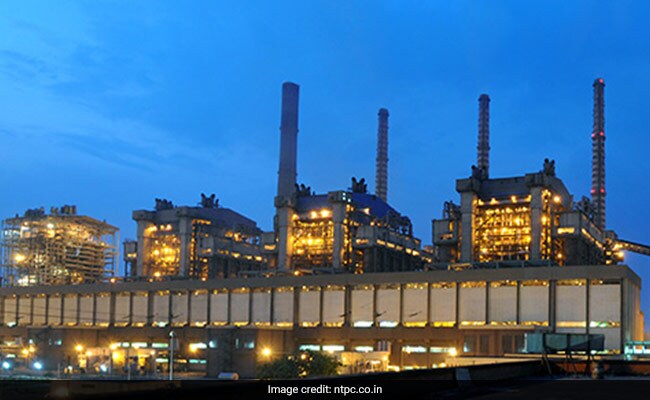
India may build new coal-fired power plants as they generate the cheapest power, according to a draft electricity policy document seen by Reuters, despite growing calls from environmentalists to deter use of coal.
Coal's contribution to electricity generation in India fell for the second straight year in 2020, marking a departure from decades of growth in coal-fired power. Still, the fuel accounts for nearly three-fourths of India's annual power output.
Environmental activists have long rallied against India adding new coal-fired capacity. Solar and wind energy prices are falling to record lows, which would help the world's third-largest greenhouse gas emitter cut emissions.
US Special Presidential Envoy for Climate John Kerry this month said India was "getting the job done on climate, pushing the curve," as he began talks with government leaders aimed at cutting carbon emissions faster to slow global warming.
But a 28-page February draft of the National Electricity Policy (NEP) 2021 - which has not been made public - showed India may add new coal-fired capacity, though it recommended tighter technology standards to reduce pollution.
"While India is committed to add more capacity through non-fossil sources of generation, coal-based generation capacity may still be required to be added in the country as it continues to be the cheapest source of generation," the NEP draft read.
All future coal-based plants should only deploy so-called "ultra super critical" less polluting technologies "or other more efficient technology", it added.
State-run NTPC Ltd said in September it will not acquire land for new coal-fired projects. Private firms and many run by states across the country have not invested in new coal-fired plants for years saying they were not economically viable.
A source with direct knowledge said a government panel of various power sector experts and officials will discuss the draft and could make changes before seeking cabinet approval.
Power ministry did not immediately respond to a request for comment on Sunday.
The draft document also proposed trade of renewable energy in day-ahead markets, creating separate tariffs for electric vehicle charging stations and privatizing electricity distribution companies.
Alternate Power Sources
The NEP 2021 is India's first attempt at revising its electricity policy enacted in 2005, when the country produced negligible renewable energy.
Experts say phasing in renewable energy sources and phasing out conventional sources such as coal and natural gas rapidly could lead to instability in the electricity grid, potentially causing blackouts.
While suggesting flexible use of coal-fired and natural gas-fired power to ensure grid stability in the coming years, the draft policy lists promoting clean power as its primary objective.
The policy draft suggested expediting adoption of "cost effective" pumped hydro storage to support the electricity grid, adding that only 4.8 gigawatts (GW) of a potential 96.5 GW of pumped storage capacity has been developed so far.
The policy also recommends compensating natural gas-fired plants for operating at reduced efficiency to ensure grid stability, and for suffering higher wear and tear due to fluctuations in generation.

-
Unhedged Position: Can India See An Indonesia-Style Time Correction?

The Nifty is trading below levels it first clocked in 2024. Is there, then, as I have suggested in the headline, potential that the current time correction drags on painfully for the next three-five, even ten years?
-
Navigating Friction And Energy Realities: An Analysis Of Marco Rubio's October Visit To India
Occurring at a critical juncture marked by stalled trade negotiations and escalating geopolitical pressures over global energy supplies, the visit offers a profound window into modern US-India relations.
-
India Exports Capital. Why Not Export Trusteeship?
The big question, then, is whether India can build an institution that global borrowers, investors, banks, and lawyers can trust, even without an Indian connection.
-
France's Economy & Politics Are In Crisis | The Reason Why
Let's look at how the French economy and politics evolved under Nicolas Sarkozy, Franois Hollande and Emmanuel Macron.
-
You May Inherit The Business. You Must Earn Its Credibility.
Succession tests the founder's ability to share authority as much as it tests the next generation's readiness to assume it.
-
Signing Deals Is One Thing; Making Them Work Is Another | The Week In Whys
Sometimes, things don't turn out as planned. Indian companies have lost some bids to rivals, some projects won't produce until 2030.
-
FOMC Wall, PERM Suspension, Hospital Stocks | Talking Points This Week
A PERM suspension would directly affect green-card sponsorship rather than H-1B visas, so the near-term earnings impact could remain relatively limited. The key question is whether this marks a new phase in US scrutiny of Indian IT.
-
Everything, Everywhere, All At Once: Dalal Street's Week To Forget | Joining The Dots
Visa curbs, a Starlink spat and cancer drug caps: what connects this week's shocks for Indian markets
-
India Is Going Abroad For Critical Minerals. But It May Take Years To Pay Off | The Reason Why
Although India's steps are in the right direction, they remain modest compared with India's growing dependence.
-
When Everyone Has AI, What Gives You An Edge?
India's young workforce is entering an uncertain world of work where powerful AI tools are becoming widely accessible. The advantage will belong to those who combine deep expertise with digital fluency, and the distinctly human capabilities that technology cannot manufacture.









