India Mars Orbiter Dies After 6-Month Mission Lasts Eight Years
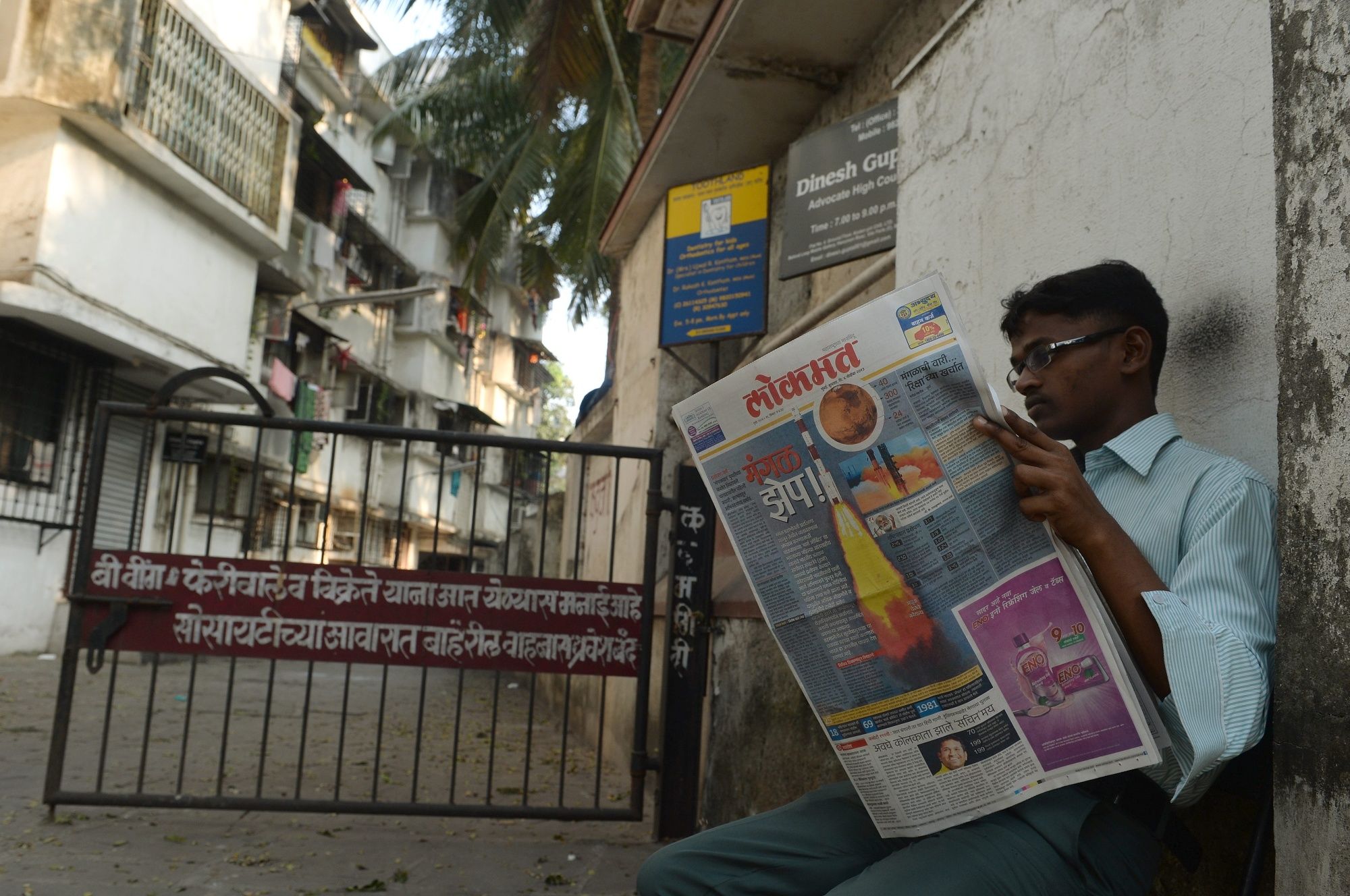
(Bloomberg) -- India's mission to Mars -- an orbiter studying the surface and atmosphere -- finally ran out of fuel after spending eight years in the outer world, according to the nation's space agency.
The device, launched in 2013, was expected to last just six months -- demonstrating India's technological prowess on a frugal budget, the Indian Space Research Organization said in a statement Monday. A long eclipse led to the orbiter losing contact with the ground station in April. It ran out of fuel and couldn't achieve the necessary altitude to generate power, the agency said, declaring the spacecraft “non-recoverable.”
The orbiter, called in Sanskrit, made India only the fourth nation to reach the distant planet. It garnered global attention primarily for its shoestring budget -- the probe cost about $74 million, just 11% of the price tag for NASA's probe, and tens of millions less than the $108 million 20th Century Fox spent making .
objectives included looking for methane and carbon dioxide in Mars's atmosphere to determine whether life ever existed on the Red planet. The mission studied the composition of several gases and quantified the altitude at which a carbon dioxide-rich atmosphere turns into an atomic Oxygen-rich one during the local evening, according to the statement.
Social media was abuzz with admiration for Indian scientists at ISRO, who have made a name for themselves by delivering a string of successful space projects despite working with a fraction of the budget of the US, China or Europe. Thrift has been the hallmark of India's space program since the early 1960s, when rocket sections were transported by bicycle and assembled by hand inside St. Mary Magdalene Church in Thumba, a fishing village near the tip of the Indian peninsula.
The Mars mission “will be ever-regarded as a remarkable technological and scientific feat in the history of planetary exploration,” ISRO said.
More stories like this are available on bloomberg.com
©2022 Bloomberg L.P.

-
Love, Sex Aur Dhokha: The Audacious Plot To Spy On Jensen Huang

A Taipei dinner, a Singapore chip buyer and a suspected Chinese asset: inside the alleged spy operation that got close to NVIDIA's Jensen Huang.
-
Ten Things I Learnt This Samvat
Patience can be a trap. Cheap stocks can stay cheap. Leverage can wipe you out. What did Samvat 2082 teach us? Niraj Shah writes on 10 lessons from the year gone by.
-
Talking Points This Week: Tech Nerves, FII Buying, And A Faraway Banking Shock
The global markets are not shining this Diwali. The exception in the large markets is, India.
-
Midterm Rally Lasted A Day. The Hard Reality Of A Divided US May Last Two Years | Opinion
Between a contested AI boom, a debt ceiling that arrives in 2027 and a president with every incentive to act alone, the next two years may prove more volatile than the first day's rally suggests.
-
Blue Wave Will Derail the AI Trade but Won't Dismantle the AI Era | Unhedged Position
The Democrats' sweep of the US Congress will see politics collide with economic forces both over the long and short term.
-
It's Time To Take The GST Council's Bet On Trust Global
Payment records can prove India's services exports, and clear, proportionate rules can bring foreign digital sellers into the tax net.
-
Opinion | India at 38: From Innovation Overperformer to Innovation Powerhouse
India now has 453 VC-backed deep science startups, 18 of them late-stage, after 117 percent growth since 2020. Laurus Labs, at USD 9.3 billion, is the most valuable deep science company in any middle-income economy outside China.
-
Navigating Energy Crossroads: S Jaishankar's Call For Diversified Supply Chains At G20 Ministerial Meeting
As geopolitical fault lines continue to test maritime trade routes and commodity flows, Jaishankar's message remains pertinent: true economic resilience requires open markets, protected transit lines, and a genuine commitment to multilateral cooperation rather than coercion.
-
Indians Are Travelling, But Not Every Journey Is A Holiday | The Week In Whys
Pilgrims, patients and working women are the real travellers, and the system hasn't quite caught up with them.









