India Looks To Shift Offshore Derivatives Market To GIFT City
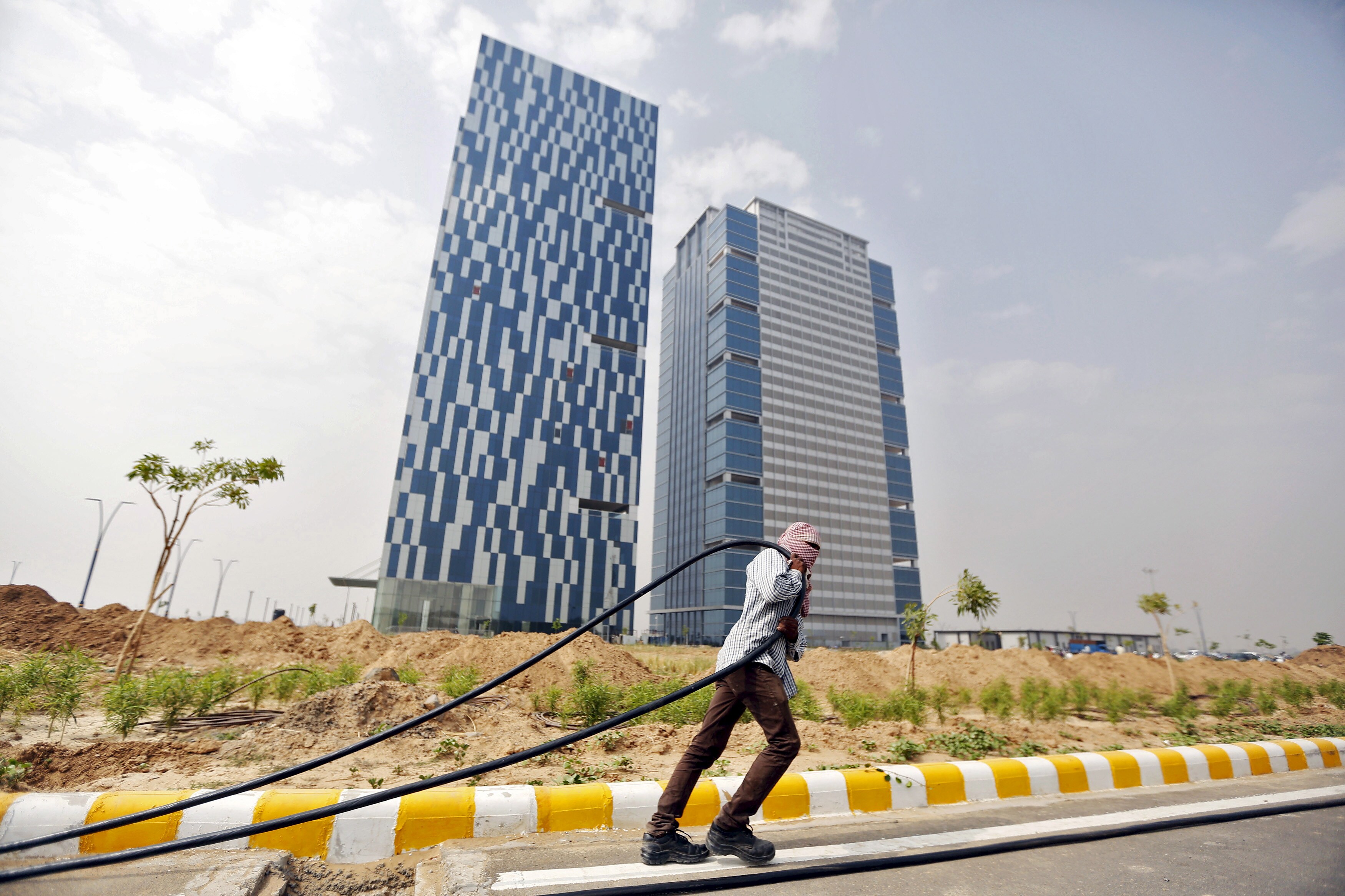
Finance Minister Nirmala Sitharaman announced plans to shift the entire offshore derivatives market to Gujarat International Finance Tech-City when she announced the recognition of offshore derivative instruments in international financial hub.
The move will require all major financial generators of offshore derivatives to register with the International Financial Services Centre at GIFT City.
At the end of December, the notional value of ODIs on equity, debt, hybrid securities, and derivatives stood at Rs 96,292 crore, including Rs 86,351 crore in equity.
The move ties in with the push to move offshore derivatives back home. India has succeeded in shift Nifty derivatives trading from Singapore to the IFSC. It's expected to fully transition by the middle of this year as all traders are moved to GIFT City through the India-Singapore Connect.
What Has Been Proposed?
According to the Finance Bill, the income of non-residents on the transfer of ODIs entered with an IFSC banking unit is exempt under Section 10(4E) of the Income Tax Act.
Under the ODI contract, the IFSC banking unit or IBU—in this case foreign banks—makes investments in permissible Indian securities. Income earned by the IBU on such investments is taxed as capital gains, interest, and dividends under Section 115AD of the Act.
After the payment of tax, the IBU passes such income to the ODI holders.
As of now, the exemption is provided only on the transfer of ODIs and not on the distribution of income to the non-resident ODI holders. Hence, this distributed income is taxed twice in India—first when received by the IBU and then when the same income is distributed to non-resident ODI holders.
The budget has removed the double taxation by proposing exemption to any income distributed on the offshore derivative instruments entered with an offshore banking unit of an IFSC.
The budget has also proposed to provide for exemption on capital gains under the exempted income for foreign portfolio investors.
What Does It mean?
India has so far not recognised offshore derivatives instruments used through Mauritius or any other tax haven route to trade in the domestic securities market. The country monitors these instruments via SEBI regulations for various intermediaries, getting access to disclosures on ODIs periodically.
In May 2016, the SEBI board decided that all the foreign portfolio instruments issuing ODIs or participatory notes shall follow the 'know your customer' of ODI subscribers as per the Indian Prevention of Money Laundering Act. The KYC or anti-money laundering norms applicable to ODI issuers will be the same as those for all other domestic investors.
The recognition of ODIs in the IFSC is a major shift towards the recognition of these instruments as market essentials and further nudging trades to a jurisdiction where it has more supervision.
The International Financial Services Centres Authority is the regulator for IFSC, or GIFT City, and it makes market regulations in consultation with SEBI, the RBI, and the Finance Ministry.
So, a IFSC banking unit can create ODIs that can invest in the domestic Indian market. It can also hedge the same with SGX Nifty Futures that would fully move to IFSC by the middle of 2023.
The GIFT City domicile for these ODIs will also remove the sword of frequent income tax harassment for many of the funds.

-
Where You Live Shapes How You Get To Work | The Reason Why

Two-wheelers are the most popular way to get to work in India, accounting for nearly 43% of workplace commutes.
-
High US Salaries, No Green Card Certainty: The Financial Calculation Facing Indian H-1B Families
The suspension of PERM processing at eight technology employers does not cancel existing H-1B visas. What it does is force a question many Indian families have been avoiding: is the US salary worth tying your career and family plans to one employer?
-
Unhedged Position: Can India See An Indonesia-Style Time Correction?
The Nifty is trading below levels it first clocked in 2024. Is there, then, as I have suggested in the headline, potential that the current time correction drags on painfully for the next three-five, even ten years?
-
Navigating Friction And Energy Realities: An Analysis Of Marco Rubio's October Visit To India
Occurring at a critical juncture marked by stalled trade negotiations and escalating geopolitical pressures over global energy supplies, the visit offers a profound window into modern US-India relations.
-
India Exports Capital. Why Not Export Trusteeship?
The big question, then, is whether India can build an institution that global borrowers, investors, banks, and lawyers can trust, even without an Indian connection.
-
France's Economy & Politics Are In Crisis | The Reason Why
Let's look at how the French economy and politics evolved under Nicolas Sarkozy, Franois Hollande and Emmanuel Macron.
-
You May Inherit The Business. You Must Earn Its Credibility.
Succession tests the founder's ability to share authority as much as it tests the next generation's readiness to assume it.
-
Signing Deals Is One Thing; Making Them Work Is Another | The Week In Whys
Sometimes, things don't turn out as planned. Indian companies have lost some bids to rivals, some projects won't produce until 2030.
-
FOMC Wall, PERM Suspension, Hospital Stocks | Talking Points This Week
A PERM suspension would directly affect green-card sponsorship rather than H-1B visas, so the near-term earnings impact could remain relatively limited. The key question is whether this marks a new phase in US scrutiny of Indian IT.
-
Everything, Everywhere, All At Once: Dalal Street's Week To Forget | Joining The Dots
Visa curbs, a Starlink spat and cancer drug caps: what connects this week's shocks for Indian markets









