Government Invokes Emergency Rules To Avoid Blackouts This Summer
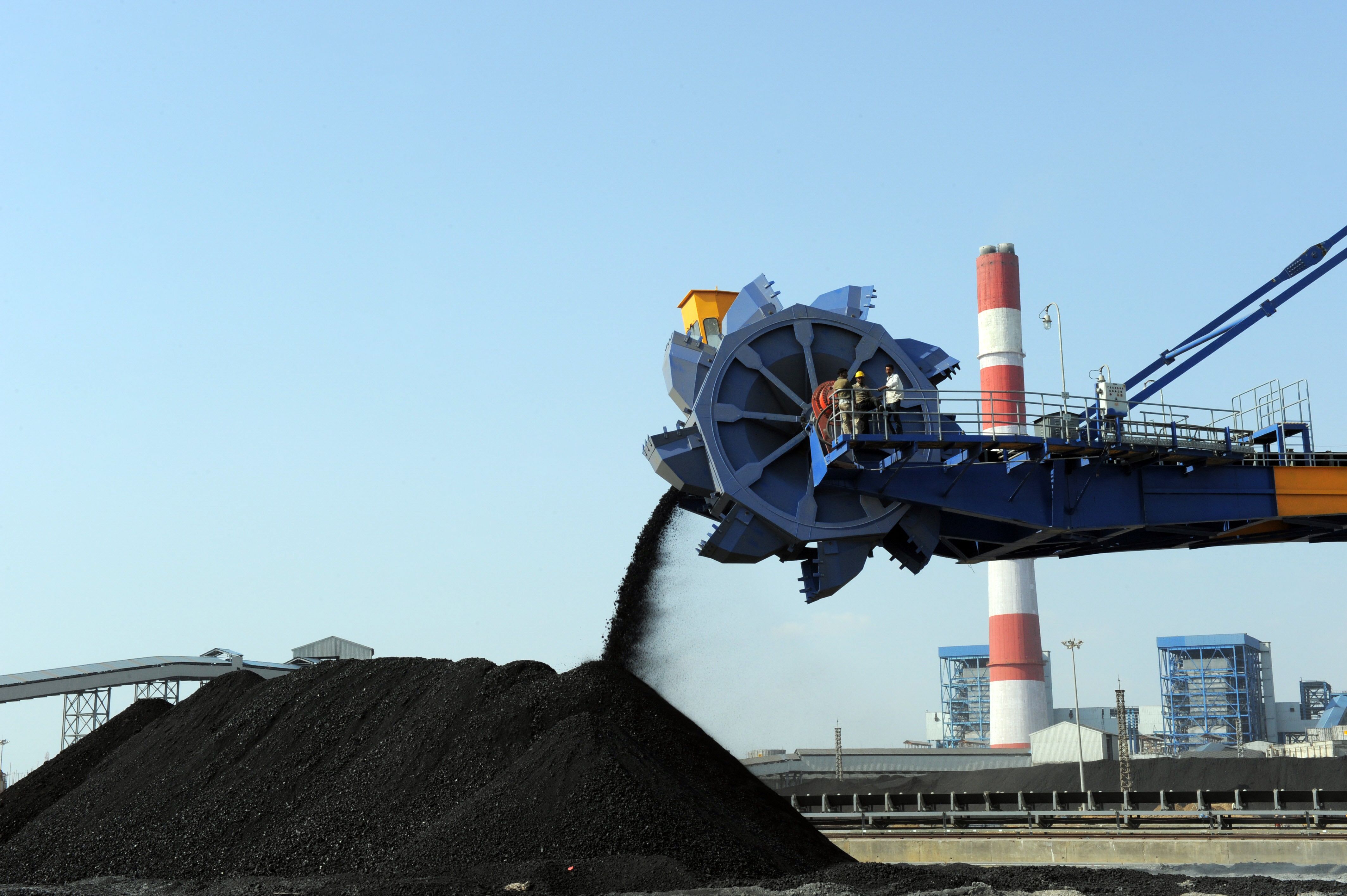
(Bloomberg) -- India is invoking an emergency rule that will force some of the country's biggest coal power plants to operate at full capacity, as the nation prepares to meet surging electricity demand and avoid blackouts.
Power stations operating on imported coal will be asked to run flat out for three months during the summer season to ease the burden on domestic coal supplies, according to a Feb. 20 power ministry order seen by Bloomberg News.
The ministry previously invoked the emergency rule during a power crisis last summer when blistering heat caused widespread blackouts and threatened economic growth.
Several parts of the country are witnessing unusually warm weather for this time of the year and peak electricity demand over the past week is already close to the record levels seen during last year's energy crisis. The government expects peak power demand to reach 229 gigawatts in April, compared with an all-time high of 215 gigawatts seen last summer.

Read more: Global Warming Making India Vulnerable to Extreme Weather Events
The affected plants include Adani Power Ltd.'s giant 4,620 megawatt facility at Mundra in the coastal state of Gujarat and Tata Power Co.'s 4,000 megawatt plant in the same town. Some of these plants with fixed-price power supply contracts have not been operating at full capacity as it's hard for them to supply electricity at those rates when imported coal prices rise.
Adani Power jumped as much as 5.1% in early Mumbai trading Tuesday, extending its streak of gains to a fourth session. Tata Power Co. rose as much as 1.7%.
Coal stockpiles at power stations have risen nearly 28% over the past year, although they are still far below the government's target of 45 million tons by March. Coal produces nearly 70% of India's electricity and adequate reserves would be key to ensuring smooth power supplies during the high-demand season.
Press officials at the ministry didn't respond to an email and a text message seeking comment. Reuters reported the order earlier on Monday.
The ministry said it would invoke Section 11 of the electricity laws in the “larger public interest” and the order will be effective starting March 16.
Plants have been asked to sell power to contracted buyers at rates determined by a government panel, according to the order. Surplus power can be sold at the exchanges and net profit from such sales will be equally divided between the generation company and the contracted buyers.
India's electricity laws allow the government to force any power station to operate as directed in extraordinary circumstances, such as a natural disaster or a threat to national security or public order.
(Updates with shares in sixth paragraph and coal inventories in the seventh.)
More stories like this are available on bloomberg.com
©2023 Bloomberg L.P.

-
High US Salaries, No Green Card Certainty: The Financial Calculation Facing Indian H-1B Families

The suspension of PERM processing at eight technology employers does not cancel existing H-1B visas. What it does is force a question many Indian families have been avoiding: is the US salary worth tying your career and family plans to one employer?
-
Swiggy vs Eternal: Food Delivery's Two Rivals Are No Longer In The Same Race
Eternal is building a private AI assistant, dark.ai. Swiggy is still working out how to make Instamart pay, with an operating loss of Rs 895 crore in the July-September quarter while Blinkit stayed profitable.
-
Where You Live Shapes How You Get To Work | The Reason Why
Two-wheelers are the most popular way to get to work in India, accounting for nearly 43% of workplace commutes.
-
Unhedged Position: Can India See An Indonesia-Style Time Correction?
The Nifty is trading below levels it first clocked in 2024. Is there, then, as I have suggested in the headline, potential that the current time correction drags on painfully for the next three-five, even ten years?
-
Navigating Friction And Energy Realities: An Analysis Of Marco Rubio's October Visit To India
Occurring at a critical juncture marked by stalled trade negotiations and escalating geopolitical pressures over global energy supplies, the visit offers a profound window into modern US-India relations.
-
India Exports Capital. Why Not Export Trusteeship?
The big question, then, is whether India can build an institution that global borrowers, investors, banks, and lawyers can trust, even without an Indian connection.
-
France's Economy & Politics Are In Crisis | The Reason Why
Let's look at how the French economy and politics evolved under Nicolas Sarkozy, Franois Hollande and Emmanuel Macron.
-
You May Inherit The Business. You Must Earn Its Credibility.
Succession tests the founder's ability to share authority as much as it tests the next generation's readiness to assume it.
-
Signing Deals Is One Thing; Making Them Work Is Another | The Week In Whys
Sometimes, things don't turn out as planned. Indian companies have lost some bids to rivals, some projects won't produce until 2030.
-
FOMC Wall, PERM Suspension, Hospital Stocks | Talking Points This Week
A PERM suspension would directly affect green-card sponsorship rather than H-1B visas, so the near-term earnings impact could remain relatively limited. The key question is whether this marks a new phase in US scrutiny of Indian IT.









